
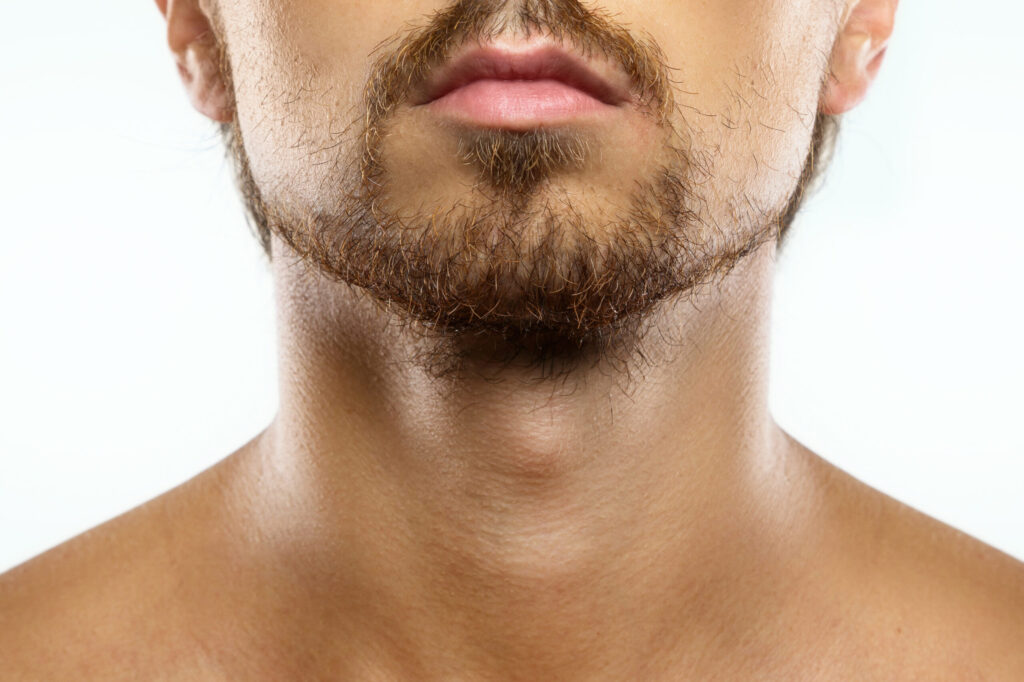
The beard transplant stages are, in order: preliminary meeting and planning, determining the donor area, graft harvesting, channel opening and placement, and post-procedure care. The process varies from person to person; the beard structure, the width of the sparse area and the chosen technique determine the details of the steps. Below we explain each stage in order and in plain language.
Preliminary meeting and planning
The first stage is the preliminary meeting with the doctor, and the whole plan of the procedure takes shape here. In this meeting, in which areas of the beard there is thinning, the skin structure, the current health condition and your expectations are evaluated together.
The doctor designs a beard line that suits the contours of your face. The direction of the line and the distribution of density are discussed at this stage so that the sideburns, jawline and moustache area look natural. Giving information about the medications you use and the illnesses you have had is important for the planning to be done correctly.
If you are curious about the points at which a beard transplant differs from a hair transplant, you can look at our article differences between beard and moustache transplant and hair transplant.
Where is the beard transplant donor area
The donor area is where the follicles to be transplanted are taken from, and mostly the scalp at the nape and behind the ears is used for this purpose. Hair follicles in this area are generally considered more resistant to shedding; for this reason they can stay for a long time where they are transplanted.
The doctor evaluates the sufficiency of the donor area at the examination. The density, thickness and curl of the follicles affect the natural look of the beard. In some people the scalp may not be sufficient; in this case the doctor discusses a different donor option together with you. In deciding which area to use, the person’s own structure is decisive.
Graft harvesting
Graft harvesting is the stage in which groups of follicles are collected one by one from the donor area. On the day of the procedure the area is first numbed with local anaesthesia, and then the follicles are taken with a fine-tipped instrument suited to the technique the doctor has chosen.
The harvested grafts are kept in a suitable liquid medium and are counted and sorted. The follicles may consist of one, two or three hairs. This distinction is important, because finer, single grafts may be preferred on the front line of the beard and multiple grafts in areas where fullness is wanted.
The difference between FUE and DHI techniques
FUE is the technique in which follicles are taken one by one and placed into channels opened beforehand; DHI relies on doing the placement with a special pen-tipped instrument at the same time as opening the channel. Which one is suitable depends on the width of the sparse area, the condition of the donor area and the doctor’s evaluation. For detail about the techniques, you can look at the FUE hair transplant page.
Channel opening and placement
Channel opening and placement is the most delicate stage, which determines the direction, angle and density of the beard. Beard hairs on the face grow in certain directions and at certain angles; the channels are opened following this natural flow.
In the FUE method, after the channels are opened the grafts are placed one by one. In the DHI method, the graft is loaded into the instrument and the placement is done in one move. In both approaches the aim is for the hair that grows to look in harmony with your own beard. The duration of this stage varies with the width of the area to be transplanted.
The first days after the procedure
In the first days after the procedure, mild redness in the transplanted area, small scabs and tenderness in the donor area may be seen. These are usual parts of the healing process and decrease over time when the care recommendations given by the doctor are followed.
- It is necessary not to touch or scratch the transplanted area and not to pick the scabs.
- Washing and cleaning should be done in the way and at the time the doctor describes.
- It is recommended to avoid hard friction, heavy sweating and direct exposure to the sun.
- Not missing the follow-up appointments is important for monitoring healing.
Some of the transplanted hairs may fall out in the first weeks; this is a normal stage. New beard hairs start to grow later, and the result becomes noticeable within months. Our article the first days after hair transplant can also give a general idea of the process after a transplant.
Thinning in the donor area
When the grafts are harvested in a planned and balanced way, no marked thinning is expected in the donor area. Because the follicles are taken in an intermittent and scattered way rather than from everywhere in the area, the scalp mostly keeps its natural look.
Still, this depends on the structure of the donor area and the number of grafts harvested. Taking too many grafts, or concentrating the harvest in a single spot, can increase the risk of visible thinning. For this reason the doctor determines the limits of the donor area at the preliminary meeting.
How the number of grafts needed is determined
The number of grafts needed is determined by the doctor according to the width of the area to be transplanted, the desired density and the capacity of the donor area. There is no single number that applies to everyone.
The need of a person who only wants to fill in a sparse area differs from that of a person who wants to rebuild the entire beard line. The doctor evaluates the areas to be transplanted on your face one by one and weighs the amount the donor area can supply together with your expectation.
Planning a beard transplant in Izmir
For a beard transplant in Izmir, you can plan a preliminary meeting at Özel Demiderm Polikliniği. You can get information about the scope of the service and how it is carried out on the Izmir beard transplant page.
Frequently asked questions
What stages does a beard transplant consist of?
A beard transplant consists of preliminary meeting and planning, determining the donor area, graft harvesting, channel opening and placement, followed by post-procedure care and follow-up stages.
Where is the donor area in a beard transplant?
The donor area is mostly the scalp at the nape and behind the ears. The doctor decides which area to use at the examination by looking at the structure of the follicles.
Is there thinning in the donor area after a beard transplant?
When the grafts are harvested in a planned and balanced way, no marked thinning is expected. Still, this varies with the structure of the donor area and the number of grafts harvested.
How many grafts are needed in a beard transplant?
The number of grafts varies from person to person. It is determined by the doctor, taking into account the width of the area to be transplanted, the desired density and the capacity of the donor area.
Next step
If you would like to learn which stages and which technique are suitable for your own beard structure, you can make an appointment and meet the doctor face to face. You can also reach us for your questions through our contact page.