
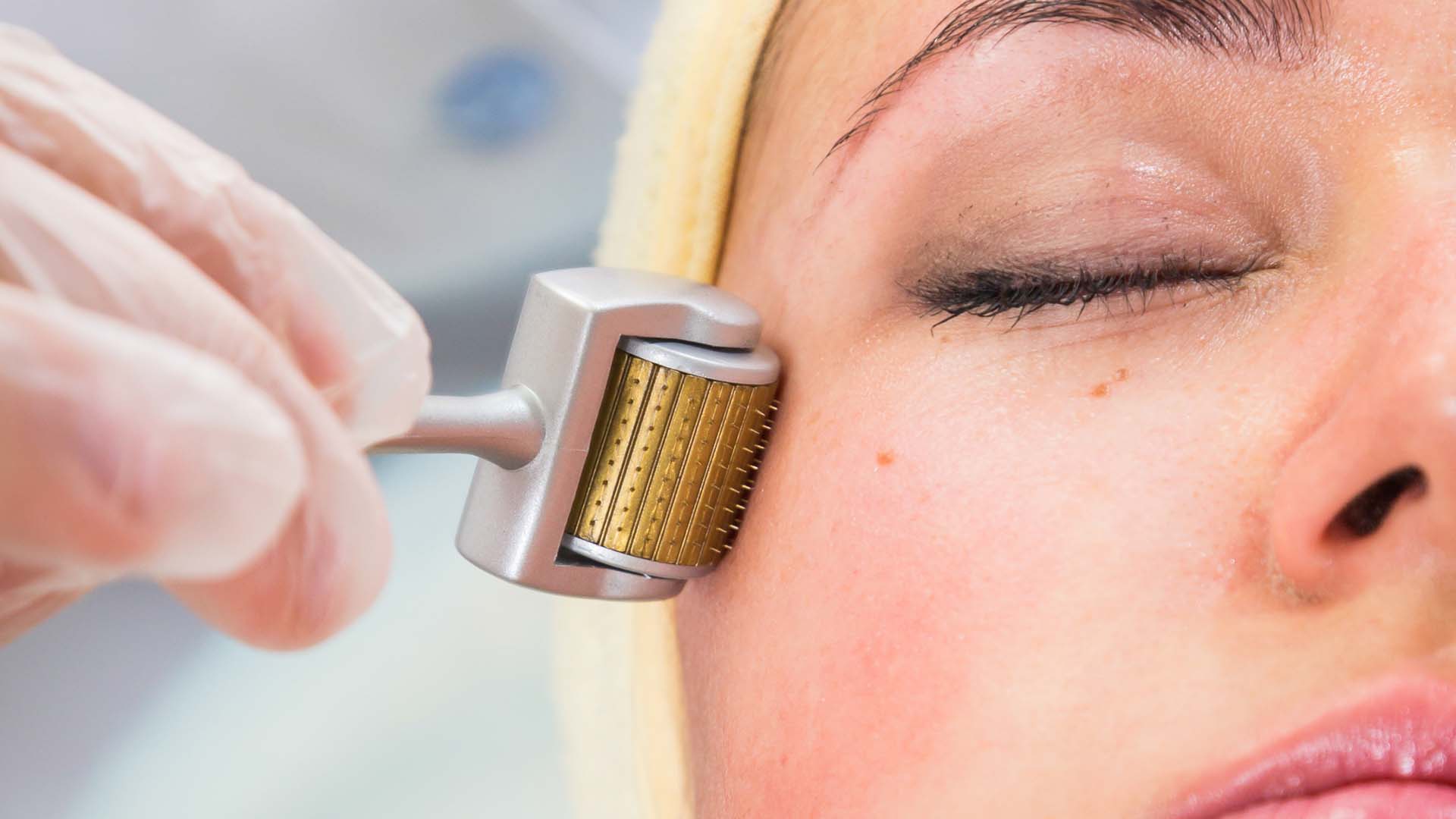
Dermaroller Treatment
Dermaroller treatment is a clinical skin-renewal procedure, carried out under the guidance of a specialist dermatologist, in which a cylindrical device containing hundreds of sterile micro-sized needles is moved in a controlled manner across the skin’s surface, opening thousands of microscopic holes that activate the body’s natural wound-repair mechanism and collagen synthesis, thereby smoothing out acne scars, spots, wrinkles, and enlarged pores.
What Is Dermaroller?
Dermaroller is a cylindrical, mechanical micro-needling device used in medical aesthetic and dermatological applications to improve skin quality, repair tissue damage, and trigger cellular renewal. On the rotating drum of this device sit hundreds of micro-needles made of titanium or stainless steel, ranging in length from 0.25 mm to 2.5 mm. When the Dermaroller is moved across the skin’s surface, it opens controlled, microscopic holes (micro-channels) that extend into the deeper layers without damaging the skin’s upper layer. This process awakens the skin’s self-protection reflex, initiating a natural biological renewal chain.
- Mechanical Triggering: Provides an entirely mechanical stimulation without creating thermal heat damage in the skin.
- Micro-Channels: Temporarily increases the skin’s permeability without breaking down the epidermis’s protective integrity.
- Transdermal Delivery: Radically raises the absorption rate of formulas applied to the skin during the procedure.
How Is Dermaroller Applied?
Dermaroller application is carried out by specialist clinicians through staged medical procedures, in full compliance with clinical hygiene and sterilization standards. Before the procedure, the area to be treated is deeply cleansed to remove makeup, sebum, and environmental grime. To ensure the patient’s session comfort, a topical local anesthetic cream is applied to the skin and left to numb for an average of 20-30 minutes. After the skin is purified with medical disinfectants, the Dermaroller device is moved over the surface with controlled pressure in horizontal, vertical, and diagonal directions to form a specific star pattern.
- Stage 1 (Sterilization): Fully purifying the application area and the device head of pathogens.
- Stage 2 (Needling): Scanning the device across the entire area with a homogeneous rhythm, according to the tissue’s elasticity.
- Stage 3 (Serum Injection): Applying hyaluronic acid or vitamins suited to the skin’s needs into the opened channels.
- Stage 4 (Soothing): Applying a medical mask to soothe the acute tightness and heat sensation at the end of the procedure.
Which Skin Problems Is Dermaroller Preferred For?
Dermaroller treatment is preferred for solving multi-dimensional aesthetic problems in which the skin’s cellular-level renewal speed has slowed, collagen quality has dropped, and structural deformations have accumulated. Because needle lengths can be chosen according to the patient’s complaint, the method can play an active role both in superficial discoloration and in deeper tissue loss. Its broad range of indications makes this mechanical procedure one of the fundamental pillars of non-surgical skin-rejuvenation protocols.
The main skin problems for which the application clinically gives the most effective responses are as follows:
- Sunken acne scars left in the deeper layers of the skin during the healing process of acne,
- Persistent spot and pigmentation problems formed due to sun exposure, aging, or hormonal changes,
- Eliminating fine lines, expression wrinkles, and sagging developing due to collagen loss,
- Tightening enlarged pore tissue arising from the loosening of pore walls.
Who Is Dermaroller Suitable For?
Dermaroller treatment is suitable for every adult who has lost radiance in their skin, is battling acne scars and spots, wants to delay signs of aging, and whose general health status does not present an obstacle to injection-type procedures. Since the system does not generate heat energy, the risk of spotting in dark-skinned individuals encountered with lasers does not exist with this method; therefore it can be safely used on every phototype. However, those with active, inflamed acne infection, those with skin diseases involving open wounds such as eczema or psoriasis, and people with a keloid tendency are not suitable candidates for this procedure.
| Skin Condition / Profile | Suitability Status | Clinical Rationale |
|---|---|---|
| Atrophic Acne Scars and Scar Tissue | Fully Suitable | Needles break down fibrotic bands beneath the tissue, filling in the pits. |
| Active Inflammatory Acne / Pustules | Not Suitable | The needling mechanism can spread inflamed bacteria across the entire face surface. |
| Dark Skin Phototype (Brown Skin) | Fully Suitable | Since there is no heat damage or thermal effect, the risk of triggering spots is minimal. |
| Sagging and Fine Wrinkles | Fully Suitable | Provides dermal thickening and tightening by stimulating natural collagen synthesis. |
Which Areas Can Dermaroller Be Applied To?
The drum width and needle-size options of the Dermaroller device allow it to be worked on both the body’s most sensitive microscopic lines and larger anatomical surfaces with thicker skin. The needle depth is chosen with millimetric precision according to the anatomical structure of the area to be treated; for example, minimal measurements such as 0.25 mm are preferred around the eyes, while this depth can be raised up to 2.0 mm on stretch-mark lines on the body.
The main areas of the body where the system is safely and successfully applied are as follows:
- Face and Forehead Area: For narrowing pores, treating acne scars, and achieving tone evenness,
- Eye Area (Crow’s Feet): For smoothing fine lines and lightening bruising by speeding up local circulation,
- Neck and Décolletage Line: For firming up the horizontal lines and sagging that develop with age in the neck area,
- Scalp: To allow medical cocktails used in hair-loss treatments to reach hair follicles directly.
Why Is Skin Analysis Important Before Dermaroller?
Every person’s skin thickness, sebum (oil) production rate, sensitivity level, and the chronicity of the damage they have experienced form a unique map; therefore, sessions applied by rote are far from bringing success. The clinical skin analysis performed by the specialist before the procedure enables determining how deep into the dermis layer the scars extend, and choosing the correct needle size to use. Choosing the wrong needle size can further stimulate melanocyte cells in a superficial spot problem, leading to the spot darkening; the analysis eliminates these risks.
- Correct Needle Length Determination: Determining the micro-needle size suited to the skin’s anatomical thickness, one that will not cause damage.
- Contraindication Screening: Checking whether there is a hidden active herpes (cold sore) or infection focus on the skin’s surface.
- Combination Needs: Clarifying the content of the serum cocktail (salmon DNA, vitamins, etc.) to be delivered into the channels.
How Is Dermaroller Treatment Planned?
The Dermaroller treatment protocol is planned on a staged schedule, according to the degree of the patient’s current skin deformation, their age, and the skin’s self-renewal (homeostasis) speed. No definitive solutions are promised over a single session while planning the process, since the collagen-weaving cycle of cellular structures is a cumulative biological process. In planning, the rest periods needed to let the skin repair itself between sessions are meticulously calculated.
- Stage 1 (Clinical Examination): The patient’s skin phototype, expectations, and the morphological structure of their scars are examined.
- Stage 2 (Determining the Period): Session intervals (generally 3-4 weeks) are entered into the schedule according to the skin’s sensitivity level.
- Stage 3 (Home Care Integration): Planning the home maintenance creams and sun-protection routines that will support session success.
How Many Sessions Does Dermaroller Application Take?
The total number of sessions for the treatment varies from person to person, depending on the depth of the damage the skin has been exposed to and the skin’s fibroblast-production capacity. While superficial dullness and mild pore problems can be resolved in a few sessions, long-established deep acne pits or embedded spots require longer-term clinical persistence. In clinical practice, courses of generally 4 to 8 sessions are recommended to achieve satisfying and permanent results.
- Mild Imperfections and Loss of Radiance: A protocol of 3 – 4 sessions is sufficient to restore skin quality.
- Spot and Pigmentation Problems: An average of 4 – 6 sessions is planned for even lightening of color.
- Deep Acne Scars and Pits: Intensified work of at least 6 – 8 sessions is needed to compensate for tissue loss.
How Long Does a Dermaroller Session Take?
Dermaroller application is a medical aesthetic procedure that adapts to the pace of an active urban life, with a relatively short and practical clinic-stay time. Most of the total session time consists of the time it takes for the topical local anesthetic cream, applied so the procedure is entirely painless and comfortable, to be absorbed beneath the skin. The needling stage is completed in an extremely short period, thanks to the cylindrical drum’s fast movement capability.
- Anesthesia and Preparation Stage: An average of 20 – 30 Minutes (Waiting for the topical numbing cream to take effect).
- Active Needling Stage: Approximately 15 – 20 Minutes (Scanning the entire face from different angles and delivering serum).
- Soothing and Mask Stage: 10 – 15 Minutes (Applying a soothing cold mask and repair cream).
How Does Dermaroller Support Collagen and Elastin Production?
The skin-renewing power of the Dermaroller device relies entirely on the human body’s natural wound-healing biology. When the device’s micro-needles reach the dermis layer, they open thousands of microscopic mechanical damage zones. The brain perceives these micro-holes as a major wound threat and initiates an emergency tissue-healing chain (wound healing cascade) in that area. With this signal, blood flow in the area increases radically, growth factors are secreted, and fibroblast cells are stimulated; fibroblasts then rapidly synthesize collagen and elastin fibers, the skin’s fundamental pillars, filling the damaged area with tight, fresh, new tissue.
- Natural Collagen Induction: Runs the skin’s own cellular factory without introducing any artificial substance from the outside.
- Epidermal Thickening: Enables skin integrity that has thinned and sagged with age to re-thicken with collagen networks.
- Increased Elasticity: Thanks to the production of elastin fibers, the skin’s capacity to resist gravity and bounce back increases.
Is Dermaroller Effective on Acne Scars?
Yes, like Dermapen, Dermaroller is also an effective method that has clinically proven itself in treating sunken (atrophic) acne scars formed as connective tissue is pulled downward while acne heals. The hardened, traumatic fiber bands located at the base of deep pits are physically broken up by the mechanical movements of the micro-needles. As these bands are freed, the intense collagen production beginning from below pushes the tissue upward; as sessions progress cumulatively, the base of the pits fades and rises, and the wavy surface gives way to smoothness.
- Mechanical Breaking of Scar Bonds: The process of loosening adhesions beneath the tissue with the help of needles.
- Volumetric Filling: Naturally filling the emptied pit areas with fresh connective tissue the skin itself produces.
- Surface Smoothing: Eliminates the shadowed look of the leg/face by softening the sharp edges of the scars.
Does Dermaroller Help Reduce the Appearance of Fine Lines and Wrinkles?
Yes, Dermaroller is one of the non-surgical rejuvenation tools most frequently used in medical aesthetics to reduce the appearance of fine lines and wrinkles. Due to aging, collagen production in the skin decreases by 1% every year after the age of 25, leading to sagging and wrinkles in the deep dermis. The mechanical needling done with Dermaroller forces aging fibroblast cells to work again at a high tempo; the newly woven collagen and elastin fibers fill the gaps beneath the wrinkles, tightening the skin from the inside out and noticeably lightening the depth of fine lines.
- Eye and Mouth Area Management: Blocks the deepening of crow’s feet and expression lines through mechanical stimulation.
- Tissue Tightening: Creates noticeable firming in cheek and jawline tissue that sags due to gravity.
- Renewed Elasticity: Increases the skin’s elasticity coefficient, making it more resistant to the effects of aging.
Is Chemical Peeling Effective on Acne Scars?
Chemical peeling is a highly effective method for treating superficial irregularities left on the skin’s surface after acne, enlarged pores, and especially persistent red/brown spots. The procedure is applied by putting medical acid agents such as Glycolic Acid (AHA), Salicylic Acid (BHA), or Trichloroacetic Acid (TCA) onto the skin at certain concentrations. These agents dissolve and peel away the stratum corneum, the topmost layer of dead cells on the skin; this disperses the melanin pigment in the deeper layers, the spots fade, and the skin tone becomes even.
- Sebum Control: Peels containing salicylic acid in particular clean out pores and also suppress new acne formation.
- Cellular Acceleration: Speeds up the cell renewal cycle (turnover), allowing spotted tissue to shed quickly.
- Surface Radiance: After regular sessions, the skin’s ability to reflect light increases and its dull appearance disappears.
How Does PRP Support Acne Scar Treatment?
PRP (Platelet Rich Plasma) is the injection of plasma fluid, obtained from the patient’s own blood and extremely enriched with clotting cells called platelets, into the damaged tissue. Platelets are cells directly responsible for repairing tissue when an injury occurs in the body, and they carry very high amounts of growth factor. In acne scar treatment, PRP alone cannot fill deep pits; however, when combined with procedures that create micro-damage to the skin, such as laser or medical needling, it cuts the skin’s healing time in half and maximizes the quality of collagen production.
- Growth Factor Support: Stimulates stem cells at the injection site, initiating the production of new, healthy tissue.
- Rapid Tissue Repair: Speeds up recovery from the redness, swelling, and crusting that occur after laser or micro-needling procedures.
- Natural and Safe: Since the patient’s own blood is used, it carries absolutely no risk of allergy, reaction, or tissue rejection.
How Does the Healing Process Proceed After Dermaroller?
The healing phase after a Dermaroller session proceeds extremely comfortably and quickly, since it is a minimally invasive procedure that does not involve surgery. Immediately after the procedure, a sunburn-like sensation and pinkening on the skin is a natural reaction indicating that the nervous system has been stimulated. The process follows a straight line; the intense redness of the first days gives way to a mild drying phase as the skin’s upper layer refreshes itself, and is completed within a short time.
- First 24 Hours: A vivid pinkness and mild tissue edema on the face is inevitable; the redness tends to subside within hours.
- 48 to 72 Hours: Fine, flour-like flaking and dryness may be felt on the skin’s surface due to the effect of cell renewal.
- Day 5 Onward: The flaking ends entirely; fresh, radiant new skin tissue emerging from below, with tightened pores, becomes clear.
What Should Be Paid Attention to After Dermaroller?
The success of the session depends as much on the professional needling done in the clinic as on the patient fully adhering to the medical protection rules they apply at home afterward; because the skin, with its newly closed channels, is extremely sensitive to external factors. Even the smallest hygiene or care neglect can disrupt the structure of the fresh tissue, laying the ground for irritation or unwanted discoloration. The patient must respect the skin’s natural healing rhythm.
- Water Restriction: The face must absolutely not be washed for the first 24 hours after the procedure; the skin should have no contact with water at all.
- Makeup Ban: Heavy, pore-clogging cosmetics such as foundation and powder should not be applied for the first 48 hours.
- Heat and Chemical Restriction: Sauna, Turkish bath, tanning beds, hot showers, and heavy sports causing excessive sweating should be cut out for at least 1 week.
- Intensive Moisturizing: Hyaluronic-acid-containing repair and epithelializing creams recommended by the specialist should be applied generously.
Why Is Sun Protection Important After Dermaroller?
After micro-needling, the skin’s topmost protective layer, the stratum corneum, temporarily becomes sensitive, and melanocyte (color-producing) cells enter an extremely sensitive phase against external factors. Exposing the skin unprotected to the sun’s ultraviolet (UV) rays during this stage triggers melanocytes to secrete pigment uncontrollably as a defensive reflex. As a result, persistent, dark-colored new sun spots called “Post-inflammatory Hyperpigmentation” can occur on the skin; sun protection is the most uncompromising stage of the process, to prevent the treatment from turning into a spot.
- Zeroing Out Spot Risk: Preventing UV rays from creating pigmentation damage in the healing, fresh tissue.
- High-Factor Protection: Mineral medical sunscreens with at least SPF 50+, zinc- or titanium-dioxide-based, should be chosen.
- Continuous Reapplication: Sunscreen should not just be applied once in the morning and left; it should be regularly renewed every 2-3 hours during the day.
What Are the Advantages of Dermaroller Application?
Among non-surgical skin-renewal alternatives, Dermaroller is a powerful system that has maintained its clinical popularity for many years thanks to both its practicality and its high safety profile. By mechanically bypassing the epidermal barrier that cosmetic creams cannot get past, it offers the luxury of directly intervening in exactly the layer the skin needs. It is an economical process with high biological compatibility.
- No Thermal Damage: Does not carry risks such as burns or permanent post-procedure spotting that can be seen with laser systems.
- Suitable for Every Skin Type: Can be safely applied all four seasons of the year, regardless of how dark the skin tone is.
- Fast Social Recovery: Healing time is very short and effortless; patients fully return to normal comfort within a few days.
- High Absorption Boost: Increases the rate at which applied medical serums reach the deeper layers of the skin by over 200%.
Which Procedures Can Dermaroller Be Applied Together With?
Because the micro-channels opened by Dermaroller maximize the skin’s transdermal absorption capacity, combining this method with other medical aesthetic protocols radically raises the clinical success rate obtained. Combinations planned simultaneously or sequentially are the most rational way to heal both the top and bottom of the skin at the same time. Which procedure is chosen alongside it is determined according to the clinician’s skin analysis result.
- PRP Treatment: Absorbing growth factors taken from the patient’s own blood through the channels doubles the tissue-repair speed.
- Mesotherapy Cocktails: Delivering salmon DNA, brightening agents, or peptides to the deepest layer through the channels provides intensive nourishment.
- Youth Vaccines: Combining vaccines containing pure hyaluronic acid with needling raises moisture-retention capacity to its peak.
What Are the Side Effects of Dermaroller Treatment?
Dermaroller is a medical-grade application with a high safety profile, and since it does not involve surgery, it does not carry a risk of permanent or systemic side effects. The temporary redness, mild tissue edema, feeling of tightness, and flour-like flaking in the first few days that develop right after the session fall into the class of “expected local reactions.” These findings are the tissue’s natural repair response to mechanical stimulation and heal entirely on their own within days, without requiring any medical intervention.
- Temporary Erythema: A pinkness that fully subsides within 24-48 hours, depending on skin sensitivity.
- Mild Dryness: A temporary drying sensation caused by increased moisture need during the cell-renewal process.
Frequently Asked Questions About Dermaroller
Below are the most common practical concerns in the minds of people considering turning to Dermaroller micro-needling protocols, along with their straightforward, unfiltered medical answers:
Is there a lot of pain or bleeding during a Dermaroller session?
Because clinically strong local anesthetic (numbing) creams are applied to the skin before the procedure, the sensation felt during the session consists only of a slight vibration and tingling feeling; unbearable pain is absolutely not a concern. Depending on increasing the needle depth for scar treatment, micro-level pinpoint blood seepage may occur at the moment of the procedure; however, this stops on its own within seconds.
Are home-sold Dermaroller devices the same as clinical applications?
They are absolutely not the same, and applications carelessly done at home carry high risk. The needle quality, sterilization, and millimetric size of clinical devices, according to the patient’s skin thickness, are chosen by a specialist. Low-quality devices used randomly at home can scratch the skin’s surface due to dulled needle angles, create micro-tears, and lead to infection, causing new permanent spots (PIH) to form.
Does Dermaroller application completely eliminate the pores on the face?
Pores are living biological structures that allow our skin to breathe and secrete sebum; therefore, no dermatological procedure can “completely eliminate” pores, and eliminating them would not be healthy either. However, Dermaroller increases collagen production in the pore walls, allowing loosened, enlarged pore openings to tighten, narrow, and reach an aesthetic form smooth enough that they are not noticeable from the outside.
Is it safe to get Dermaroller treatment during summer?
Since Dermaroller is not a laser procedure, does not generate heat energy, and does not chemically peel the upper layer of the skin, it can be safely applied all four seasons of the year, including summer. The only rule to pay attention to in summer is not to sunbathe directly until the needle punctures fully heal, in the first 3 days after the procedure, to stay away from pool/sea water due to infection risk, and to never neglect a high-factor sunscreen.
Is the smoothing effect achieved after treatment permanent?
The new tissue woven beneath acne scars and lines as a result of the collagen synthesis triggered by Dermaroller is the skin’s own cell; therefore, unlike temporary fillers, it does not dissolve and disappear after a certain period — the success achieved is permanent. However, the aging cycle of human skin due to age and environmental stressors cannot be stopped. For this reason, a touch-up session once or twice a year is recommended to preserve the form gained.
Who Are We? & About Özel Demiderm Polyclinic
Özel Demiderm Polyclinic is a licensed healthcare institution that combines its long-standing clinical experience in dermatology, medical aesthetics, and non-surgical skin-renewal technologies with the latest scientific infrastructure to provide corporate healthcare assurance to its clients. In its Dermaroller Therapy protocols, carried out to eliminate scars, spots, and enlarged pores that develop on the skin’s surface and sabotage quality of life and aesthetic integrity, it produces permanent and safe solutions by centering evidence-based medical disciplines and personalized dermatological analysis.
In all medical interventions carried out within Demiderm Polyclinic, the principles of absolute sterilization, high patient safety, transparency, and honesty are operated with uncompromising commitment. In our clinical practices, medical-grade original Dermaroller technologies are meticulously applied by our expert staff, using millimetric needle sizes according to the patient’s scar grade, skin phototype, and barrier structure. Our goal is not to offer rote package programs, but to analyze the barrier quality of every client’s skin with a discerning eye, achieving maximum session comfort and the highest tissue smoothness without harming the skin. If you are tired of seeing the shadows of your acne scars, spots, or pores whenever you look in the mirror, and want to begin your treatment process with scientific assurance in an expert polyclinic setting, you can confidently begin your journey toward change and lasting smoothness by contacting the expert staff of Özel Demiderm Polyclinic for your detailed skin analysis.