
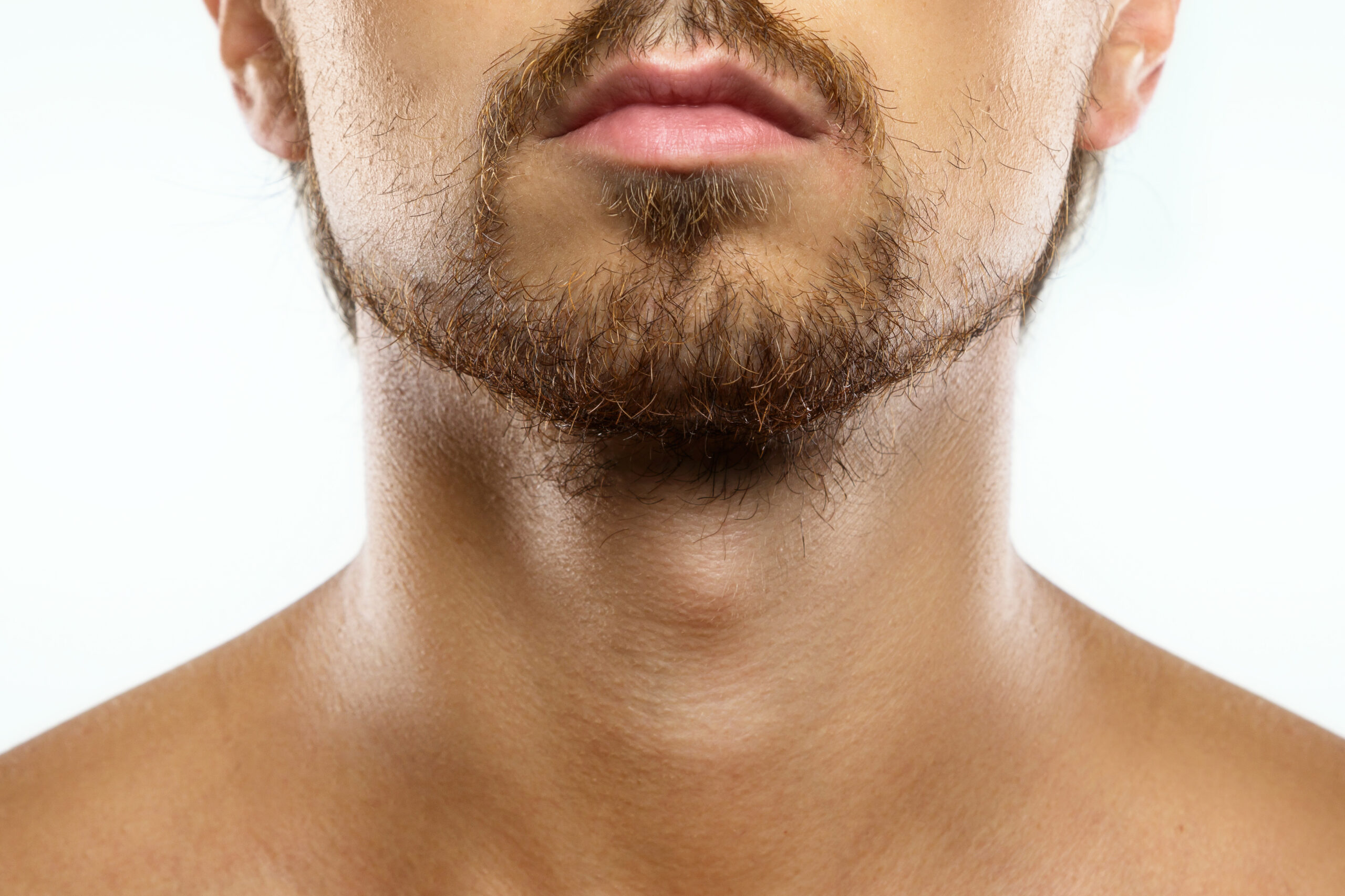
Professional beard transplantation treatment is a microscopic autologous tissue transfer service based on the principle of transplanting live grafts—homogeneously harvested with micro-punch tips from the hair loss-resistant donor area of the nape—with millimetric precision, strictly adhering to the facial golden ratio parameters and natural hair growth directions, in order to eliminate hair follicle losses occurring due to hereditary lack of beard growth, hormonal fluctuations, or traumatic burn and incision scars.
What is Beard Transplantation?
Beard transplantation is an autologous live tissue transplantation that reinforces facial aesthetics and maxillofacial integrity, offering a definitive solution to permanent hair thinning in the chin and cheek corridors. In male anatomy, the beard and mustache areas mature as a secondary sexual characteristic from puberty onwards under the stimulation of the dihydrotestosterone (DHT) hormone. The beard transplant operation is based on the hierarchy of transferring follicular units—which are insensitive to the DHT hormone in the nape region and possess lifelong anti-shedding genetics—to the gaps on the face without losing their viability and vascularization potential. This process is not an artificial fiber placement or a cosmetic simulation; it is a biological facial restoration based on the principle of the transplanted live roots re-locking into their new bed via capillary vessel networks (the angiogenesis phase).
- Autologous Cell Power: Since the patient’s own tissue is utilized, there is no risk of the body developing a foreign body reaction or tissue rejection.
- Follicular Unit Stability: Charting graft structures containing single and fine hair strands with micron-level resolution.
- Permanent Integration: The biology of follicles adapting to the androgenic structure of the beard tissue in their new bed, maintaining their lifelong growth capacity.
Who is Beard Transplantation Suitable For?
Micro-surgical beard transplantation procedures are medically suitable for individuals who genetically have no beard growth at all (confirmed hereditary bareness), who have insidious patch-like gaps in their beard lines (alopecia areata scars), or who have lost hair follicles due to past accidents in the facial region. The process is verified by laboratory check-up tests proving that the patient’s general immunity and healing potential can tolerate surgical interventions. However, this transplantation protocol is not medically suitable for cases that do not harbor a sufficient volume of healthy follicles for transplantation in the nape area (accepted as the donor site) or who have active, acute skin diseases with ongoing inflammatory phases.
- Those with Asymmetry in the Facial Oval: Male patients whose beard line is irregularly distributed and whose hair density in the chin and cheek contours is not homogeneous.
- Those Carrying Traumatic Scars: Individuals whose hair roots in the facial skin have been completely claimed as a result of surgical incisions, acne scars, or burns.
- Those Targeting Density Increase: Clients whose existing beards have thin shafts (vellus hair consistency) and who desire a thicker, more masculine jawline.
In Which Situations Can Beard Transplantation Be Preferred?
Preferring permanent follicle transplant surgeries over temporary cosmetic concealers or non-evidence-based methods such as beard serums is indicated as a definitive medical rule in cases where hair roots in the facial skin are irreversibly lost. Just as in hair clinics, when the root is completely dead in the facial region, no externally applied lotion can create a cell out of nothing. The surgeon rationally decides on this micro-surgical workflow to permanently restore the patient’s masculine facial projection and to rebuild the contours of the lower jawbone (mandible) and the mustache order according to the facial golden ratio parameters.
| Facial Beard and Mustache Clinical Presentation | Surgical Preference Criterion and Reason | Expected Ultimate Histological Output from the Operation |
|---|---|---|
| Congenital Bareness (Absence of Beard) | Genetic lack of hair germs in the chin and cheek quadrants post-puberty. | Building a real, growing, and shaveable beard from scratch, in harmony with facial contours. |
| Localized Patch-Like Thinning (Gaps) | Formation of local smooth, shiny skin craters due to alopecia areata or trauma. | Homogeneous tissue coverage completely equalized with the color and thickness of existing beards. |
| Scar (Wound / Burn) Tissue Areas | Disappearance of capillary vascularization and roots due to the hardening of connective tissue. | Roots infiltrated with micro-sections over the fibrosis re-registering viability. |
| Cross-Connection Break Between Mustache and Chin | Inability to integrate the mustache line above the lip with the chin beard corridors. | The phase of reinforcing the masculine facial aesthetic golden ratio order with an uninterrupted line. |
How is Beard and Facial Analysis Performed Before Beard Transplantation?
Beard and facial analysis is the most vital pre-operative check-up phase that detects the facial aesthetic axis lines and mathematically models the efficiency coefficient to be obtained from the surgery. In this phase, the specialist magnifies the structure of existing facial hair with the help of digital micro-cameras called trichoscopes. During the analysis, the sebum (oil) balance of the cheek and chin skin, the number of active beard strands per cm², and the thickness levels of the existing hair in microns are scanned layer by layer and accurately recorded on the patient’s digital facial aesthetic card. The ideal transplantation boundary lines are verified by measuring the width of the vertical lower third segment of the face.
- Hair Shaft Thickness Charting: Measuring the existing beard diameter and matching it with the thickness of the donor hair root to be selected from the donor area.
- Skin Undertone Scanning: Auditing the suitability of the vascular structure of the facial mucosa and skin for surgical needling steps.
How is the Donor Area Evaluated in Beard Transplantation?
Donor site inspection is the most uncompromising surgical safety rule that draws the mathematical boundary lines of beard transplantation and calculates the maximum graft dose that can be harvested without causing permanent thinning damage in the rear area. In beard transplantation, the primary donor area is the two behind-the-ear lines and the nape line. However, by the nature of beard transplantation, facial hair mostly contains single follicles; therefore, it is planned to meticulously separate the multiple (double, triple) roots within the grafts collected from the nape area into single fibers under a microscope. If the hair quality at the nape remains too thick, the cheekbone or sub-mental (under the neck) beards can also be registered as alternative donor areas.
- Single Graft Capacity Calculation: Verifying the maximum number of single follicular units that can be extracted from the nape area without disrupting donor integrity.
- Tissue Elasticity Coefficient: The phase of measuring the oxygenation capacity in the lower layer of the donor skin via surgical pin pressure tests.
How is Beard Transplantation Treatment Planned?
The planning of the beard transplantation workflow is conducted through a step-by-step algorithm based on the patient’s age lines, cheekbone curves, lower jawbone (mandible) corners, and the depth degree of the hairless areas. Lines are absolutely never drawn by rule of thumb during planning; all planning is designed over aesthetic virtual simulations fully synchronized with the facial golden ratio parameters. In planning, the density hierarchy with which the grafts harvested from the donor site will be distributed to which regions (mustache, chin, cheek) is rationally verified before the surgery.
- Design of the Beard Boundary Line: Drawing the sub-mental Adam’s apple border and the upper cheekbone lines in harmony with the patient’s facial expressions.
- Regional Density Calibration: A hydraulic distribution plan allocating 40-45 grafts per square centimeter to the tip of the chin and 30-35 grafts to the cheek transition corridors.
- Vectoral Angle Mapping: Mapping the orientation angles extending 10-15 degrees downward on the cheek and parallel to the bone curve on the jawline.
What Are the Methods Used in Beard Transplantation?
In modern facial micro-surgical practices, two main microscopic transplantation methods based on evidence and displaying maximum loyalty to tissue integrity are deployed, registered according to the harvesting and placement morphologies of the follicles. The specialist does not blindly impose a single methodology on the patient; they bring the technological variation that will offer the highest survival rate into the field according to the chronicity of the openness and the donor hair shaft quality. All of these methods have completely assigned old-fashioned, distressing patterns that leave stitch scars to history.
- FUE (Follicular Unit Extraction) Beard Transplantation: A popular method for covering wide cheek areas, where grafts are collected one by one with micro-motor tips and then placed with forceps into channels opened with sapphire blades.
- DHI (Direct Hair Implantation) Beard Transplantation: An advanced system where harvested roots are placed inside micro medical pen needles called “Choi Implanters,” executing the channel opening and root implantation phases simultaneously onto the facial skin in a single movement within the same millisecond.
How is FUE Beard Transplantation Applied?
The Sapphire FUE beard transplantation workflow is a two-stage surgical procedure executed by means of micro-blades manufactured from specialized anti-bacterial sapphire stone to apply minimum trauma to the delicate skin tissue of the face. After the single roots collected from the donor area are prepared, a local anesthesia block is applied to the facial region. The surgeon prepares micro-slits (channels) in the cheek and chin skin using sapphire tips at much narrower angles (10-15 degrees) compared to hair transplantation. Following the opening of the channels, the single follicles kept in special nutrient fluids are placed into the slots one by one with micro-forceps tips, completing the sealing with razor-edge smoothness.
- Sapphire Tip Advantage: Unlike metal blades, a crystal incision geometry that does not cause tearing in the tissue and reduces facial edema and swelling risks to a minimum.
- Step-by-Step Follow-up: The order of first opening the cheek slots completely, then transitioning to root assembly.
How is DHI Beard Transplantation Applied?
Registered as the Choi pen protocol, DHI beard transplantation is the most visionary facial micro-transplantation method that completely eliminates the pre-channeling stage in the facial skin, offering the flexibility of being conducted in a single stage and without shaving. In this system, single live roots harvested from the donor area are linearly placed inside hollow titanium Choi needles under a microscope by the nursing team. The surgeon touches the facial skin with the tip of the pen at an angle (10 degrees) suitable for the hair’s natural growth vector; at the exact millisecond the hydraulic piston at the back of the pen is pressed, the pen opens the needle slot while simultaneously infiltrating the root beneath the mucosa, completing the assembly.
- Zero Pre-Channel Damage: Radical shortening of the post-operative crusting and redness period since extra incision lines are not created on the face.
- Maximum Density Capacity: The luxury of weaving through existing beard hairs and filling the gaps with a density of 60 grafts without damaging old beards.
How Do the Graft Harvesting and Placement Processes Progress in Beard Transplantation?
Harvesting follicular units from the donor site and transplanting them to the face is an advanced surgical phase with a high technical focus, carried out in polyclinic operating rooms subject to a strict sterilization chain. In the first stage, ultra-thin titanium perforated punches with a diameter of 0.6 mm – 0.7 mm, matching the patient’s hair follicle diameter exactly, are attached to the tip of the micro-motor device. Approaching at an angle fully parallel to the vertical subcutaneous growth axis of the hair strand, the punch tip shaves the cortical connective tissue around the follicle with a micron-level circular incision; the loosened live tissue unit is pulled away from the socket with forceps. During the placement phase, these roots are added to the beard quadrants one by one, taking into account the movement directions of the facial muscles (expression muscles).
- Single Fiber Separation: Meticulously separating double and triple hair clusters within the nape roots under a microscope (to prevent double hairs from growing on the face).
- Depth Stability: Placing the roots into the stratum basale layer of the facial skin with milimetric precision; if it remains superficial, the follicle dries out and the process is sabotaged.
How is a Natural Appearance Achieved in Beard Transplantation?
The seamless, natural form stability that ensures no artificial transplantation can be detected from the outside when looking in the mirror at the end of the beard transplantation steps depends on the rules of “vectoral horizontal angle” and “single graft arrangement.” The most major surgical error is transplanting the beard at sharp and upright angles (30-40 degrees) as in hair transplantation; this causes the beard to grow straight out on the face (in a hedgehog or grass-head silhouette). Naturalness is verified by processing the beard hair horizontally at ultra-narrow angles of 10-15 degrees as if it were virtually glued to the facial skin, and by arranging only the finest single follicles asymmetrically on the foremost cheek boundary lines.
“The secret to flawless naturalness in beard transplantation lies not just in making the hair grow, but in those hair strands growing at angles compatible with your cheek muscle lines, extending completely flat against the skin to grant your face an authentic expression of masculinity.”
How Long Does the Beard Transplantation Procedure Take?
The active surgical session duration in the chair for beard transplantation operations requires a specific time management in the medical calendar, depending on the total number of grafts planned for transfer and the preferred surgical methodology (FUE/DHI). In beard transplantation, massive numbers like in hair transplantation (4000-5000 grafts) are usually not required; an average of 2000 – 3000 grafts is completely sufficient to weave a full beard-mustache line for a bare-faced patient. A beard transplant session of this volume is completed with meticulous workmanship, usually taking a total of 4 to 5 hours, including pre-operative anesthesia steps.
- Harvesting (Root Collection) Stage: The period of homogeneously collecting roots from the nape area with ultra-thin punches; approximately 1.5 hours.
- Assembly (Implantation) Stage: Processing the collected single roots into the cheek, chin, and mustache slots with milimetric pens or forceps; approximately 2.5 – 3 hours.
What Are the Anesthesia Methods Used in Beard Transplantation?
High safety profile anesthesia technologies are deployed in modern facial surgery to zero out the patient’s psychological stress coefficient during surgery and to completely block pain transmission lines in the facial area. Facial skin is much more delicate compared to scalp skin and is extremely rich in nerve endings; therefore, computer-controlled, needle-free digital anesthesia units are a primary rule to eliminate the pressure sting that traditional syringe needles can create face-to-face. Furthermore, for sensitive clients whose surgical room anxiety runs high, a light 15-minute sedation (semi-sleep) support under the supervision of an anesthesiologist is successfully integrated to manage the process in a state of complete relaxation.
How Does the Healing Process Progress After Beard Transplantation?
Thanks to the face’s high blood circulation speed (vascularization quality), the post-operative tissue recovery phase progresses with much faster, more predictable, and linear steps compared to hair transplantation. During the first 48 hours following the surgery, the formation of red dots about the size of a mosquito bite and mild facial edema (swelling) due to micro-coagulation around the needle entry holes is a completely natural physiological reaction given by the extracellular matrix. The process flows smoothly; at the end of the 10th day, the crusting in the transplantation area sheds through special medical washing protocols, verifying the stitch-free comfort standard.
- First 72 Hours: Adhesion of the roots to the facial mucosa; the period when leaking fluids in the donor area begin to dry up.
- Between the 2nd Week and 1st Month (Shock Loss): The biology of transplanted beard shafts shedding temporarily while the root remains viable and transitions into a new hard hair production phase (this is completely normal).
- 3rd Month and Beyond: The phase where permanent hard beard hairs emerge from the revived follicles, verifying the ultimate masculine volume in a phase observable with the naked eye.
What Should Be Considered After Beard Transplantation?
The care discipline the patient follows in the home environment after the surgery is of vital importance to render the biological success of live follicle transplantation permanent and to support the newly injected roots’ stability in drawing blood from facial capillary beds. Since the transplanted roots are not yet tightly locked into the facial mucosa during the first two weeks, remaining as delicate as loose, leaking cotton threads, maintaining the patient’s homeostasis balance is a medical necessity.
The medical rules that must be meticulously observed at home during the critical post-operative period are as follows:
- For the first 10 days, sleeping must be on the back and face-down sleeping must be completely eliminated to prevent the transplanted cheek and chin areas from rubbing against the pillow and dislodging the roots.
- For at least 2 weeks, big yawns, loud laughter, and hard chewing movements that excessively stretch the facial muscles (expression muscles) must be avoided; soft/liquid diets should be implemented.
- For the first 1 month, the consumption of cigarettes, tobacco products, and alcohol must be completely ceased so as not to paralyze the micro-cell repair mechanisms in the donor and transplantation sites.
- For at least 30 days, sauna, Turkish bath, solarium, and heavy cardio sports activities must be postponed to prevent graft leakage from pores through facial sweating.
How Should the Shaving and Care Process Be After Beard Transplantation?
Post-operative hair grooming and barber routines contain a chain of strict medical rules to prevent newly transplanted delicate grafts from dislodging, and to mute infection risks by softening wound scabs. While the facial skin is healing, the blade pressure of razors or electric shavers can completely tear fresh roots away; therefore, the shaving calendar is divided into stages over time.
- Medical Washing for the First 10 Days: Washing the face gently every day with specialized shampoo foams using finger pads without friction, shedding the scabs.
- 1st Month Scissors Shaving Phase: When the beard grows during the first 30 days after the surgery, a razor must absolutely not be used; length reductions should only be done superficially with the help of scissors.
- 6th Month Razor Shaving Freedom: The requirement that normal razor or machine shaves can be safely transitioned to only after the roots establish full calcification binding integrity with the jawbone and periosteal tissue (from the 6th month onwards).
What Factors Affect the Longevity of Beard Transplantation?
The ability of medical beard transplantation to remain within cheek and chin boundaries for long years without shedding or losing its direction depends directly on the “technical workmanship quality” during the operation and the long-term nutritional hygiene meticulousness of the patient working in perfect coordination. Roots collected from the nape region genetically possess lifelong anti-shedding coding; however, the sole element determining the long-term success of the prosthesis is that no mechanical damage was inflicted on the live nerve bed of the follicle (the bulbus line) during the attachment moment.
- Moisture and Solution Balance: The safety of preserving roots in hypothermosol fluids at the correct temperature while outside the body; if the root dries, permanence collapses by 80%.
- Micro-Circulation Reinforcement: Adding medical hair/beard care courses recommended by the physician to the schedule to keep blood flow quality high in the facial tissue post-surgery.
What Are the Advantages of Beard Transplantation?
Among holistic facial restoration processes, beard transplantation surgery is the most visionary investment that rebuilds the facial golden ratio parameters by bringing patients who experience loss of self-confidence in social settings due to bareness or scars to a lifelong permanent, natural, and masculine beard integrity. Completely muting mucosal irritations that temporary concealing cosmetic dyes might bring, it offers the patient the chance to shine with their own true hair tissue.
- Masculine Jawline Construction: The power to sharpen facial symmetry by camouflaging weak or retruded lower jawbone contours with beard density.
- Permanent Coverage of Scar Imperfections: The luxury of seamlessly masking insidious acne craters and burn lines on the face with firmly growing hair roots.
- Lifelong Permanent Style Freedom: The dynamism standard allowing the patient to grow the transplanted beard as they wish, leave a stubble, or shave clean-shaven.
With Which Applications Can Beard Transplantation Be Planned?
Medical beard transplantation technology can be planned in a combined synergy with other modern instruments of medical aesthetics and dentistry to holistically elevate the aesthetic architecture of the lower facial oval and the facial frame rigidity. While upper beard lines are woven with pens, lower jawbone boundaries or hair thinning can be treated simultaneously with different robotic units; the combination calendar is designed by the expert physician.
- Autologous PRP / Hair Mesotherapy (Allied Course): Injecting plasma growth factors into the facial skin to facilitate rapid fusion of the transplanted roots with facial capillaries after beard transplantation.
- Hair Transplantation (Combined Surgery): Processes where both bald areas and beard gaps are treated with a joint harvest on the same day in a single operating room session for patients sharing the same donor nape area.
What Are the Frequently Asked Questions About Beard Surgery?
The most common practical concerns arising in the minds of clients planning to get rid of hair loss in facial lines and have permanent facial frame reinforcement, along with their clear medical matches in medical standards, are presented below:
Will I feel a lot of pain or ache while roots are being placed into my cheek and chin skin during the beard transplantation operation?
No, absolutely not the slightest unbearable pain or ache sensation awakens. Before punch tips or sapphire blades touch the operation site, local anesthetic solutions are infiltrated into the facial mucosa with computer-controlled, needle-free digital anesthesia devices at a speed suitable for tissue resistance, providing full blockage; since all nerve transmission lines are completely closed throughout the session, you only perceive the coolness of the water and the gentle touch rhythm of the devices, ending the procedure extremely comfortably.
When the roots taken from the hair are transplanted to my face, will they grow hard like a beard, or will they grow in the form of long hair?
This is a very insidious microscopic concern frequently encountered among parents and adult patients. The rule of “donor dominance” is operated in tissue transplantation medical literature; however, androgenic male hormones (testosterone) in the facial skin modify the cellular structure of the transplanted hair roots over time. As the roots feed on the hormonal pH fluids of the face, they thicken, harden, and at the end of 1 year, they begin to grow with 100% the same hardness and curl as your original beard hair morphology, they do not grow straight like hair.
In the 3rd week after the surgery, all my transplanted beards suddenly started to shed flakily, did the operation fail?
No, this is a completely normal, expected, and mandatory biological part of transplantation processes, called “Shock Loss” in facial surgery histology. Hair shafts exposed to trauma enter a breaking and shedding phase, but the live cell root underneath is tightly locked into its bed; from the 3rd month onwards, your new hard beard strands that will remain permanent for life begin to emerge from those sleeping roots with a smooth line, there is no need to worry.
Will permanent bald holes or scars remain in the nape area used as the donor site after the beard is transplanted?
No, this is medically impossible in microscopic cases planned with the correct technique. Since the titanium punch tips used during the root collection stage are of microscopic diameters like 0.6 mm, and work is conducted within the homogeneous order of the nape hair (taking only 1 out of every 4 roots), a permanent bald window or a surgical scar line strip definitely does not form in the donor area; socket holes close without stitches in 3 days.
Can I return to my normal professional and daily life immediately on the day the beard transplantation operation is completed?
Yes, beard transplantation surgeries are entirely local micro-surgical works that do not carry general anesthesia weight, do not cloud consciousness, and do not slow down motor muscle reflexes; therefore, the exact second the session ends, you can stand up from the chair and continue your normal daily, professional, social, or academic life rhythm from where it left off with bright self-confidence without even needing a companion; you can drive a car, there is no obstacle to travel.
Who Are We? & Private Demiderm Polyclinic
Private Demiderm Polyclinic is a licensed health institution centered around corporate medical discipline in branches completing modern facial integrity, primarily medical aesthetics, dermatology, laser technologies, hair and beard health solutions, and holistic rejuvenation applications. Instead of abandoning hair losses, mucosal deformations, or facial symmetry erosions to the distressing patterns of insidious and temporary cosmetic concealers, our center gives vital importance to executing “biological tissue-protective surgical” principles with evidence-based clinical data, and unwaveringly runs Digital Diagnostic Mapping and Advanced Technology Beard Transplantation Restoration ecosystems with calendar discipline from the very beginning to the end of the clinical operation workflow.
Under the roof of Private Demiderm Polyclinic, all diagnosis, digital scanning, design, and microscopic tissue activation interventions are operated in full compliance with medical regulations by charter, ensuring absolute sterilization, high patient safety, transparency, and honesty principles. In our clinical practices, while analyzing the micro and macroscopic follicle quality of the cheek skin with the help of digital trichoscope units, smart photo-thermal units that coagulate vascular integrity during the operation and ultrasonic surgical systems that do not damage surrounding hard tissue are applied with millimetric precision under the supervision of our expert staff. Our goal is not to impose old-fashioned, slow, distressing analog intervention patterns on our patients; but to meticulously analyze each individual’s facial golden ratio boundaries, occlusion mechanics, and hair follicle Miller density class scores before the operation, obtaining vibrant and lush beard integrity that you will use with maximum session comfort without damaging surrounding soft tissues, a standard of practicality lasting seconds, and unshakeable trust for life. If you are tired of your beard thinning and the fading form of your facial features when you look in the mirror, yet you postpone your checks due to fear of surgical risks or time constraints, and you wish to start your smart digital treatment process from start to finish with scientific assurance in an expert corporate polyclinic environment; you can contact the expert staff of Private Demiderm Polyclinic to safely take your health and facial integrity under protection in line with your detailed examination.