
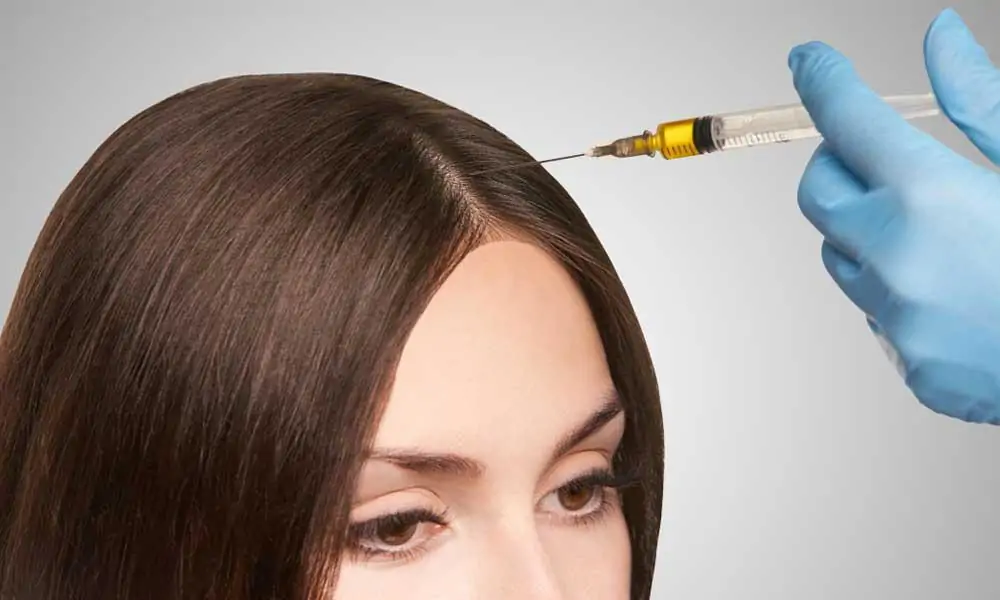
What Is PRP Hair Treatment?
PRP hair treatment (Platelet Rich Plasma) is a proprietary biotechnology discipline referred to in the medical literature as autologous regenerative biotherapy, based on the principle of maximizing the body’s own healing potential at the level of the hair follicles. When hair roots weaken due to environmental stress, hormonal fluctuations (the suppressive effect of the DHT hormone), or inadequate nutrition, they enter a process of miniaturization and shed. The PRP system involves separating the formed elements of the blood in the laboratory, concentrating the platelet density to a supersaturated level 4 to 8 times above the normal peripheral blood level, and injecting this directly into the scalp. Carried out without loading any artificial chemicals or drugs from outside, this process is an entirely bio-compatible cellular repair mechanism.
- Autologous Nature: Because the material is produced from the patient’s own blood, the risks of allergy, infection, and tissue rejection are eliminated.
- Growth Factor Boost: Vital proteins such as PDGF, TGF-beta, VEGF, and EGF accelerate the rate of subcutaneous cell division (mitosis).
- Triggering Angiogenesis: The biology by which injected plasma weaves micro-capillary networks in the damaged or weakened area, restarting the nourishment of the follicles.
How Is PRP Hair Treatment Applied?
The PRP injection procedure carried out in the clinic room is an extremely practical and dynamic biological workflow, conducted with outpatient comfort, that entirely eliminates the heavy stitching or incision-related distress that analog medical operations can bring. The process begins by drawing blood from the patient’s arm vein into proprietary vacuum tubes; the drawn blood is transferred within seconds to special robotic centrifuge units, where it is separated into its fractions. The resulting golden-colored premium platelet-rich plasma fluid is then infiltrated, via micro-injector tips (30G mesotherapy needles), into the 1-2 mm depth layers of the target tissue using millimetric circular scanning motions to complete the procedure.
- Venous Blood Draw: Drawing an average of 8 to 10 ml of sterile blood sample from the patient’s forearm crease into vacuum tubes.
- Rapid Centrifugation Cycle: The period in which cells are separated layer by layer according to their mass and size.
- Targeted Micro-Injection: Following the application of numbing creams to the skin to eliminate any sensation of pain, the gentle transfer of plasma into the tissue.
Who Is PRP Hair Treatment Suitable For?
Biological cell-renewal hair cures are medically suitable for any adult patient who has begun to experience stealthy thinning, whose hair strands are getting finer, whose shedding period is accelerating, or who wants to maximize graft-retention quality after a hair transplant. Because the procedure does not involve ionizing radiation or chemical drug loads, it also provides a complete bio-safety shield for individuals with a sensitive general health profile. However, this elective regeneration process is not medically suitable for patients whose hematology records show an insufficient platelet count (thrombocytopenia), a documented history of active cancer, or a chronic widespread microbial infection focus at the injection site.
- Those Experiencing Genetic Hair Loss: Individuals in the early stages of androgenetic alopecia who aim to preserve their hair density.
- Women with Weakening Hair Strands: Female patients facing widespread thinning and dullness during hormonal or seasonal transitions.
- Those Protecting Graft Health: Clients who want to accelerate healing comfort and the speed of new hair emergence following hair transplant operations.
In Which Situations Is PRP Hair Treatment Preferred?
Preferring biological plasma transfers over conventional drug treatments is clinically indicated as a rule whenever preserving the hair roots’ own self-repair potential (homeostatic strength) is desired. As long as no permanent death (scar-tissue formation) has developed in the hair follicles, using only superficial cosmetics to stop stealthy shedding is a waste of time. The surgeon or specialist physician rationally opts for this forward-looking workflow when they want to filter the organism’s own healing factors through mechanical means and focus them on the target.
| Scalp and Follicle Profile | Reason for Preferring PRP and Clinical Indication | Expected Final Cellular Success Outcome |
|---|---|---|
| Early-Stage Hair Thinning and Miniaturization | The need to stimulate the capillary nourishment of hair roots. | Stopping shedding; dormant follicles thickening and entering the active phase. |
| Seasonal and Stress-Related Acute Shedding | The need to break the shedding cycle in the telogen phase and trigger the anagen (growth) phase. | Preventing hair roots from going into shock; documented rapid volume increase in hair strands. |
| Post-Hair-Transplant Period | The goal of having newly transplanted grafts rapidly adapt to the tissue integrity of the scalp. | Maximizing the graft-retention rate; rapid subsidence of crusting and swelling at the donor site. |
| Dullness After Chemical Exposure | Keratin breakdown caused in the hair structure by dyes or heat treatments. | Nourishing the roots from within to give the facial frame a smooth, radiant vitality. |
How Is the Hair and Scalp Assessed Before PRP Hair Treatment?
The clinical hair examination carried out before finalizing the plasma isolation and injection session schedule is the most vital pre-operative analysis stage, screening the scalp’s biochemical stability and keeping the regeneration efficiency to be gained from the treatment at the highest level. During the examination, the physician uses digital hair-analysis cameras called trichoscopes to examine the number of hair strands per square centimeter, the follicles’ miniaturization index scores, and the quality of oiliness (sebum) on the scalp. The strictest medical rule at this stage is confirming, with mathematical clarity, through a screening of the patient’s general complete blood count (hemogram) data, that the platelet ($PLT$) levels per microliter fall within safe physiological limits.
- Trichoscopic Follicle Scanning: Microscopic mapping of the roots’ degree of vitality and the distribution of single/multiple grafts.
- Platelet Count Confirmation: The process of proving that the patient’s blood platelet value is above the threshold of 150,000 / $\mu L$.
- Mucosal and Skin-Level Analysis: Ruling out the presence of seborrheic dermatitis, psoriasis, or an active discharging infection on the scalp.
How Is the Blood Sample Prepared in PRP Hair Treatment?
The preparation stages of the fresh blood sample drawn from the patient’s venous pathway follow completely sealed laboratory-grade medical standards that prevent the cells from prematurely deactivating (degranulating) upon contact with outside-air oxygen. The special tubes into which the blood is drawn are not ordinary laboratory tubes; their inner walls are sealed with a medical anticoagulant solution (generally sodium citrate) that prevents platelet clumping. From the moment the blood enters the tube, the physician or technician gently inverts the tube to homogeneously mix the anticoagulant fluid with the blood cells, bringing it to a smooth consistency before it is placed into the centrifuge slot.
How Is Platelet-Rich Plasma Obtained in PRP Hair Treatment?
Achieving a smooth, reliable concentration of the high-concentration growth-factor cocktail that will awaken the hair roots is done by spinning the blood tube in robotic centrifuge devices, calibrated with gravitational acceleration coefficients (G-force), following a strict time hierarchy. During spinning, the heaviest cells in the tube — the red blood cells (erythrocytes) — settle at the very bottom of the tube, while platelet-poor plasma (PPP) remains at the very top. Exactly in the middle of these two layers lies the “Buffy Coat,” a micro yellow line where platelets and white blood cells (leukocytes) are most densely clustered; this is drawn off millimetrically with special injector tips and isolated as the proprietary PRP fluid that will revive the damaged tissue.
- G-Force Calibration: Spinning the device at an average speed limit of around 3000 rpm to prevent cell membranes from rupturing.
- Three-Layer Stratification Profile: The stage of documenting the visual separation of erythrocytes (red), the Buffy Coat (golden-yellow line), and PPP (light yellow fluid).
How Does PRP Hair Treatment Support Hair Roots?
The renewing power of the plasma injection shield on hair-root histology is based on the principles of “follicular stimulation” and “collagen-vascular matrix construction.” Growth factors infiltrated into the dermal bed of the scalp via micro-needles lock onto stem-cell receptors at the follicle base, triggering cell division. As a result, the hair roots do not gain a temporary revival from artificial chemicals but rather a clear, vibrant nourishment axis arising from their own cellular crystallization structure. The connective tissue around the roots tightens, bringing the hair’s adhesion rigidity to the scalp to a maximum level.
“In PRP hair treatment, no artificial chemical dye is injected into your head; a biological shield is built that feeds the follicles from within by breathing your own blood’s healing cells into the roots.”
How Is PRP Hair Treatment Used in Managing Hair Loss?
In trichology practices, PRP technology is among the leading evidence-based and most popular process models for stopping stealthily advancing hair loss. In genetic shedding, capillaries narrow and follicle cells, left without oxygen, move into the dormant (telogen) phase. Thanks to the dense vascular growth factors it releases, PRP triggers the weaving of new micro-vascular networks (angiogenesis) in the scalp. This biological stimulation cuts the rate of shedding decisively while waking dormant roots, moving the hair series’ life cycle entirely into a stable phase.
Can PRP Hair Treatment Be Applied Together With Hair Transplant?
Yes — professional PRP hair cures and hair transplant surgeries (FUE/DHI) are two inseparable regenerative allies that are planned together with perfect synchronization in clinical workflows to maximize the retention curve of the newly transplanted grafts. Roots collected from the donor site during the operation are rested in a PRP plasma bath while waiting outside the body, eliminating cell loss; the moment the transplant session ends, plasma is injected into the transplanted channels, ensuring seamless sealing and lightning-fast wound closure.
How Many Sessions Can Be Planned for PRP Hair Treatment?
The total number of sessions for platelet-injection cures requires a stable schedule hierarchy in the medical literature, depending on the chronic degree of scalp wear, miniaturization index scores, and the severity coefficient of shedding. A single injection sparks an instant effect, but for building long-term tissue memory the rule is to schedule a total of 3 to 4 sessions repeated at 2- to 3-week intervals; to preserve the resulting radiant form, a single reminder dose once a year is recommended.
- Acute Heavy Shedding Period: A program of 4 main sessions applied at 15-day intervals to rapidly stabilize the roots.
- Chronic Protection and Maintenance Phase: After the cure is completed, single support sessions performed every 6 months to preserve hair-thickness stability.
How Long Does PRP Hair Treatment Take?
Regenerative hair plasma sessions are among the fastest, most dynamic, and practical processes in the medical calendar, showing pleasing compatibility with the tight time constraints of modern city life and taking up almost none of the patient’s time. With blood drawn from the vein taking 2 minutes, layer-by-layer separation in the device taking 8 minutes, and infiltration into the tissue via mesotherapy tips taking 10 minutes, the entire process is smoothly completed in just 20 to 30 minutes in a single comfortable appointment.
What Stages Does PRP Hair Treatment Consist Of?
The operational steps carried out in the clinic room proceed through a strict medical hierarchy that entirely eliminates the micro-leakage risks that human error could bring. Each stage contains technical infrastructure chains that directly reinforce the sealing quality of the medical gels to be infused at the root tip in the next stage. Atraumatic micro-surgical rules are applied without compromise throughout the process.
- Establishing Vascular Access: Drawing 8-10 ml of peripheral blood from the forearm crease with sterile injectors into vacuum tubes,
- Fractional Centrifugation: Stratifying the blood by spinning it at high speed in computerized units according to the cells’ weight,
- Local Anesthesia Cures: Applying topical anesthetic solutions to the scalp to eliminate any sensation of stinging at the moment of injection,
- Micro-Injection Phase: Infiltrating the golden-colored plasma across the entire scalp in micro-droplets at 1 cm intervals.
What Should Be Paid Attention to After PRP Hair Treatment?
To make the biological success of the cell-repair session permanent — and to help the growth factors infiltrated beneath the tissue bond fully with the target cells instead of dispersing into surrounding facial spaces — there are a number of practical rules the patient should follow at home after the procedure. It should be kept in mind that, due to the micro-needle entry points, the tissue walls enter a phase open to outside contaminants in the first hours.
The critical medical rules that must be carefully observed at home after the procedure are as follows:
- For at least 3 days, smoking, tobacco products, and alcohol consumption must be completely stopped, so as to fully preserve the repair speed of the scalp’s capillary vessels.
- For the first 48 hours, sauna, steam bath, tanning beds, and heavy cardio sports should be postponed to prevent plasma from leaking out of the pores through facial sweating.
- For the first week after the application, hair dryers, curling irons that apply high heat waves to the hair roots, or chemical hair-dyeing procedures should be postponed.
What Should the Hair-Washing Process Be Like After PRP Hair Treatment?
The bathing and hair-cleansing routines after the injection session should include gentle steps that preserve the sealing quality of the micro-needle entry points. In the first hours, contact of the head area with water must be completely avoided, so as not to sabotage the bonding strength of plasma absorption in the lower cell layers. In the following days, a switch is made to medical shampoo protection.
- 24-Hour Water Ban: Since the steps are non-surgical, hair must absolutely not be washed or wetted on the first day, and pool/sea activities should be avoided.
- Lukewarm Water and Gentle Massage: After the 24th hour, lukewarm water should be chosen instead of boiling or ice-cold water when washing hair, and it should be lathered gently with fingertips without scratching.
- Paraben-Free Shampoo Boost: It is mandatory to prefer pH-neutral, paraben- and sulfate-free herbal shampoos, so as not to stress the roots with chemical loads.
When Can Daily Life Be Resumed After PRP Hair Treatment?
Platelet-injection protocols are entirely non-invasive applications that do not affect consciousness or fine motor skills, and do not involve surgical stitches or hours of facial numbness; therefore, the very second the plasma transfer is complete, you can get up from the chair and return immediately, without interruption, to your normal daily, academic, professional, social, or travel life rhythm with radiant confidence — there is no clinical obstacle to driving a car or attending work meetings right after the session.
What Are the Advantages of PRP Hair Treatment?
The advantages that biomedical technology has brought to the field of hair health go beyond creating a momentary visual glow — they elevate tissue safety to a level beyond human error. The risk of artificial reaction that synthetic fillers can bring is entirely eliminated in this autologous system. The strength of these biological bonds offers the patient a lifelong legacy of cellular rejuvenation.
- 100% Natural and Safe: Because the patient’s own blood cells are used, foreign-body reaction or tissue-rejection risk is medically impossible.
- Root-Level Solution Power: Rather than masking hair loss with temporary external lotions, it directly treats the fibroblast and follicle bed beneath the skin.
- Comfort in Seconds: The luxury of a dynamism standard that, thanks to the practicality of a single 20-minute session, does not pull the patient away from social life or work hours.
With Which Other Applications Can PRP Hair Treatment Be Planned?
Platelet-rich plasma technology can be planned in synergistic combination with other modern instruments of medical aesthetics and trichology, aimed at holistically elevating the renewal architecture of the scalp and follicular rigidity. While the underlying stem cells are stimulated by plasma, form-related damage in the upper layers can be treated simultaneously with different units; the combination schedule is designed by the specialist physician.
- Hair Mesotherapy (Combined): After the roots are stimulated with plasma, providing additional external nourishment reinforcement with amino-acid and vitamin cocktails.
- Dermapen / Gold Needle Applications: Opening micro-channels in the scalp to accelerate the penetration of plasma down to the deepest follicle beds of the pores.
Why Is Regular Follow-Up Important in PRP Hair Treatment?
Staying committed to the periodic follow-up check-up appointments carried out after cellular regeneration sessions includes the most vital monitoring steps for supervising the rate of collagen weaving beneath the tissue and the quality of the hair roots. Because cells have a dynamic life cycle, supporting the process with annual routine follow-up sessions — to measure the resistance of the stable, radiant form achieved against the passage of time and to cut off relapse-risk lines — is the fundamental medical rule that carries the achieved success to its maximum lifespan.
Regained Volume: Frequently Asked Questions
Below are the most common practical concerns in the minds of clients planning to renew their hair with the healing power of their own blood cells, along with their medical answers:
Does the injection during the PRP hair treatment session hurt a lot while sitting in the chair — are the needles very painful?
No, you absolutely will not feel any unbearable pain or ache. Before the injection session begins, strong local numbing anesthetic solutions and cooling sprays are applied to the tissue surface (scalp) to medical standards, ensuring the area is fully desensitized. In addition, since the needle tips used in the application are micro-filament mesotherapy tips even thinner than insulin injectors, you will only feel light touches, and the procedure is completed very comfortably.
Does this plasma fluid injected into my head in PRP hair treatment contain any artificial chemical, drug, or minoxidil?
No, absolutely not. The greatest medical assurance of PRP treatment is that it is 100% “autologous” — that is, entirely your own bodily substance. That miraculous, golden-colored fluid drawn into the syringe is nothing but your own blood platelets and growth factors, filtered by centrifuging blood taken from your own arm; no artificial vitamin, foreign chemical, cortisone, or anti-shedding drug paste is ever added to its content — it is entirely organic.
Does a PRP hair injection make entirely new hair grow on completely bald skin where the follicles have already died?
This is a major medical misconception that is most commonly fallen into in society and is open to misuse. PRP is not a procedure that creates something from nothing, like hair transplant surgery. If the follicle structure on the scalp has died completely and the area has fully entered the shiny bald phase, growing new hair there with PRP is medically impossible. The role of PRP is to stimulate roots that have not died — but have stealthily fallen into a dormant sleep and thinned — to thicken them and stop the threshold of shedding; in cases of complete baldness, it is combined with transplant surgery.
How long does the effect of PRP hair treatment last in stopping hair loss and thickening the strands — is it permanent?
Once a full course of 4 sessions is completed, the resulting cellular renewal and hair-root thickening stability is fully maintained in the tissue for an average of 1.5 to 2 years. However, since the human body is a living organism that continues to age, having a single reminder maintenance dose once a year is recommended to keep this protective shield fresh against the passage of time, ensuring that the aesthetic form gained is preserved for life.
Can I return to my normal professional, social, and work life immediately on the day my PRP hair injection course is completed?
Yes — PRP treatment is an entirely local, non-invasive form of prophylactic care that involves no surgical scalpel incisions, stitches, or hours of heavy facial numbness; therefore, the very second your healing cells are infused into the tissue, you can get up from the chair and return immediately, without interruption, pain-free, and with a high sense of confidence and freshness, to your normal daily, professional, social, or academic life rhythm — there is no clinical obstacle to driving a car right afterward.
Who Are We? & Özel Demiderm Polikliniği
Özel Demiderm Polikliniği is a licensed healthcare institution that centers institutional medical discipline in medical aesthetics, dermatology, laser technologies, hair health solutions, and holistic rejuvenation applications, as well as in modern esthetic dentistry and branches that complement facial integrity. Rather than abandoning hair loss, mucosal deformations, or the erosion of facial symmetry to the distressing molds of stealthy, temporary cosmetic cover-ups, our center — which places vital importance on operating the principles of “biological regenerative protection” based on evidence-based clinical data — runs its Digital Diagnostic Mapping and Autologous PRP/PRF-Supported Hair and Tissue Renewal ecosystems uncompromisingly and on schedule, from the very start to the end of every clinical workflow.
In all diagnostic, digital scanning, design, and microscopic tissue-activation interventions carried out under the roof of Özel Demiderm Polikliniği, the principles of absolute sterilization, high patient safety, transparency, and honesty are applied in full compliance with medical regulations, as required by statute. In our clinical practices, while the micro- and macroscopic follicle quality of the scalp is analyzed with the help of digital trichoscope units, proprietary robotic centrifuge stations that turn the patient’s own blood cells into supersaturated regenerative membranes are applied with millimetric precision under the supervision of our specialist physician staff. Our goal is not to impose old-style, slow, distressing analog surgical molds on our patients, but rather to meticulously analyze each individual’s facial golden-ratio boundaries, occlusion mechanics, and hair-follicle Miller density class scores before the operation, and to achieve vibrant, dense hair integrity that can be used with maximum session comfort, a standard of practicality lasting only seconds, and unshakable lifelong confidence, without harming surrounding soft tissues. If you have grown tired of your hair thinning or your facial features fading, but keep postponing your check-ups due to fear of needles or time constraints, and you want to start your digital treatment process — smart, from start to finish, with scientific assurance, in a specialist institutional clinic environment — you can contact the expert staff of Özel Demiderm Polikliniği and, following your detailed examination, safely protect your health and facial integrity.