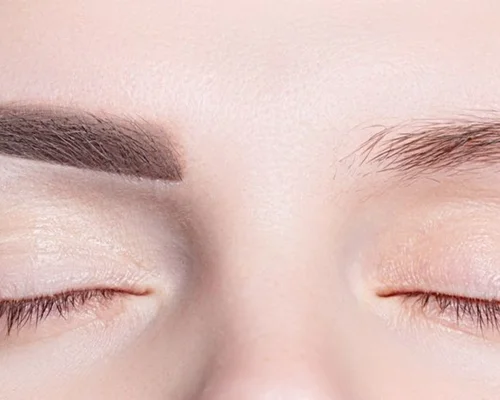
Permanent makeup correction treatment is a professional corrective and restorative medical aesthetic service based on the principle of treating asymmetric shape deformities, color deviations, and excessive pigment concentrations occurring in the eyebrow, eyeliner, or lip tissue as a result of under-the-counter or faulty applications via new generation color neutralization agents, laser removal protocols, and skin-toned medical camouflage techniques, while smoothly restoring contours and staying loyal to the histological integrity of the skin.
What is Permanent Makeup Correction?
Permanent makeup correction (micropigmentation revision) is a multidisciplinary corrective medicine and aesthetic art aimed at repairing pigmentation defects that disrupt aesthetic comfort due to incorrect depth, faulty technique, or poor-quality dye selection along facial aesthetic lines. If cosmetic tattooing and micropigmentation procedures are injected into the deep fat beds of the dermis instead of the basal layer of the epidermis, dye spreading (blurring) and chemical transformation are triggered in the tissue. Permanent makeup correction engineering is based on the principle of breaking down these deformed artificial pigment deposits, eliminating insidious asymmetries, and restoring natural contour curves to the facial tissue wall. The process is not a simple quick-fix of covering up the faulty design by painting over it, but a precise therapeutic model managed according to the principles of color theory and tissue histology.
- Color Theory Integration: Neutralizing faulty tones that have shifted to green, blue, or red in the tissue using opposing contrast color wavelengths.
- Biological Cell Protection: Eliminating pigment molecules without exposing the skin wall to scar tissue (permanent cicatrization/scarring).
- Anatomical Re-Modeling: The power to erase overflowing lines that disrupt the facial golden ratio parameters using skin-toned mineral camouflage components.
In Which Situations is Permanent Makeup Correction Applied?
Corrective micropigmentation steps are indicated as a clinical necessity when a visual asymmetry, color anomaly, or tissue destruction is verified in a person’s facial projection. Incorrect needle frequency or poor-quality coloring agents can produce insidious leakages along the most delicate mucosal lines of the face (eyelid or lip margins), creating artificial lines. The expert physician rationally decides on this restorative process to regain the patient’s disrupted aesthetic self-confidence and tissue health.
The primary clinical situations where permanent makeup correction protocols are definitively put into play are as follows:
- In cases where the eyebrow turns an intense reddish-orange, an artificial gray-blue, or green as a result of block painting being performed instead of the hair stroke technique in the eyebrow area,
- In cases where the dye seeps into the eyelid capillary vessels during eyeliner or dipliner applications, migrating toward the temples and leaving a smear (migration),
- When artificial stained lines occur at the corners of the mouth as a result of overflowing outside the symmetrical lip frame during lip blushing steps,
- When the old permanent makeup design completely conflicts with the face’s current golden ratio lines due to the sagging of facial muscles over time.
Who is Permanent Makeup Correction Suitable For?
Corrective micropigmentation and removal courses are medically suitable for all pediatric and adult patients who are unhappy with prior permanent makeup errors on their face, carry asymmetric lines, or restrict their expressions in social environments due to tattoo dyes changing color. The procedure offers a high bio-compatibility profile since it relies on the tissue’s own self-renewal potential and does not harbor toxic heavy metals. However, for cases where a 4-6 week cellular healing period has not yet passed since the faulty procedure was performed, or who have active weeping wounds or pyogenic infection foci on their skin, revision steps must be medically postponed until tissue integrity is stable.
- Victims of Dentophobia and Aesthetics: Sensitive clients who develop dentophobic-level anxiety as their facial symmetry is disrupted in under-the-counter beauty salons.
- Those Isolated from Social Life: Individuals forced to use thick concealers every day due to faulty eyebrow or eyeliner drawings.
- Those Hesitant About Laser Surgery: Patients who fear the risk of laser beams burning eyelash or eyebrow roots and thus desire a chemical/color-based correction.
How Are Permanent Makeup Errors Evaluated?
The clinical scanning of regional pigmentation defects is the primary therapeutic step that reveals the etiological origin of the error. During the evaluation, the error is not simplified as a merely superficial drawing deformity; the histological layer where the dye is trapped (whether epidermis or dermis) is verified through palpatory and optical tests. If the dye has infiltrated into the deepest corridors of the dermis and become petrified, the correction algorithm assumes a combined identity supported by a removal phase.
- Depth Scale Charting: Measuring the vertical placement density of pigment deposits within subcutaneous micro-layers.
- Chemical Structure Analysis: The process of scanning the organic/inorganic character and iron oxide ratios of the dye utilized in the faulty procedure.
How is Analysis Performed Before Permanent Makeup Correction?
The pre-operative facial check-up carried out before transitioning to the revision session is the most vital phase that mathematically maps the skin’s elastin quality and tissue damage index scores. During the examination, the physician transfers the face’s shadow and asymmetry curves onto the computer screen with the help of high-resolution digital facial scanner units. In our analytical table below, the revision analysis parameters based on the clinical variations of permanent makeup errors are listed:
| Verified Permanent Makeup Error Type | Clinical Analysis and Diagnostic Methodology | Primary Selected Technique in the Correction Workflow |
|---|---|---|
| Old Eyebrow Design Turned Red / Orange | Melanin/iron oxide detection via spectrophotometric light wavelength analysis. | Color Neutralization with opposing olive green and ashy pigments. |
| Blue-Green Blocked Deep Tattoo Line | Dermal depth probing and mucosal border control. | Q-Switched Nd:YAG Laser or Chemical Pigment-Breaking Liquid Solution. |
| Asymmetric / Double-Tailed Eyeliner Overflow | Eyelid orbital margin and canthal distance measurement. | Micro-injection skin-toned titanium dioxide-free Medical Camouflage. |
| Bruised Pigment Overflowing the Lip Line | Periodontal analysis of the lip mucosal margin and vermilion border. | The phase of Chromatic Melange Neutralization with warm orange/salmon tones. |
How is the Permanent Makeup Correction Process Planned?
The planning of the corrective micropigmentation workflow is conducted through a step-by-step medical algorithm based on the width of the facial coordinates where the error is located, the patient’s skin phototype, and the degree of tissue scarring. Rash decisions are not made during planning; because performing aggressive interventions repeatedly on damaged skin can lead to tissue necrosis (cell death). In planning, incorporating a 4-week stabilization period—which corresponds to the epithelial cell turnover rate of the skin—between sessions is an absolute rule.
- Phase 1 (Diagnosis and Cellular Soothing): Bringing the moisture and barrier quality of the damaged skin to a phase suitable for the operation via bio-active creams.
- Phase 2 (Neutralization / Breaking): The period of breaking down the faulty colors through chemical or light-based methods to drop them into a faded phase.
- Phase 3 (Re-Modeling and Aesthetic Design): The cycle of re-registering smooth new contours with smart plant-based dyes, compatible with facial golden ratio parameters.
How Are Eyebrow, Eyeliner, and Lip Permanent Makeup Correction Procedures Performed?
The eyebrow, eyeliner, and lip correction interventions executed in the clinic room involve delicate micro-surgical steps conducted under local topical blockade using separate technical instruments, taking into account the histological differences of each tissue (skin and mucosal borders). While micro-channels are opened in the eyebrow area with the help of flexible diamond blades to infiltrate color-breaking solutions, the rule on the eyelid is to deploy blunt-tipped micro-cannulas to protect vessels. In the lip region, a monoblock coverage is woven by injecting warm-toned organic pigment melanges layer by layer, showing absolute loyalty to the delicate cement-like sensitive structure of the mucosa to accelerate lymph circulation.
- Eyebrow Revision: Weaving micro hair strokes with opposing tones in between to break up the old block appearance.
- Eyeliner Migration Repair: The process of vaporizing black stains that have seeped into the temples using liquid removers that trigger subcutaneous macrophage cells.
- Lip Contour Restoration: Sharpening the vermilion border by scraping away overflowing dark spots at a micron level with skin-toned mineral crystals.
How Are Permanent Makeup Color Changes Corrected?
Correcting the insidious color deviations appearing in permanent makeup depends on the laws of “complementary color chemistry” and “spectral contrast.” If an eyebrow dye turns red over time, this situation arises because the black carbon molecules in the dye are prematurely eliminated by the body, leaving behind only the iron oxide red. The physician does not paint over this redness directly with black; they inject olive green neutralization pigment into the skin, which is the exact opposite of red on the color wheel; at the exact second the green and red molecules unite beneath the skin, they chemically evolve into a neutral smooth ashy brown tone, resolving the color error within seconds.
“The color correction process is not about applying white paint over a faulty dye; it is about moleculary colliding the wavelengths of opposing colors beneath the skin to smooth the error observed with the naked eye into a natural tone.”
How Are Permanent Makeup Shape Deformities Corrected?
In eliminating shape deformities that disrupt the facial golden ratio balance—such as upward-bent asymmetric eyebrows or thickly drawn artificial eyeliner lines—two-dimensional “mechanical removal” and “medical camouflage” principles are operated in a joint synergy. Primarily, overly thick lines overflowing outside the facial template are faded by polishing them with the help of enzyme-content biological remover gels. The remaining micro-overflows are carried into an invisible phase by being scanned with razor-edge thinness using titanium dioxide-free medical camouflage mineral dyes blended in the laboratory perfectly parallel to the patient’s skin tone on the Fitzpatrick Scale.
- Asymmetry Elimination: Zeroing out vertical millimetric deviations in the eyelid and eyebrow arches by measuring them with digital calipers.
- Margin Softening: The phase step of softening the edges of sharp artificial lines with smoky, smooth transition effects.
How is Permanent Makeup Pigment Density Balanced?
Balancing pigment density in faulty permanent makeup applications that are excessively dark, petrified, and have become monoblock pitch black is managed by the mechanism of breaking down the solid dye crystals trapped beneath the skin into micro-pieces that can be carried away by macrophage (immune scavenger) cells. At this stage, Q-Switched Nd:YAG laser technologies or smart liquid solutions containing lactic acid-based fruit enzymes are brought onto the field. The moment the material encounters the pigment towers, it breaks the chemical bonds; the dye density thins out, allowing the skin to breathe, and facial dullness gives way to a clear illumination.
What Are the Techniques Used in Permanent Makeup Correction?
In combined revision practices, different mechanical and chemical methodologies registered in medical literature are deployed based on the depth of the error and the dimension of the material’s sub-enamel/sub-mucosal spread. The process does not rely on a single device; the goal is to verify maximum fading stability with minimum tissue trauma. The variety of methods used carries operational safety to the highest limit.
- Enzimatik Pigment Sökümü (Chemical Removal): The technique of natural salt and fruit acid solutions infiltrated beneath the skin via micro-needles, drawing the dye upward hydraulically like a magnet.
- Laser Re-Surfacing: The phase step method where 1064 nm wavelength laser beams shatter solid black-blue pigment accumulations into dust within seconds, without damaging the skin.
- Chromatics Camouflage: The process of sealing the micro-defects remaining after removal procedures with mineral oxides suitable for the skin’s undertone code.
How Long Does the Permanent Makeup Correction Procedure Take?
Thanks to the speed of modern clinicians and the calibration quality of robotic units, corrective micropigmentation interventions are among the fastest processes that show excellent integration into the heavy time constraints of modern metropolitan life. The stages of scanning and neutralizing an asymmetric lip line in a jaw hemisphere or a single brow arch contour error with solutions are usually completed in a short time frame of only 30 to 45 minutes per session; social life is not interrupted.
How Many Sessions of Permanent Makeup Correction Can Be Applied?
The total number of sessions for revision courses requires a stable time hierarchy in medical literature, depending on how deep the faulty dye was processed and the speed at which the skin ejects the dye from the line (phagocytosis). Since entirely eliminating a deep tattoo dye in a single sitting would burn the skin, the processes are divided over time. It is an absolute medical rule to schedule the processes as a holistic course of 2 to 4 sessions in total repeated at 4-week intervals, monitoring the color fading saturation coefficient.
- Session 1 (Pigment Breaking): The phase of loosening the structural integrity of solid dye blocks beneath the skin chemically or via radiation.
- Session 2 (Chromatic Equalization): The step of neutralizing the emerging intermediate colors (redness or grayness) with opposing contrast tones.
- Session 3 (Final Aesthetic Art): The cycle of processing the smooth new design matching the facial golden ratio parameters after the area is completely cleaned.
How Does the Healing Process Progress After Permanent Makeup Correction?
The post-operative tissue recovery phase progresses through highly predictable, rapid, and linear steps due to involving scalpel-free and stitch-free steps. The formation of a mild pinkness, flaking, and a thin, subtle micro-scab layer in the injection area during the first 48 hours following the procedure, linked to the removal reflex of dye molecules from the line, is a completely natural physiological cell repair reaction given by the extracellular matrix. The healing speed is rapid, just like in childhood stages; on the 5th day, the scabs shed, and the softened, faded, and cleansed clear form of the contours is verified.
What Should Be Considered After Permanent Makeup Correction?
To render the functional success of the session permanent, support the dissolved dye molecules to flow smoothly away from the line, and preserve the sealing quality of the micro-pores, there are some practical medical rules the patient must observe in the home environment after the procedure. It must not be forgotten that during the early days, the skin walls can temporarily transition into a phase more sensitive to external factor leakages.
The points that must be meticulously observed at home during the critical post-procedure period are as follows:
- For the first 3 days following the application, the revision site must absolutely not come into contact with water and no baths should be taken, in order to prevent bacteria from seeping through micro-holes and triggering infections.
- The forming fine micro-scabs must never be scratched with fingernails or peeled off; if scabs are removed prematurely, they cause the dye to leave permanent stains (scars) between cells.
- For the first 1 week, no cosmetic foundation, powder, or concealing chemical resin must be applied to the corrected sites.
- For at least 3 days, the consumption of cigarettes, tobacco products, and alcohol must be completely ceased so as not to paralyze the facial capillary vessel repair rate.
What Factors Affect the Permanence of Permanent Makeup Correction?
The ability of correction procedures to exhibit permanent fading success within facial tissue boundaries depends directly on the chemical quality of the initial faulty dye and the patient’s macrophage cell activity dynamics. New generation enzymatic removers permanently shatter the dye; however, the sole element determining the long-term success of the prosthesis is the patient’s fidelity to protection against the sun’s ultraviolet (UV) rays in the home environment.
- Skin Cell Renewal Speed: Since cell turnover is fast in young patients, the elimination period of the broken-down dye is registered more rapidly.
- Sun and UV Shield Safety: The risk of solarium or unprotected sunbathing prematurely dulling the corrected mineral camouflage tones.
What Are the Advantages of Permanent Makeup Correction?
The advantages provided by biomedicine and medical camouflage steps to the quality of life of permanent makeup victim patients go beyond creating an instant visual whiteness; they rescue the patient from social anxiety traps in a single session. Offering needle-free comfort and rapid discharge makes this method one of the smartest preventive aesthetic investments.
- Restores the Face to Its Organic Form: It grants a clear, bright, and fresh facial expression to contours by erasing artificial metallic colors and overflowing lines.
- Prevents Future Surgical Needs: By cleaning incorrectly drawn eyeliner stains, it rescues the eyelid from premature surgical lifting (blepharoplasty) obligations.
- Scar-Free Safety Standard: The luxury of protecting the health of the enamel and mucosa without compromise through enzymatic neutralization, instead of burning the skin with acids and leaving bald scars.
What Are the Differences Between Permanent Makeup Renewal and Correction?
The most deep-rooted differences between permanent makeup renewal (refreshing) protocols and correction (revision) interventions are the presence of tissue pathology at the initial moment of procedures, the depth of the applied pharmaceutical method, and the architecture of the completion time schedule. The renewal procedure is the step of refreshing the brightness of a smooth and symmetrical design that has slightly faded over time by passing over it with the same color tone; it harbors no error in the tissue and finishes in a single session. Correction, on the other hand, is a multi-session treatment schedule aiming to shatter asymmetries, bruising, and overflowing chemical towers.
How Should Maintenance Be Conducted After Permanent Makeup Correction?
The oral hygiene and facial care routines to be maintained at home from the final delivery moment when the course sessions terminate are the safety steps that take the moisture stability of repaired cell layers under protection at the highest level. Leaving the skin surface dry causes the dye to flake off; therefore, moisture balance must be reinforced morning and evening with thin coatings via bio-active epithelializing creams recommended by the physician, avoiding harsh brushing.
- Soft Sweeping Cleansing: Washing the area twice a day by massaging with fingertips using pH-neutral medical solutions.
- Bio-Active Panthenol Doping: The requirement to thinly spread pure hyaluronic acid or vitamin creams to accelerate cell regeneration.
What Are the Frequently Asked Questions About Permanent Makeup Correction?
The most common practical concerns arising in the minds of clients planning to get rid of faulty permanent makeup lines and asymmetry aches on their faces, along with their polyclinic medical answers, are presented below:
Can’t you just cover up my faulty old permanent makeup in a single session by painting over it directly with skin-toned dye?
No, this is absolutely contraindicated (a major error) in medical and aesthetic standards. If skin-toned (camouflage) dye is applied directly over dark black, blue, or reddish dye, although the dyes may look covered in the initial months, they will combine within the lower layer within seconds to evolve into a muddy, dirty, and intensely yellowish dirty stain appearance. The correct medical approach is to primarily shatter and fade those solid dye towers with enzymatic removers, then neutralize the remaining micro-defects; concealing dye is not applied over the tattoo.
Will bald marks (scars) like permanent razor wounds remain on my face while removing or breaking the color of faulty permanent makeup?
If this procedure is done in under-the-counter salons with industrial-type heavy acids or uncalibrated tattoo devices, your skin can burn and bald scars can remain; however, the new generation “enzymatic pigment removers” used in our polyclinics are bio-compatible fluid components harboring lactic acid and fruit enzymes. Since they merely break the dye bonds without disrupting the natural pH balance of the skin, absolutely no permanent scar, hollow, or bald mark remains in the tissue after the procedure.
Will my own original eyebrow hairs burn from the root and shed while I am having my old faulty eyebrow tattoo removed?
No, absolutely not the slightest risk of shedding is experienced. The chemical enzymatic removers or Q-Switched laser wavelengths we utilize are calibrated solely to target the artificial dye pigment molecules beneath the skin. They cannot make contact with the keratin structure of your own living eyebrow and eyelash follicles even at a micro level; therefore, your own eyebrow hairs are preserved with their fully organic structure and continue their natural growth course without damage.
Will it hurt a lot while micro-needles are applied to my face during a faulty permanent makeup correction session?
No, you will definitely not feel an unbearable ache or pain. Prior to the procedure, the skin wall planned for revision is coated with powerful local anesthetic gels and creams verified in medical standards, registering that the area transitions into a completely desensitized phase. Since nerve transmission lines are completely locked throughout the session, you only perceive the gentle touch tickle of the devices and the water coolness of the solution, completing the process painlessly in a room of total comfort.
Can I return to my normal business, nursery, and social life at the exact second my permanent makeup correction session finishes?
Yes, permanent makeup correction applications are entirely local and non-invasive micropigmentation revision craftsmanship involving no clouded consciousness, no slowed motor hand coordination reflexes, and no surgical scalpel incisions; therefore, the very minute the illusion is concluded, you can stand up from the chair and return to your normal daily, professional, social, or academic life rhythm from where it left off instantly, uninterrupted and with high self-confidence relief, without even needing a companion; there is no obstacle to driving a car immediately.
Who Are We? & Private Demiderm Polyclinic
Private Demiderm Polyclinic is a licensed health institution centered around corporate medical discipline in branches completing modern facial and mucosal integrity, primarily medical aesthetics, dermatology, laser technologies, hair health solutions, and holistic rejuvenation applications. Instead of abandoning incorrectly performed permanent makeup asymmetries, bruised lip stains, or eyeliner migrations that have seeped into the temples to the distressing patterns of insidious and temporary cosmetic concealers, our center gives vital importance to executing “biological tissue-protective and micropigmentation revision” principles with evidence-based clinical data, and unwaveringly runs Digital Diagnostic Mapping and Advanced Technology Permanent Makeup Correction – Removal aesthetic ecosystems with calendar discipline in full compliance with the regulations by charter from the very beginning to the end of the clinical operation workflow.
Under the roof of Private Demiderm Polyclinic, all diagnosis, digital scanning, design, and microscopic tissue activation interventions are operated in full compliance with medical regulations by charter, ensuring absolute sterilization, high patient safety, transparency, and honesty principles. In our clinical practices, while analyzing the intra-tissue placement depths of the faulty dye and mucosal sensitivity Miller class grades with the help of optical units in the preliminary examination, absolute moisture isolation systems keeping resin bonding strength at maximum and robotic correction stations that do not cause intra-tissue trauma are applied with millimetric precision under the supervision of our expert staff. Our goal is not to impose old-fashioned analog distressing patterns on our patients that abrade their enamel, cause pain, or cut the tooth unnecessarily because the ache could not be resolved; but to analyze each individual’s facial golden ratio boundaries, occlusion mechanics, and skin phototype class scores on a digital screen before the operation, obtaining smooth natural facial features that you will use with maximum session comfort without damaging surrounding soft tissues, a same-day standard, and unshakeable trust for life. If you are tired of the artificial tattoo colors on your face, the asymmetric lines, or the fading form of your eyelids when you look in the mirror, yet you postpone your checks due to fear of needles or time constraints, and you wish to start your smart digital treatment process from start to finish with scientific assurance in an expert corporate polyclinic environment; you can contact the expert staff of Private Demiderm Polyclinic to safely take your health and facial integrity under protection in line with your detailed examination.