
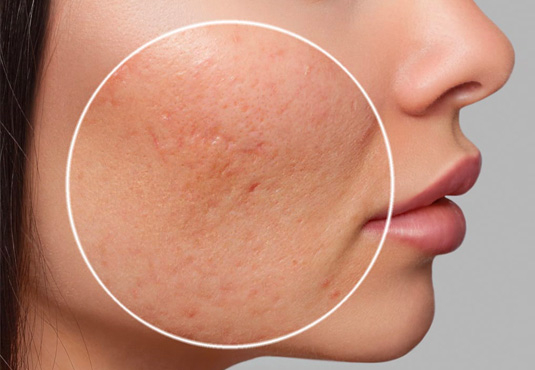
Acne Scar Treatment
Acne scar treatment is a scientific and clinical dermatological renewal process that uses advanced laser systems, micro-needling technologies, and specialized peeling agents to eliminate the atrophic pits, hyperpigmentation spots, and scars left on the skin’s surface by past severe acne problems, triggering the skin’s collagen production and completely restructuring the epidermal layer to achieve a smooth appearance.
What Is Acne Scar Treatment?
Acne scar treatment is the clinical correction of permanent damage, depressions, or discoloration that occurs in skin tissue during the healing process of acne. The intense inflammation that occurs in the hair follicle and sebaceous gland unit during acne formation damages the collagen and elastin fibers in the deeper layers of the skin. This damage, which results in tissue loss, creates permanent irregularities and pits on the skin’s surface; the treatment process controls and stimulates this damaged tissue so the skin can repair itself.
- Tissue Renewal: Aims to accelerate cell renewal so that healthy skin replaces the damaged tissue.
- Collagen Synthesis: Stimulates fibroblast cells to increase production of collagen, the skin’s fundamental building block.
- Combined Solutions: Depending on the depth and structure of the scars, several medical aesthetic methods are used together.
In Which Cases Is Acne Scar Treatment Applied?
Acne scar treatment is applied when permanent structural disorders remain on the skin following inflammatory acne processes experienced during adolescence or adulthood. Once the active acne problem is fully brought under control, this process begins to correct the remaining permanent scars. When the wavy appearance, shadowing, and roughness on the skin’s surface negatively affect a person’s aesthetic perception, medical aesthetic interventions become unavoidable.
- When permanent deep pits (scars) remain on the skin after active acne has healed,
- When red or brown spots (hyperpigmentation) that don’t fade for months form in acne-affected areas,
- When the skin’s surface develops a wavy, rough, and non-homogeneous loss of tissue,
- In cases where the person experiences a loss of self-confidence, socially and psychologically, due to acne scars.
Who Is Acne Scar Treatment Suitable For?
This treatment is suitable for any adult whose active acne problem has ended, whose skin barrier has become stable, and whose general health does not present an obstacle to medical aesthetic procedures. Although the success of the treatment varies depending on the person’s skin structure, age, and the chronicity of the scars, all patients with realistic expectations can benefit from this process. With the exception of those who are pregnant or breastfeeding and people prone to keloids (excessive tissue growth), a treatment protocol can be created for every skin type.
- Those Without Active Acne: Individuals whose breakout process has stopped and whose skin is in a stable phase,
- Adults: Generally all male and female patients aged 18 and over whose skin development is complete,
- Those with Spot and Pit Complaints: People with deep scar tissue or persistent pigmentation problems on their skin.
Why Do Acne Scars Form?
The main reason acne scars form is that the intense infection and inflammation that occurs in the deeper layers of the skin during acne breakouts destroys healthy tissue. As the body fights this inflammation, it tries to repair the damaged area quickly; however, if not enough collagen is produced during this repair process, atrophic (sunken) scars form, and if too much collagen is produced, hypertrophic (raised) scars form. Squeezing or picking at acne, or failing to treat deep cystic acne in time, multiplies the extent of this damage many times over.
| Cause of Formation | Mechanism in the Skin | Resulting Scar Type |
|---|---|---|
| Deep Inflammation | Breakdown of collagen and elastin fibers in the dermis layer. | Atrophic (Sunken) Scars |
| Squeezing/Picking at Acne | Mechanical disruption of tissue integrity and spread of infection. | Wide and Irregular Pits |
| Excessive Tissue Repair | Uncontrolled, excessive collagen production by the body during healing. | Keloid and Hypertrophic Scars |
| Melanin Accumulation | Excess pigment production by melanocyte cells after inflammation. | Red and Brown Spots |
What Are the Types of Acne Scars?
Acne scars are not uniform in structure; they show different morphological features depending on each individual’s skin structure and the depth of the acne. Clinically, acne scars are generally examined in three main groups: sunken scars (atrophic scars), raised scars (hypertrophic scars), and discoloration (spots). The success of the treatment depends directly on correctly diagnosing the anatomical structure of the scar on the skin and selecting the technological devices specific to that structure.
| Scar Group | Morphophysiological Structure and Appearance | Clinical Name |
|---|---|---|
| Ice-pick-like Scars | Narrow, deep, sharp-edged, pore-like pits that descend vertically into the skin. | Ice-pick Scar |
| Boxcar Scars | Round or oval depressions with steep edges and a flat base. | Boxcar Scar |
| Round, Wavy Scars | Wide, wavy irregularities caused by bands forming beneath the skin. | Rolling Scar |
| Discoloration | Red or dark spots left at the site of acne without any tissue loss. | Post-inflammatory Erythema / Pigmentation |
Why Is Skin Analysis Important Before Acne Scar Treatment?
Every person’s skin structure, sebum (oil) ratio, moisture balance, genetic factors, and the depth of their acne scars are entirely different from one another; therefore, no treatment protocol applied by rote produces successful results. The detailed skin analysis performed before the procedure makes it possible to predict which layer the scars are in, the direction of the fibers, and how the skin will respond to aggressive procedures such as laser or micro-needling. A correct analysis prevents the wrong device or dosage from being chosen, minimizing side-effect risks such as hyperpigmentation.
- Identifying the Scar Type: Determining which of the Ice-pick, Boxcar, or Rolling structures predominates in the skin,
- Skin Barrier Check: Measuring the skin’s moisture and sensitivity level to determine the maximum energy level it can tolerate,
- Combination Needs: Precisely mapping which area will receive laser and which will receive Dermapen or PRP.
How Is Acne Scar Treatment Planned?
When planning acne scar treatment, the patient’s social life, work life, skin color (phototype), and the depth of the scars are considered as a whole. Planning does not follow a straight line; it is dynamic and revised between sessions according to how the skin responds. In the early sessions, methods that stimulate the deeper layer of the skin and trigger collagen are usually chosen, while later on, more emphasis is placed on peeling or micro-needling procedures that provide surface smoothness.
- Stage 1: Clinical Examination and Mapping: The depth and type of the scars are identified, and different strategies are determined for different areas of the face.
- Stage 2: Method Combination: The safest laser or needling combinations are selected according to the patient’s phototype (skin color).
- Stage 3: Session and Schedule Planning: A schedule is created that allows for the 4-6 week rest periods needed between procedures for the skin to repair itself.
Which Methods Are Used in Acne Scar Treatment?
In modern medical aesthetic clinics, many innovative, evidence-based methods offered by technology are integrated and used together to eliminate acne scars. Since it is not clinically possible to eliminate all scars with a single device, the most rational approach is to benefit from the mechanisms of action of different devices simultaneously. The table below provides a general summary of the main clinical methods actively used in treating acne scars:
| Clinical Method | Mechanism of Action in the Skin | Primary Scar Type Targeted |
|---|---|---|
| Fractional Carbon Dioxide (CO2) Laser | Opens microscopic columns of heat, controllably peeling and renewing the upper layer of the skin. | Deep Boxcar and Rolling scars. |
| Dermapen (Micro-needling) | Opens thousands of micro-channels to trigger the skin’s natural healing and collagen mechanism. | Superficial pits and general pore size. |
| Chemical Peeling | Removes the skin’s dead layer with special acid agents, accelerating cell turnover. | Post-inflammatory red and brown spots. |
| PRP / Mesotherapy | Injects growth factors and vitamins directly beneath the damaged tissue. | Cellular renewal support and overall skin quality. |
How Is Laser Acne Scar Treatment Performed?
Laser acne scar treatment is one of medical aesthetics’ most powerful and effective tools, especially for eliminating deep, established scars. Before the procedure, a local anesthetic cream is applied to the skin for patient comfort; then shots are made on the skin’s surface using Fractional CO2 or Er:YAG laser systems. The laser beams open thousands of microscopic heat channels (thermal damage zones) in the skin. The healthy skin tissue surrounding these channels rapidly triggers fibroblast cells and new collagen production to repair the damage; this way, the base of the pits gradually rises and becomes smooth over time.
- Thermal Effect: Heat stimulation tightens and shortens the elastic fibers in the deeper layers of the skin.
- Controlled Peeling: Micro-level peeling of the damaged upper layer of the epidermis accelerates the emergence of fresh, radiant skin from below.
- Crusting Process: Redness and micro-crusting lasting a few days after the procedure is a natural result of the treatment.
How Is Dermapen Used in Acne Scar Treatment?
Dermapen is an automatic micro-needling technology device with numerous millimetric, sterile micro-needles. These needles, which move at a perpendicular angle and high speed on the skin’s surface, open thousands of invisible micro-channels reaching down to the dermis layer without damaging the epidermis. The brain perceives these channels as a wound and sends an intense growth factor and cell-repair kit to that area. During the procedure, salmon DNA, hyaluronic acid, or brightening serums suited to the skin’s needs are also absorbed through these channels down to the skin’s deepest layers, multiplying the treatment’s effect.
- Mechanical Stimulation: The physical action of the needles breaks down hardened, traumatic scar tissue bonds beneath the skin.
- High Absorption: Increases the rate at which the medical cocktails applied to the skin reach the deeper layers by over 200%.
- Fast Social Recovery: Compared to laser procedures, healing time is much shorter; redness generally fades within 24 hours.
Is Chemical Peeling Effective on Acne Scars?
Chemical peeling is a highly effective method for treating superficial irregularities left on the skin’s surface after acne, enlarged pores, and especially persistent red/brown spots. The procedure is applied by putting medical acid agents such as Glycolic Acid (AHA), Salicylic Acid (BHA), or Trichloroacetic Acid (TCA) onto the skin at certain concentrations. These agents dissolve and peel away the stratum corneum, the topmost layer of dead cells on the skin; this disperses the melanin pigment in the deeper layers, making the skin tone more even.
- Sebum Control: Peels containing salicylic acid in particular clean out pores and also suppress new acne formation.
- Cellular Acceleration: Speeds up the cell renewal cycle (turnover), allowing spotted tissue to shed quickly.
- Surface Radiance: After regular sessions, the skin’s ability to reflect light increases and its dull appearance disappears.
How Does PRP Support Acne Scar Treatment?
PRP (Platelet Rich Plasma) is the injection of plasma fluid, obtained from the patient’s own blood and extremely enriched with clotting cells called platelets, into the damaged tissue. Platelets are cells responsible for repairing tissue when an injury occurs in the body and contain very high amounts of growth factor. In acne scar treatment, PRP alone cannot fill deep pits; however, when combined with procedures that damage the skin, such as laser or Dermapen, it cuts the skin’s healing time in half and maximizes the quality of collagen production.
- Growth Factor Support: Stimulates stem cells at the injection site, initiating the production of new, healthy tissue.
- Rapid Tissue Repair: Speeds up recovery from the redness, swelling, and crusting that occur after laser or micro-needling procedures.
- Natural and Safe: Since the patient’s own blood is used, it carries absolutely no risk of allergy, reaction, or tissue rejection.
How Many Sessions Does Acne Scar Treatment Take?
The total number of sessions for acne scar treatment varies greatly from person to person, depending on the depth and extent of the scars, the patient’s skin structure, and the chosen technological method. Superficial discoloration and mild spots can be resolved with 2-4 sessions of peeling or mesotherapy protocols, while cases involving deep ice-pick or rolling scars require aggressive laser and combination treatments along with an increased number of sessions. The table below shows an estimated session schedule matrix based on scar severity:
| Scar Severity and Structure | Recommended Clinical Methods | Estimated Session Range |
|---|---|---|
| Mild (Superficial spots and mild pores) | Chemical Peeling, Dermapen, Vitamin Mesotherapy | 3 – 4 Sessions |
| Moderate (Superficial Boxcar scars, red marks) | Fractional Laser, Dermapen + PRP combination | 4 – 6 Sessions |
| Severe (Deep, fibrotic banded Rolling/Ice-pick scars) | Aggressive CO2 Laser, Subcision (band release), PRP injection | 6 – 8+ Sessions |
How Does the Healing Process Proceed After Acne Scar Treatment?
The nature and duration of the healing process depend directly on the aggressiveness of the method applied during the session. After Dermapen or light peeling procedures, only mild pinkness and dryness lasting 24-48 hours is observed on the skin, whereas after deep-peeling applications like Fractional CO2 Laser, the process goes through more pronounced stages. The healing phase progresses in a straight line; the intense swelling and redness of the first days give way to the peeling phase in which the skin renews itself.
- First 24-48 Hours: An intense sunburn-like sensation, redness, and swelling (edema) on the skin is completely normal.
- Days 3 to 5: Micro-sized brown-spotted crusting begins in the areas where the laser was applied, and the skin takes on a sandpaper-like, rough texture.
- Day 7 Onward: The crusts fall off entirely on their own with no mechanical intervention; fresh, smooth, pink new skin appears underneath.
What Should Be Paid Attention to After Acne Scar Treatment?
In acne scar treatments, in addition to the success of the clinical session, it is vital that the patient adheres to the home care procedures they will apply after the procedure; because the skin, which has been stimulated by the treatment, is completely defenseless against external factors during this phase. Even the smallest neglect (for example, not using sunscreen) can lead to discoloration (PIH) in the freshly healing tissue, sabotaging the success of the process. The patient must be patient and respect the skin’s natural healing rhythm.
- Absolute Sun Protection: High-factor (SPF 50+) medical sunscreen should be used every 2-3 hours for at least 1 month after the procedure.
- Do Not Pick at Crusts: The micro-crusts that form on the skin should never be scratched or peeled off; they should be allowed to fall off on their own.
- Chemical and Heat Restriction: Hot water should not touch the face for the first 3 days, makeup should not be worn, and aggressive products containing retinol/acids should be discontinued.
- Intensive Moisturizing: Barrier-repairing, epithelializing, and hyaluronic acid-containing creams recommended by the therapist should be applied liberally.
When Are the Results of Acne Scar Treatment Seen?
Expecting an instant, miraculous transformation from acne scar treatments does not align with biological reality; because collagen synthesis is a cellular process that requires time. When the crusts fall off right after the procedure, a temporary sense of radiance and smoothness occurs on the skin; however, this is an optical illusion created by swelling. Real and permanent tissue repair emerges wave by wave after the session, as new collagen fibers are woven together in the deeper layers of the skin.
- Initial Signs (3-4 Weeks): Homogenization of skin tone, lightening of spots, and tightening of superficial pores are observed.
- Real Structural Change (2-3 Months): As collagen fibers mature, it becomes clearly noticeable that the base of deep pits has risen and the scars have shrunk.
- Final Result: In the 6th month after completing the protocol, the skin reaches its most stable, resilient, and smooth level; this achieved effect is permanent.
What Are the Advantages of Acne Scar Treatment?
The greatest advantage of this professional dermatological process is its ability to directly intervene in the dermis (deeper) layer of the skin, which no cosmetic cream or serum used at home can reach. A properly planned scar treatment does not just hide the skin’s flaws; it builds a healthier anatomy by fundamentally changing its structure. Not only is aesthetic comfort provided, but the psychological satisfaction and self-confidence a person feels when looking in the mirror are also raised to the highest level.
- Radically reduces the shadowed, wavy, sunken appearance of the skin’s surface, providing smoothness,
- Narrows enlarged pores, regulating and controlling the skin’s oil (sebum) balance,
- Creates an anti-aging effect by improving the skin’s elastin and collagen quality, tightening the skin,
- Completely eliminates acne spots, removing tone differences and providing a smooth, clear skin texture.
Can New Scar Formation Be Prevented After Acne Scar Treatment?
Acne scar treatments repair existing damaged tissue but cannot, on their own, prevent future acne breakouts from leaving new scars. The only way to prevent new scar formation is to keep the acne-formation mechanism under control and intervene immediately and correctly with any active acne that appears. Unless the patient adopts a cleansing and care routine suited to their skin type after completing scar treatment, recurring inflammatory processes can cause new scars to form.
- Early Intervention: If new acne is cystic and deep, medical treatment should be sought without delay to prevent scarring.
- Avoiding Mechanical Trauma: Active acne should never be scratched, squeezed, or popped at home.
- Cosmetic Awareness: Heavy makeup products that clog pores (comedogenic) should be avoided, and cleansers containing salicylic acid should be used.
Frequently Asked Questions About Acne Scar Treatment
Below are the most common practical concerns in the minds of people planning to seek clinical treatment to lighten or completely get rid of acne scars, along with their straightforward, unfiltered medical answers:
Is a lot of pain or discomfort felt during acne scar treatment?
Before the procedures, clinically strong local anesthetic (numbing) creams are applied to the skin and left on for an average of 20-30 minutes. This reduces the sensation of pain in procedures like Dermapen or Chemical Peeling to almost zero. In more aggressive procedures like Fractional CO2 Laser, a slight tingling or a sensation of heat/a rubber-band snap may be felt at the moment of the shot despite the device’s cooling system; however, these sensations are not unbearable.
Do these treatments completely eliminate acne scars 100%?
No guarantee of “100% complete elimination” can be given for any scar tissue in medical and medical-aesthetic literature, because it is biologically impossible for damaged fibers to return to their original state. However, the depth, appearance, and edge sharpness of scars can be reduced by 70% to 90% with the right combination treatments. This rate represents a smooth level at which, viewed from the outside, the scars will no longer draw attention and can be fully covered with makeup.
Can laser acne scar treatment be done during the summer months?
No, aggressive procedures that peel the skin and create melanin sensitivity, such as Fractional CO2 Laser or deep chemical peeling, are absolutely not applied during the summer months. The ultraviolet (UV) rays of the summer sun greatly increase the risk of “Post-inflammatory Hyperpigmentation,” meaning permanent sun spots, forming in the sensitive, healing tissue. For this reason, the safest period for laser treatments is autumn and winter. In summer, mild Dermapen or mesotherapy procedures with no spotting risk can be preferred instead.
Do acne scars come back years after the treatment is finished?
No, the success achieved in treatment is permanent. As a result of the collagen production triggered by laser or micro-needling, the base of the pits is filled with new, living tissue. This fullness does not have a structure that dissolves like temporary fillers do; it is the skin’s own cells. However, the skin’s general loss of elasticity due to aging may slightly make the scars more noticeable, or severe new acne breakouts may create new scars.
Do home acne creams or dermaroller devices get rid of scars?
Cosmetic creams or retinol-containing serums used at home may only work for very superficial spot changes and mild tone inconsistencies. However, if what’s involved are actual “scars” — real pits and fibrotic bands — the molecular size of home products is not enough to reach the dermis layer. Home dermaroller devices with high needles, used without proper knowledge, can also lead to infection due to non-sterile conditions and to new scars forming from further scratching of the face.
Who Are We? & About Özel Demiderm Polyclinic
Özel Demiderm Polyclinic is a corporate healthcare institution that combines years of clinical experience in dermatology and medical aesthetics with the latest technological device infrastructure to provide its clients with services at international standards. Particularly in its Acne Scar Treatment protocols aimed at eliminating acne spots, deep scars, and pore problems, it produces lasting solutions by centering evidence-based medical principles and personalized dermatological analysis.