
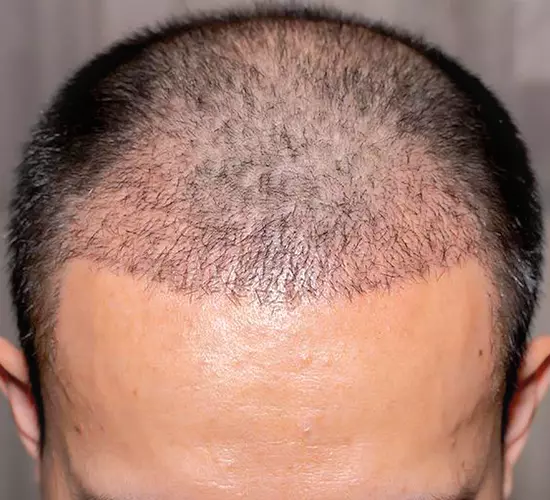
What is FUE Hair Transplantation?
FUE (Follicular Unit Extraction) is a procedure that forms the basis of modern hair restoration surgery, in which hair follicles in the donor area are extracted as individual units without sutures and incisions. Unlike the old-type FUT (strip) method, it does not leave a linear scar in the nape area. This process is based on loosening the cylindrical tissue surrounding the hair follicles with millimetric punch tips and collecting them with micro-forceps. These extracted roots (grafts) are transplanted one by one into microscopic channels in areas experiencing hair loss, permanently treating the baldness problem on anatomical grounds.
- Microsurgery Discipline: Surgical instruments of millimetric diameter (0.6mm – 0.9mm) are used to protect tissue integrity.
- Sutureless Treatment: Since no cutting process is performed, suturing is not required, and large wound lines do not form on the scalp.
- Universal Method: It is accepted as the gold standard baseline rule of hair transplantation in evidence-based medicine literature worldwide.
How is FUE Hair Transplantation Performed?
The FUE hair transplantation application is a progressive procedure carried out under local anesthesia in sterile surgical operating room conditions in order to ensure the patient’s operation comfort. The process begins with the sterilization and numbing of the donor area; then, hair follicles are collected with a homogeneous distribution with the help of micromotor devices. While the collected grafts are preserved in special solutions, micro-channels are opened in the area to be transplanted at the correct angle and depth. In the final stage of the operation, these grafts are meticulously placed one by one into the opened channels via medical forceps, completing the transplantation process.
- Local Anesthesia Block: Numbing the donor and transplantation areas to eliminate the sensation of pain.
- Follicular Extraction: The phase of loosening the roots from the scalp and collecting them as live micro-units.
- Channel Creation: Preparing slits suitable for the natural direction of the hair using sapphire or steel blades.
- Graft Implantation: Millimetrically placing the prepared live roots into their new hair beds.
Who is FUE Hair Transplantation Suitable For?
The FUE hair transplantation method is suitable for every individual over the age of 18 who experiences androgenetic alopecia (male pattern hair loss) or local hair loss due to wound or burn scars, and whose general health profile does not pose an obstacle to surgical procedures. The most critical criterion for the success of the operation is the presence of healthy hair follicles of sufficient density and quality in the back and sides of the scalp (donor area) to cover the transplantation area. It gives rational results in both male and female patients, regardless of hair structure and phototype, in all suitable cases where shedding stability has been achieved.
- Those Experiencing Male Pattern Hair Loss: Individuals whose front lines have receded or whose crown area has opened up due to hormonal reasons.
- Those with Tissue Scars: Patients who have hairless areas on their scalp due to past accidents or surgical scars.
- Those with Sufficient Donor Capacity: Individuals whose hair density in the nape region is at a level that can meet the needs of the shedding area.
In Which Situations is FUE Hair Transplantation Preferred?
The FUE technique is primarily preferred particularly in the presence of patients who do not want prominent suture scars to remain on their scalp after the operation and plan to cut their hair short. When large bald areas need to be covered with high graft numbers in a single session, FUE’s tissue flexibility and harvesting capacity make the method the primary choice. Additionally, this method is clinically selected for clients with an active social life who target maximum graft survival while extracting roots from the donor area and wish to minimize the recovery burden (downtime).
- Large Bald Areas: When high graft numbers such as 3000 to 4500 need to be transplanted in a single session,
- Scarless Healing Expectation: When there is a social concern about a suture or scar line remaining in the nape line,
- Short Hair Use Habit: In individuals who prefer to have their hair shaved in a short model after the operation.
How is Hair Analysis Performed Before FUE Hair Transplantation?
The hair analysis performed before the operation calendar is finalized is a trichological examination stage that measures the success rate of the transplantation and the graft-carrying capacity of the skin. In this analysis, the number of hair strands per square centimeter of the scalp and the thickness of the hair strands in microns are measured using microscopic camera devices called digital dermoscopes. By detecting whether the follicular units in the donor area are single, double, or multiple, it is mathematically calculated with what density the transplantation area can be covered.
- Dermoscopic Scanning: Photographing and analyzing the hair roots and scalp at a microscopic level.
- Graft Calculation Matrix: Determining the boundaries of the maximum amount of roots that can be safely extracted from the donor area.
- Shedding Tendency Detection: Determining whether current hair will shed in the future by measuring its miniaturization (thinning) rates.
How is the FUE Hair Transplantation Process Planned?
The planning of FUE hair transplantation is a personalized aesthetic and medical mapping process according to the patient’s facial anatomy, golden ratio parameters, and cranial bone structure. While designing the frontal hairline, the person’s age, the movement limit of the forehead muscles, and natural hair growth directions are taken as a guide. During the planning phase, the orientation map of how many grafts will be transplanted per square centimeter to which region and where the roots will be placed on the scalp is clearly determined. The staged process organization of the operation is detailed in the planning table below:
| Planning Phase | Focused Clinical Study | Targeted Operational Output |
|---|---|---|
| Stage 1: Initial Examination and Drawing | Determining the frontal hairline, drawing the donor and transplantation boundaries on the scalp. | Creating a natural and symmetrical transplantation template. |
| Stage 2: Donor Management | The harvesting plan of the graft population in the nape area with a homogeneous distribution. | Preventing the formation of a thinning or blank appearance in the nape line. |
| Stage 3: Densification (Density) Schedule | The placement map of single grafts on the front lines and multiple and thick grafts on the inner parts. | Maximum hair density and natural light-shadow transition. |
How is the Graft Harvesting Process Performed in FUE Hair Transplantation?
The graft harvesting process is a microsurgical stage requiring high attention that ensures the separation of follicular units from the scalp without damaging their viability. After the donor area is numbed, hollow sterile surgical punch tips with diameters varying between 0.7 mm and 0.85 mm, attached to the tip of the micromotor device, are centered on the axis of the hair follicle. The tissue surrounding the root is loosened by the rotational movement of the device; then, the graft is gently pulled and extracted from the scalp via micro-forceps. Collected roots are immediately transferred into special nourishing organ preservation solutions so that they do not lose their cellular integrity.
- Punch Selection: Selecting the minimum punch diameter that will not damage the follicle according to the thickness of the hair strand.
- Homogeneous Extraction: Collecting roots evenly from across the nape; avoiding over-harvesting from a single point.
- Cold Chain Protection: Keeping grafts in a solution at +4°C so that they do not undergo dehydration (lack of water) while waiting in the external environment.
How Are Hair Roots Placed in FUE Hair Transplantation?
The placement of roots (implantation) is the final and most sensitive stage that determines the aesthetic naturalness and permanent hair density of the operation. Grafts are placed one by one into the previously opened micro-channels with the help of medical micro-forceps. During this process, the surgeon pays utmost attention not to make mechanical contact with the bulb part, which is the most vital part of the root, and to hold the graft only from the tissue piece on top. The placement depth of the roots must be perfectly level with the scalp surface; they should neither be pushed too deep nor left too superficial.
- Angle and Direction Control: Placing the roots in full alignment with the previously determined 40-45 degree natural exit angles of the channels.
- Graft-Channel Matching: Arranging single grafts on the frontal hairline, and double and triple strong grafts on the crown and inner volume areas.
- Tissue-Friendly Craftsmanship: Gentle manipulation that will not create additional edema or microscopic tearing in the scalp during injection.
How Long Does FUE Hair Transplantation Take?
The total duration of the FUE hair transplantation operation generally varies between 6 to 8 hours, depending on the number of grafts to be transplanted, the elasticity/hardness coefficient of the scalp, and the coordination speed of the surgical team. The process is managed in linear blocks; each stage is conducted within a specific time discipline so that the external transit time of the grafts does not exceed critical limits. Since patients are under local anesthesia during the operation, they do not feel pain, can watch television, or eat food during breaks.
- Anesthesia and Extraction Phase: Average 2 – 3 hours (Collecting and arranging roots one by one with a micromotor).
- Channel Opening Phase: Approximately 1 hour (Preparing the recipient spaces with sapphire or steel blades).
- Placement Phase: Average 3 – 4 hours (Transplanting roots one by one into channels with forceps).
How Many Grafts Can Be Applied in FUE Hair Transplantation?
The maximum number of grafts that can be safely applied in a single session in the FUE technique generally shapes between 3000 and 4500 grafts (approximately 7000 – 10000 hair strands), depending on the availability of the donor area. This amount, which can be taken without depleting the hair population in the nape region and without creating permanent thinning areas there, is clinically the most optimum volume to cover wide balding areas at once. If the patient’s balding area is very wide and the donor capacity allows, the process should be planned by dividing it into two consecutive days or two different sessions 1 year apart in order to reach higher numbers.
| Shedding Degree (Norwood Scale) | Net Graft Volume Needed | Session Structure and Calendar |
|---|---|---|
| Stage 2 – 3 (Mild / Front Line Recession) | 1500 – 2500 Grafts | Single Session (Short-term operation) |
| Stage 4 – 5 (Moderate / Crown and Front Balding) | 3000 – 4000 Grafts | Single Session (Standard FUE protocol) |
| Stage 6 – 7 (Severe / Complete Baldness) | 5000 – 6500+ Grafts | Multiple Sessions (Two consecutive days or 2 sessions 1 year apart) |
How Does the Healing Process Progress After FUE Hair Transplantation?
The tissue healing phase after the operation progresses quite rapidly, predictably, and with comfortable steps since large surgical incisions are not made on the scalp. The microscopic round holes in the nape area where the roots are taken and the channels in the transplantation area close rapidly within the first 24-48 hours thanks to the skin’s homeostasis mechanism, moving into the scabbing phase. The healing process flows on a linear path; the tissue edema and pinkness in the first days leave their place to a completely normalized fresh epidermal surface within a week.
- First 72 Hours: The phase where roots try to hold onto the tissue bed, mild fluid leakage can occur on the scalp, and edema can form around the face area.
- 10th Day (Scab Shedding): As a result of daily gentle medical washings, all micro-scabs on the scalp are completely shed and the skin breathes.
- 1st Month Milestone: With the start of the shock loss process, the shafts of the transplanted hair break, and the roots pass into the resting (telogen) phase.
What Should Be Considered After FUE Hair Transplantation?
The success of FUE hair transplantation depends on the patient’s full adherence to the medical protection procedures to be applied in the home environment after the operation as much as the surgical meticulousness conducted in the clinic; because it takes about 7 to 10 days for the transplanted roots to completely fuse and stabilize biologically with the tissue. The smallest mechanical friction or impact to be made in this critical process can cause the roots to pop out of place and lead to permanent tissue losses. It is essential for the patient to be patient and protect the scalp from external stressors.
Vital rules that must be meticulously followed at home after the operation are as follows:
- For the first 5 days, one should sleep on their back at a 45-degree angle (with a double pillow or a travel pillow) to prevent the roots from being damaged by rubbing against the pillow.
- For the first 10 days, the scalp should absolutely not be scratched or picked, and it must be absolutely protected against any kind of physical impact / bump.
- Saunas, Turkish baths, solariums, pools, sea, and heavy sports activities that will trigger edema and infection risk on the scalp must be discontinued for at least 1 month.
- Comfortable clothes with buttons, cardigans, or zippers should be preferred instead of tight-necked t-shirts that could dislodge the roots.
What is Shock Loss After FUE Hair Transplantation?
The sudden and intense shedding of hair strands in the transplanted area between the 2nd and 4th weeks following the operation is called “Shock Loss” (Telogen Effluvium), and this situation is a completely normal, temporary, and biologically expected clinical phase. While hair roots are separated from the donor area and transplanted into new channels, they experience a temporary lack of oxygen and adaptation stress; due to this stress, the follicle takes itself into protection, releases the hair shaft on it, and passes into the resting phase. What sheds is not the root of the hair, but only its temporary hair shaft; the roots are completely alive and safe under the scalp.
- Biological Adaptation: It is a natural cycle renewal reflex exhibited by roots while adapting to the new tissue bed.
- Timeframe: It usually reaches its peak in the 1st month after the operation, and the shedding process stops completely at the end of the 2nd month.
- Rebirth: The hair strands shed during shock loss begin to be replaced by firm and dense hair that will remain for a lifetime starting from the 3rd month.
When Do FUE Hair Transplantation Results Start to Be Seen?
The emergence of permanent and dense hair strands on the surface after hair transplantation requires a patient process spread over time, as it is subject to the natural biological growth cycle of the hair follicles. Following the end of the shock loss phase, starting from approximately the 3rd month, the hair roots pass into the anagen (growth) phase and begin to produce the first fine permanent hair strands on the scalp surface. This process continues cumulatively with an increase in hair density and thickness every month.
- 3rd – 4th Months: The first permanent hair strands begin to appear on the scalp (They may initially be thin, slightly curly, or matte in structure).
- 6th – 8th Months: Approximately 60% of the transplanted hair completes its emergence; the hair structure thickens, its direction clarifies, and it gains a distinct volume.
- 12th – 18th Months: The final clinical result emerges; the hair regains its original thickness, density, and completely smooth natural form.
Does FUE Hair Transplantation Provide a Natural Hair Appearance?
Yes, the FUE hair transplantation method is a technique that provides the highest level of natural appearance thanks to the microscopic control it offers to the surgeon in mimicking the natural exit directions of the hair, growth angles, and the wavy morphology of the frontal hairline. The sole rule of naturalness is opening the channels at the original 40-45 degree angles to the scalp and showing full loyalty to the natural direction map of the hair (vortex rotations) during transplantation. Placing only single and thin grafts on the frontal hairline definitively prevents the formation of a grass-man appearance.
- Micron-Level Angling: Coordinating each hair root to emerge from the scalp in its original direction.
- Front Line Softening: Naturalizing the transition by arranging microscopic single roots on the forehead line instead of thick multiple roots.
- Natural Density Transition: Breaking the artificial mass appearance by applying a densification scheme that increases from front to back.
What are the Advantages of FUE Hair Transplantation?
FUE technology has numerous certified advantages in modern hair restoration practices in terms of both operation comfort and the quality of aesthetic results. The flexibility of the micromotor punch technique ensures maximum graft efficiency without damaging the donor area. This method, which does not involve operating room burdens, allows patients to get through the process without fear and with ease.
- Does Not Leave a Linear Scar: It does not create a permanent şerit-shaped suture scar in the nape region; hair can be cut short.
- High Graft Efficiency: Wide bald areas can be successfully covered by collecting a very high number of roots in a single session.
- Fast Tissue Recovery: The recovery time is quite short since micro-holes close within a few days.
- Low Complication Rate: The risk of infection or necrosis is minimum since tissue integrity is not exposed to large incisions.
How Should Hair Care Be Done After FUE Hair Transplantation?
The hair care procedures to be applied in the first months after the operation require a medical discipline to support the nutrition of the transplanted roots, repair the donor area quickly, and prevent scab accumulation on the scalp. For the first 10 days, friction-free washing should be performed with special gentle medical shampoos and panthenol-containing lotions shown in the clinic. In the following months, the process should be supported with clinically registered supplements that will nourish the hair roots from inside and out.
- Gentle Medical Washing: A friction-free washing protocol performed with light touches using the palms during the first 10 days, aiming to shed the scabs.
- Barrier-Repairing Lotions: Keeping panthenol-based lotions on the skin to soften the tightness and scabs in the donor and transplantation areas.
- Clinical Doping Support: Integrating Mesotherapy or PRP sessions into the process upon doctor’s recommendation to accelerate root growth.
How Long Does the Permanence of FUE Hair Transplantation Last?
The permanence of hair transplanted with the FUE technique is for a lifetime; meaning that the transplanted hair will not shed in the following years by being affected by genetic shedding waves. The medical and genetic reason for this is that the hair roots in the nape area between the two ears, selected as the donor area, are hereditarily insensitive (resistant) to the DHT (Dihydrotestosterone) hormone, which causes male pattern hair loss. The roots retain this non-shedding code when they are transplanted to the front or crown region of the face; therefore, the transplanted hair maintains its presence on the scalp permanently for a lifetime.
- Genetic Resistance: Preservation of the feature of roots in the nape region not being affected by hormonal shedding patterns.
- Permanent Structural Restoration: The transplanted hair strands do not shed, but since the person’s existing old hair may continue to shed, protective treatments should be maintained.
What are the Frequently Asked Questions About FUE Hair Transplantation?
The most common practical concerns arising in the minds of individuals planning to have an FUE hair transplantation operation and their uncensored, bare medical counterparts are presented below:
Is a lot of pain or ache felt during the hair transplantation operation?
A slight stinging is felt during the local anesthesia (regional numbing) injections applied to the donor and transplantation areas at the beginning of the operation. After numbness is achieved, the patient definitely does not feel any pain, ache, or soreness during the graft harvesting, channel opening, or root placement stages of the operation; the session is completed at a highly comfortable pace.
Will the transplanted hair definitely grow back after the shock loss phase?
Yes, it will definitely grow back. What sheds during the shock loss phase is not the root of the hair, but only the shaft of the hair strand released due to adaptation stress. The hair roots (foliküller) are waiting under the scalp, attached to their new homes in a live and healthy manner; starting from the 3rd month, new coarse hair that will remain for a lifetime begins to grow from these roots.
How long after having a hair transplant can I shave my hair normally?
For the first month after the operation, a razor, shaving blade, or machine must absolutely not touch the transplanted area; because these mechanical moves can damage the roots. After the first month, the growing hair can be gently shortened with the help of scissors. For shaving with a razor (jilet) or harsh machine shaves, it is clinically recommended that at least 6 months pass after the operation.
Will hair grow back in place of the hair taken from the donor area (nape)?
No, a hair strand will not grow back from the place of the roots taken individually with micromotor punch tips from the donor area; because the root has been completely extracted from there. However, since the extraction process is done homogeneously and by thinning (in a matrix pattern), when the surrounding hair grows, the extraction points are completely hidden, and a visible thinning or blank space definitely does not form in the nape region.
Will a permanent swelling or bruising remain on the scalp after the operation?
It is normal for a mild edema (swelling) to form in the first 3-4 days as a result of the local anesthetic fluids and serums applied during the operation descending to the face and eye area with the effect of gravity. These swellings and slight bruises at the injection points disappear completely on their own within 5 to 7 days at the latest with plenty of water consumption and ice compress support, without leaving any marks or damage.
About Us & Special Demiderm Policlinic
Special Demiderm Policlinic is a licensed health institution that offers corporate health assurance to its clients by blending its long years of institutional experience in the fields of dermatology, medical aesthetics, and hair restoration surgery with registered medical device equipment at international standards. It produces high success charts by centering evidence-based medicine disciplines and personalized trichological analyses in FUE and DHI Hair Transplantation protocols carried out for the permanent, safe, and recurrence-free treatment of hair loss, thinning, and baldness problems.
In all hair transplantation interventions carried out within Demiderm Policlinic; absolute sterilization, high patient safety, transparency, and honesty principles are operated with an uncompromising determination. In our clinical practices, original and high-performance FUE/DHI implanter technologies are meticulously calibrated and applied by our expert physician staff according to the patient’s hair baldness degree, donor capacity, and hair strand micron thickness. Our goal is not to turn everyone into look-alike artificial hair forms by offering rote package programs; but to analyze the hair and donor quality of each client with a bare eye to achieve maximum session comfort and the highest density, natural exit-angled hair designs without damaging tissue. If you are going to miss the past density of your hair when you look in the mirror and want to start your treatment process with scientific assurance in an expert clinic environment; you can safely protect your health and hair integrity by contacting the expert staff of Special Demiderm Policlinic in line with your detailed hair examination.