
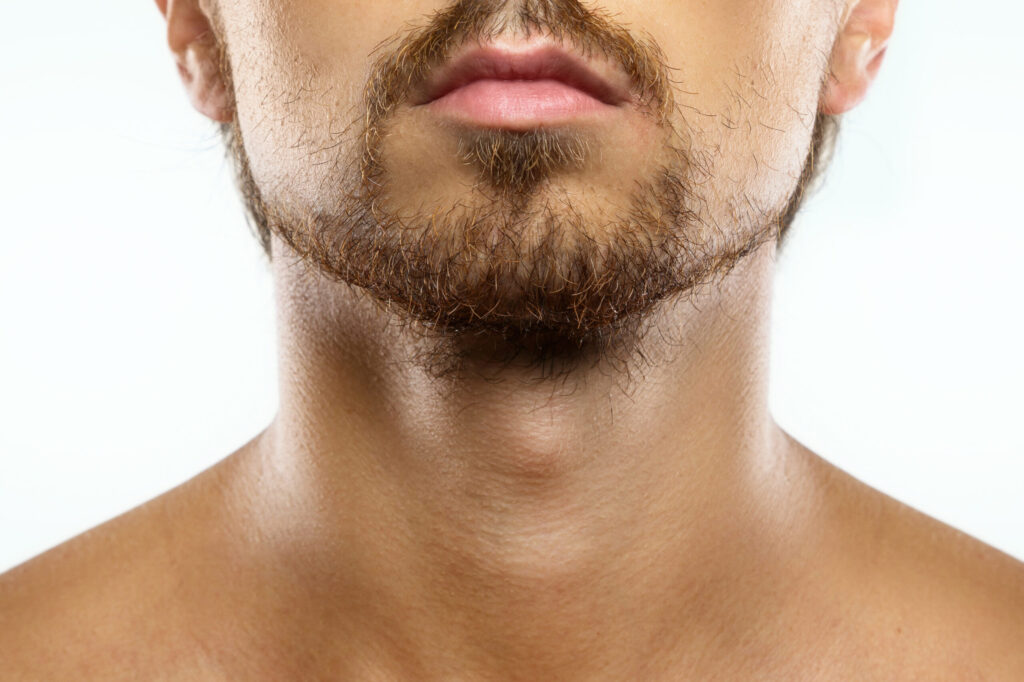
During beard transplant recovery, redness is the most noticeable sign in the first days and in most people it begins to fade within a few days; how long it takes to disappear completely varies with skin type and the procedure. Scabbing, shock loss and the growth of the new beard are separate stages that progress over weeks and months. Below we explain in order what to expect at each stage; for your personal timeline, the final word belongs to the doctor who performed the procedure.
What you see in the first days
Right after a beard transplant, it is expected to see redness, mild swelling and small dots around the transplanted follicles in the treated area. The skin reacts this way because it has met small openings during the procedure.
Swelling in the face area can sometimes spread to the cheeks and around the chin. There may also be a feeling of tightness, mild tenderness or tingling in the area. Their intensity varies from person to person.
When does the redness fade
Redness usually begins to settle from the first days, and the colour of the skin gradually approaches normal. On fair skin the redness may be noticeable for longer, while on darker skin it may be less conspicuous.
During this time, not scratching or rubbing the area and following the care instructions given by the doctor support healing. Redness gradually decreasing is a healthy course; if it increases instead, the clinic should be informed.
Scabbing and shock loss
It is normal for small scabs to form over the transplanted follicles, and these scabs fall off on their own in the first weeks. Picking at the scabs is not recommended because it may damage the transplanted grafts.
During the beard transplant shock loss stage, some of the transplanted hairs fall out. This does not mean the root is lost; the hair root goes into a resting phase and grows again in the following period. Shock loss is usually seen in the period after the first weeks and may make the beard look sparse for a few months. This is a temporary stage, but patience is needed while waiting.
Does a beard transplant leave scars
Since a beard transplant is done through small openings, no obvious scar is expected after the procedure; however, depending on the skin structure, temporary pinkness or dot-like marks may be noticeable for a while. These marks generally become less visible as the transplanted beard grows.
How visible the marks are depends on the skin’s healing structure, following the care instructions and the technique the doctor applies. You can also read about the similar subject in the scalp area in our article does hair transplant leave scars.
What to pay attention to in the first weeks
In the first weeks the most important rule is to leave the transplant area alone and follow the care programme given by the doctor. In general, the following points are observed:
- Not touching or scratching the area and not picking the scabs
- Applying the cleaning and washing instructions as the doctor describes
- Not using shaving, creams or skin products before the doctor approves
- Staying away from direct sun and activities that cause heavy sweating for the period the doctor specifies
- Taking care not to press the face into the pillow and not to take any blows
This list is general information; since every person’s situation is different, the clear rules are determined by the doctor who performed the procedure.
How the results emerge
Beard transplant results do not appear all at once but gradually over months. After shock loss, new hairs begin to grow, thicken over time, and the beard density becomes more noticeable.
The full result usually takes months; therefore the sparseness in the early period should not be considered a cause for concern. If you are curious about how beard and moustache transplants differ from hair transplants, you can look at the article differences between beard and moustache transplant and hair transplant.
When to let the clinic know
If the redness increases instead of decreasing, if the swelling is spreading, or if signs such as persistent pain, discharge or fever appear in the area, you should let the clinic that performed the procedure know without losing time. These symptoms are situations that need a doctor’s evaluation.
When you cannot be sure the process is going normally, the most sensible thing is also to get your doctor’s opinion by sending a photo or going for a check-up.
Frequently asked questions
When does redness go away after a beard transplant?
Redness usually begins to fade in the first days and disappears over time; the full recovery time varies from person to person according to skin type. If there is redness that increases instead of decreasing, a doctor should be consulted.
How many days does it take for a beard transplant to heal?
The first signs on the surface, such as scabbing and redness, usually settle in the first weeks. The beard transplant recovery process is completed over months, along with the growth of the new hairs.
Is there shock loss after a beard transplant?
Yes, it is an expected stage for some of the transplanted hairs to fall out temporarily. The hair roots go into a resting phase and grow hair again in the following period.
When are beard transplant results seen?
Results appear gradually; after shock loss, new hairs grow, thicken over time and the density becomes noticeable. Months are needed for the full result.
Does a beard transplant leave scars?
Since a beard transplant is done through small openings, no obvious scar is expected; temporary pinkness or dot-like marks may be seen for a while. How visible the marks are depends on the skin’s healing structure and on care.
Let’s plan your process together
If you would like to talk about the beard transplant process and the healing stages according to your own situation, you can review the service on our Izmir beard transplant page, speak with our doctor by making an appointment, or reach us through the contact page.