What people considering a hair transplant most often confuse is whether hair implantation, hair transplant and densification implantation are different procedures. Hair implantation and hair transplant are two names for the same procedure; densification implantation is a way of performing it between existing hairs rather than in completely bald areas. Which one you are a candidate for depends on the state of your hair loss and how sufficient your donor area is.
Hair implantation and hair transplant, two names for the same procedure
Hair implantation and hair transplant are two different names describing the transfer of hair roots (grafts), taken from a donor area resistant to shedding, to thinning or bald areas; technically they are the same procedure. The word “transplant” emphasises moving the roots from one area to another, while “implantation” emphasises placing them.
The roots used in this procedure are usually taken from the back and sides of the head. Because the roots in these areas are genetically more resistant to shedding, they tend to keep growing in their new place too. For the general hair transplant process, you can look at our hair transplant page.
What is densification implantation and how does it differ from a classic transplant?
Densification implantation is the placement of new roots between existing hair strands in areas where the hair has not fallen out completely but has become clearly thinner. A classic transplant, on the other hand, is performed in areas where the hair has receded completely.
The key difference is whether there are existing hairs in the area being worked on. While channels can be planned freely in a bald area, in densification every new channel has to follow the direction and angle of the existing hairs and must not damage the roots already there. That is why densification implantation is a procedure that requires more care and planning.
Comparison table
The table below compares the two procedures on the points that decide the choice.
| Point | Classic transplant (bald area) | Densification implantation |
|---|---|---|
| Area treated | Areas where the hair has receded completely | Areas where the hair has thinned but not fallen out completely |
| Who is it considered for? | People whose front hairline has receded or whose crown has gone bald | People whose hair has become finer and lost volume, with the scalp starting to show |
| Technical difficulty | Channels are planned in a bald area | Channels have to follow the direction and angle of the existing hairs |
| Technique often used | FUE or DHI | Often DHI, since it allows work between existing hairs |
| Existing hair | There is no hair, or very little, in the recipient area | Protecting it and keeping it from harm is the priority |
| Expectation | Covering the bald area | Making the thinning area look fuller and denser |
| Healing and care | Crusting, temporary shedding and new growth | The same process; temporary shedding may also be seen in the existing hair |
Who is a candidate for densification implantation?
The most suitable candidates for densification implantation are people whose hair has become finer and thinner but not completely bald, who have a sufficient donor area and whose hair loss has settled into a pattern. The questions below help you think about which group you are closer to:
- Is my scalp clearly visible under light on the front or crown, or is it completely bald?
- Have my hair strands become finer over the years, or has their number decreased?
- Is my hair loss still progressing quickly, or has it stayed at the same level for a while?
- Is there a history of advanced baldness in my family?
- Is the hair at the back and sides of my head dense and healthy?
If your hair is thin but there is no bald area, densification implantation may be considered; if there are distinct bald areas, a classic transplant or a combination of both. The final decision is made at the consultation, after a hair analysis.
Is existing hair damaged?
In densification implantation, protecting the existing hair is at the centre of the plan; opening the channels to match the direction and angle of the existing hairs reduces the risk of damaging the roots already there. That is why densification implantation is a procedure that requires experience and care.
In the weeks after the transplant, temporary shedding may be seen both in the transplanted hair and in the existing hair around it; this is called shock loss. This shedding does not mean the roots have been lost. The roots stay in place and start producing hair again after a resting phase. Knowing from the start that shock loss may happen helps you get through this period more calmly.
How are DHI and FUE used in these procedures?
DHI and FUE are techniques that can be used in both procedures; the choice depends on whether there is existing hair in the recipient area and how large the bald area is. Özel Demiderm Polikliniği performs both techniques.
In FUE hair transplant, roots are harvested one by one, channels are first opened in the recipient area, and the grafts are then placed in these channels. It is often preferred for covering large bald areas. In DHI hair transplant, the roots are placed with a special pen at the same time as the channel is opened. Because this approach can allow work between existing hairs and without trimming the hair in the recipient area, it stands out in densification implantation.
Densification implantation in women
Because hair loss in women is often seen as diffuse thinning rather than baldness in a specific area, densification implantation is an option that comes up more often for women. However, the cause of the hair loss needs to be clarified before deciding on a transplant.
Causes such as thyroid problems, iron deficiency, hormonal changes or the period after childbirth can lead to similar thinning. That is why, in women, blood tests are requested before a transplant when considered necessary, and if there is a treatable cause, it is addressed first.
Treatments that support the transplant
A hair transplant moves permanent roots to the treated area but does not stop active shedding; the natural hair around it may continue to fall out. That is why, for people whose hair loss is ongoing, a transplant can be considered together with supporting treatments.
Alongside hair transplants, the clinic also offers hair mesotherapy and PRP hair treatment. These treatments may be planned for some people to slow the shedding before the transplant, and for others to support the existing hair after it. Which of them is needed is decided according to the results of the hair analysis.
What do you need for a hair transplant?
The basic requirements for a hair transplant are a sufficient and healthy donor area, hair loss that has settled into a pattern and general health that allows a surgical procedure. In addition, realistic expectations and being ready to follow the care rules during healing are also an important part of the result.
- Donor area: There should be enough healthy roots at the back and sides of the head that can be moved.
- Course of the hair loss: If the hair loss is progressing very quickly, supporting treatments may be discussed first.
- Health: Uncontrolled chronic illnesses, a tendency to bleed or an active infection on the scalp can lead to the procedure being postponed.
- Time: You need to make room in your schedule for the day of the procedure and the care of the first days.
What happens in the first period after the transplant?
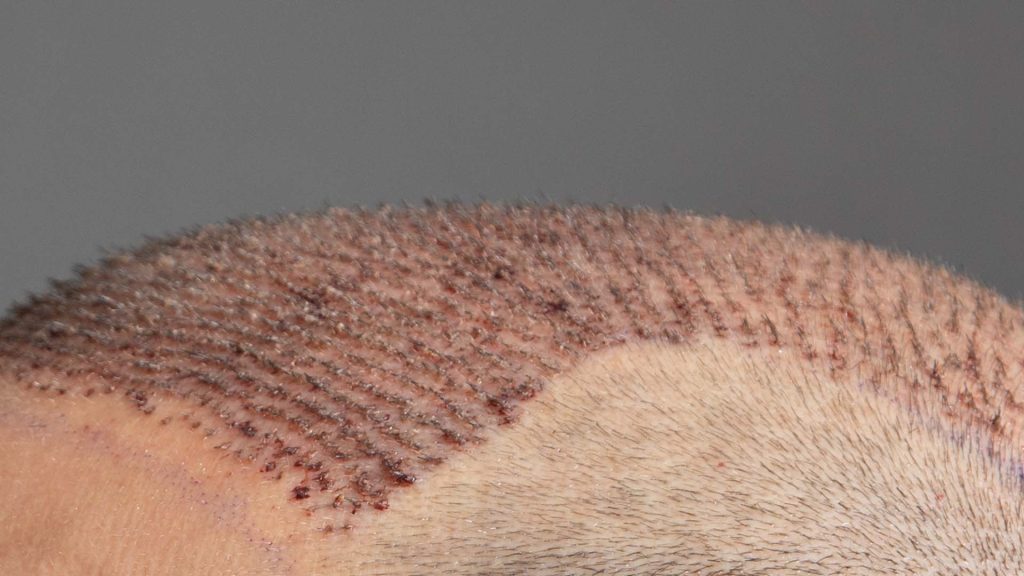
With both a classic transplant and densification implantation, the first days pass with crusting and mild tenderness; temporary shedding is seen in the following weeks, and new hair grows gradually over time. In densification implantation, because the existing hair partly covers the thinning area during this period, the appearance in the first days often attracts less attention. Not touching the recipient area, not picking off the crusts and staying away from heavy exercise, saunas and direct sun for a while are recommendations that apply to both procedures.
What is discussed at the consultation?
The first step towards a hair transplant is a consultation in which your hair loss and your donor area are assessed. At this meeting, the type and course of the hair loss, the structure of your hair, the density of the donor area, your health and the medicines you use are covered. Your expectations are also heard, and the density that can be achieved is discussed openly.
What determines the cost of a hair transplant?
The cost of a hair transplant is determined mainly by the number of grafts needed and the technique chosen; that is why clear information can only be given at the consultation, after a hair analysis. When planning your budget, asking about these points makes comparison easier:
- How many grafts are planned and how was this number determined?
- Which technique is recommended and why?
- Are the initial consultation and hair analysis part of the plan?
- Are the anaesthesia, medicines and dressing on the day of the operation included?
- Are the first wash, care products and check-up appointments included?
- If supporting treatments are needed, are they planned separately?
What should you look for when choosing a clinic?
When choosing a clinic for a hair transplant in İzmir, check whether the plan is based on a hair analysis, how the capacity of your donor area is assessed, whether the reason for the recommended technique is explained clearly and how follow-up continues after the operation. If you are considering densification implantation, be sure to ask how your existing hair will be protected. A consultation that tells you what is possible, rather than that everything is possible, makes your decision easier.
The hair transplant process in İzmir
The hair transplant process in İzmir starts with a consultation and hair analysis; if you are found suitable, the technique, the number of grafts and the day of the procedure are planned together. Özel Demiderm Polikliniği was founded in 2003 on the principle of “health first”; its founder is Hülya Demiral and Dr. Özlem Şahan is part of its medical aesthetics team. The clinic serves clients from across İzmir, including Bornova, Karşıyaka and Buca, and consultations can be held in Turkish and English. To find out which procedure you are a candidate for, you can send your consultation request through our contact page.