
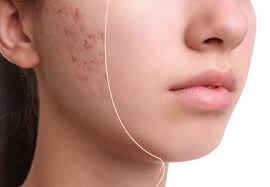
Professional medical spot and pigmentation treatment is an advanced technology preventive dermatology service based on the principle of breaking down melanin pigment towers—unstably accumulated in the epidermal and dermal layers as a result of ultraviolet rays, hormonal fluctuations, or microbial acne scars—at a cellular level using advanced fractional laser systems, enzyme peeling courses, and melanocyte-suppressing mesotherapeutic agents, restoring the tissue’s original optical homeostasis balance, and rebuilding a smooth, homogeneous tone order around the mouth and across the entire facial frame.
What is Spot and Pigmentation Treatment?
Spot treatment is a cellular dermatological therapeutic discipline aimed at eliminating hyperpigmentation (skin darkening) pathologies that overshadow facial aesthetics and mucosal integrity. Melanin pigment, which gives human skin its natural color, is synthesized by melanocyte cells located in the basal layer. As a result of various irritants, these cells bypass their defense reflex, beginning to secrete excessive coloring matter in micro-regions and weaving solid crystallization towers. Medical spot treatment engineering is based on the principle of breaking down these established pigment foci into micronized pieces with the help of photothermal wavelengths or chemical peelers, allowing them to be evacuated from the line via lymph channels without burning deep tissues and leaving bald scar marks (cicatrices). The process is not the simple practicality of applying a superficial whitening cream, but a strict pharmacological protocol that controls the skin’s enzyme cycle.
- Melanocyte Inhibition: Deactivating the cells’ capacity to prematurely produce unstable pigment by suppressing tyrosinase enzyme synthesis.
- Epidermal Turnover Speed: Accelerating the mitosis (cell division) rate in the basal layer of the skin to ensure the early shedding of spotted cell layers from the line.
- Bio-Dynamic Illumination: Verifying the translucent (semi-transparent) radiant integrity of the skin from the inside out, rather than masking the surface like artificial concealing powders.
Why Do Skin Spots and Pigmentation Occur?
The pathological proliferation of hyperpigmentation foci in the facial skin depends directly on the combined action of multi-faceted intrinsic and extrinsic triggers that stimulate melanocyte cell receptors. The primary factor is the ultraviolet (UV) radiation shocks leaking from the sun; because the body perceives this radiation as dangerous, like a scalpel blow, and weaves a protective melanin barricade beneath the enamel and skin. In addition, hormonal fluctuations such as pregnancy, birth control pills, or thyroid disruptions also trigger spot formation along a linear line by uncontrollably serializing the cells’ coloring matter synthesis motor.
- Post-Inflammatory Hyperpigmentation (PIH): Insidious dark spots leaving a residue on the healing mucosal wall after acne, pimples, or injuries finish.
- Phototoxic Chemical Reactions: Perfumes or acidic cosmetic ingredients applied to the skin burning and spotting cells the exact moment they come into contact with sunlight.
- Hereditary Calcification Predisposition: The biology of freckle or lentigo formation index scores being inherently coded high in the individual’s chromosomal structure.
Who is Spot and Pigmentation Treatment Suitable For?
Medical pigment removal courses are medically suitable for all pediatric and adult patients who have confirmed sun spots, pregnancy mask (melasma), or acne marks on their face, and who experience anxiety in social settings due to color tone asymmetries. The procedure exhibits a high bio-compatibility profile since it awakens the tissue’s own natural regenerative homeostasis potential. However, for sensitive cases with active open wounds, weeping eczema, or widespread pus-producing pyogenic infection foci on their skin, as well as ongoing pregnancy calendars, these types of spot-cleansing steps are not medically suitable since the cellular pH balance will progress unstably.
- Victims of Melasma: Male and female patients carrying extensive brown spots in a map-like shape on the forehead, cheeks, and upper lip.
- Those Carrying Senile Lentigo: Geriatric individuals displaying dark round spots appearing on the backs of their hands and along temple corridors linked to aging.
- Those with Cosmetic Spots: Clients whose skin has developed shaded burn spots as a result of incorrect laser hair removal or aggressive peeling applications.
In Which Situations Can Spot and Pigmentation Treatment Be Preferred?
Preferring biotechnological spot repair protocols over merely cosmetic concealing creams is indicated as a definitive medical rule at moments of clinical diagnosis where pigmentation damage has infiltrated down to the lower layers of the enamel and skin, entering a permanent phase. When spot cells take root in the dermis bed, no ordinary lotion applied from the outside can mechanically break down those solid towers. The specialist rationally decides on this evidence-based microscopic workflow when wishing to erase the tired, spotted, and dull expression on facial features, and to resurrect the radiant order of the facial skin within the framework of preventive medicine rules.
| Pigmentation and Spot Pathology Class | Medical Preference Criterion and Clinical Reason | Expected Ultimate Cellular Success Output from the Application |
|---|---|---|
| Chronic Epidermal Melasma (Chloasma / Pregnancy Mask) | The presence of a solid melanosis layer on the cheek and upper lip via hormonal stimulation. | Blocking the tyrosinase enzyme, smoothly fading the spot without leaving scabs. |
| Solar Lentigo (Sun / Age Spot) | UV shocks weaving solid melanin towers on enamel-like surface prisms. | The phase where laser beams shatter pigment blocks to drop the spot into a dust phase. |
| Post-Acne Erythema and Brown Marks | Capillary vessel damage and the spot remaining permanent after acne inflammation finishes. | The cycle of narrowing vascular networks, equalizing color as hollows fill from the base. |
| Widespread Freckle (Ephelides) Clustering | Freckles merging in fair-skinned patients due to a hereditary calcification predisposition. | Bringing the skin undertone color to a homogeneous phase, gaining a pure white clarity. |
How is Skin Analysis Performed Before Spot Treatment?
The pre-operative facial examination performed in the diagnostic chair is the most vital check-up stage that extracts the micron-sized boundary lines of spot depth and verifies the success stability of the treatment. During the examination, the physician or specialist amplifies the color of the spot with the help of special ultraviolet wavelength lamps called a “Wood’s Light”; if the spot darkens under the light, it is verified as epidermal (superficial), and if it blurs, it is registered as having taken root in the dermal (deep) phase. At this stage, with the help of three-dimensional digital skin scanner units (Visia and dermo-scanner systems), the map of invisible insidious spots in the lower layers of the skin is charted with mathematical clarity.
- Melanin Density Verification: Determining the vertical placement index scores of pigment towers within subcutaneous micro-layers.
- Vascular Capillary Vessel Scanning: The process of eliminating insidious capillary feeding networks (the presence of telangiectasia) at the base of spots.
- Fitzpatrick Phototype Determination: Registering the patient’s skin color code to calibrate the joule energy power to be utilized during laser sessions.
How is Spot and Pigmentation Treatment Planned?
The planning of the spot-cleansing workflow is conducted through a step-by-step medical algorithm based on the anatomical depth of the spot, the chronic damage dimension, and the patient’s facial golden ratio curve lines. Rash and default schedules are absolutely never given during planning; all steps are shaped with full fidelity to the epithelial cell turnover (renewal) periods of the skin. In planning, first calming the spot-producing factory (the melanocyte) and then breaking up the surface deposits is a hierarchical rule.
- Phase 1 (Melanocyte Suppression): The appointment for hydraulically halting coloring matter production with antioxidant-content mesotherapy injections during the initial weeks.
- Phase 2 (Pigment Breaking and Peeling): The schedule for spreading smart enzyme peeling masks or shattering solid crystals within seconds with fractional laser tips.
- Phase 3 (Barrier Reinforcement and Repair): The phase step of throwing epithelializing locks to support the weaving of fresh, smooth cells in place of the removed spotted tissues.
What Are the Types of Skin Spots and Pigmentation?
Pigmentation lesions appearing in human facial anatomy are divided into stable classes in medical literature according to the micro-cell layers where they form and their triggering pharmacological origins. The histological structure of each spot variation contains a different bond composition; therefore, the nature of the instruments to be utilized in treatment is flexed according to this fingerprint code of the spot. An incorrect diagnosis can increase damage in the skin, just as it does along the margins of fillings.
- Melasma (Pregnancy/Chloasma Mask): Persistent giant patch towers of hormonal origin with irregular borders, usually appearing in cheek symmetry and the center of the forehead.
- Solar Lentigolar (Sun Spots): Coin-shaped, sharp-edged brown foci clustered on the cheek contours that receive the most direct exposure to sun rays.
- Post-Inflammatory Erythema (PIE): Red-purple vascular spot forms caused by insidious blood accumulation at the base of acne and pimple craters.
- Ephelides (Freckles): The phase of micro-dot melanin deposits clustered over the nasal wing, usually in blonde and red-haired biotypes.
Which Treatment Methods Are Applied for Sun Spots?
In treating the solid solar lentigo towers woven by sun rays on enamel-like surface prisms, the principles of “photothermal selective photolysis” and “enzymatic peeling” are operated in a joint synergy. Clinically, Q-Switched Nd:YAG Laser or Thulium Laser technologies hold primary rule status for these spots. The laser light produces a shock wave the exact nanosecond it encounters the melanin crystal in the spot cell, shattering the solid mass into dust; not even a micro level of heat damage leaks into the surrounding healthy tissues, and the loosened spots are claimed away with a smooth contour within weeks.
How Are Acne Spots Evaluated?
The clinical scanning of pimple marks remaining from puberty or periods of metabolic stress is conducted with precision based on the color of the lesion and the volume of hollowing (cicatrization) in the tissue. If the acne mark is merely in the red-purple color phase (PIE), this is proof that the capillary micro-vessels in that region have remained open and damaged, and vessel-targeted lasers (Dye Laser/BBL) are indicated. If the mark has turned brown, melanin accumulation is verified, and acid-based solution cleansing processes are added to the schedule.
What Are the Differences Between Melasma and Standard Skin Spots?
The most deep-rooted differences between hormonal-origin chronic melasma pathology and standard sun or age spots are the tissue depth layers where the lesions are located, the insidiousness of their triggering mechanisms, and their resistance stability coefficients against treatment. While sun spots mostly remain limited to the outermost layer of the skin (the epidermis), melasma infiltrates micro-arms down to the dermis, the deepest living bed of the skin, like an insidious octopus. In the comparison table below, the clinical parameters of the two major pigmentation classes are listed:
| Clinical, Histological, and Treatment Criterion Group | Melasma Pathology (Hormonal Mask) | Standard Sun Spot (Solar Lentigo) |
|---|---|---|
| Primary Etiological / Triggering Root of the Spot | Estrogen/Progesterone hormone fluctuations, pregnancy cycle, and chronic intrinsic stress. | Direct or prolonged unprotected exposure to the sun’s ultraviolet (UV) rays. |
| Subcutaneous Cell Placement Depth | Mostly mixed; takes root both in the superficial epidermis and the deepest dermis bed. | Largely superficial; clusters at the upper stratum corneum and basal boundary lines of the skin. |
| Boundary Lines and Anatomical Distribution Silhouette | Map-like, with indented-outdented margins, and fully asymmetric twin spread across the cheek and forehead segment. | Coin-shaped or circular sections, forming sharp foci whose boundary lines are clearly selected with the naked eye. |
| Relapse (Rebirth) and Resistance Coefficient | Extremely high; can flare up again within seconds under the slightest unprotected sun or heat shock. | Low; once claimed away with laser, it does not relapse at the same spot if home protection is disciplined. |
| Primary Selected Clinical Treatment Protocol | Non-aggressive smart enzyme peeling masks (Cosmelan/Dermamelan) and melange mesotherapies. | Photothermal-focused Q-Switched Nd:YAG Laser units or Thulium smart glass laser courses. |
What Are the Methods Used in Spot and Pigmentation Treatment?
The components used in modern clinical spot practices are synthesized from nanotechnological pharmaceutical raw materials so that the material can keep the enamel and sub-mucosal cell repair rate at a maximum. The surgeon does not impose a single device on the patient; they bring the bio-technological combinations into the field that will offer the highest fading stability based on the spot’s Miller class depth. This variety of methods carries spot-removal success to a perfection beyond human error.
- Smart Enzyme Peeling Masks: Masks containing kojic acid and azelaic acid, left on the face for 8-10 hours to lock the tyrosinase enzyme motor,
- Thulium (Spot) Laser Technology: Smart units that open thousands of micron-sized channels in the skin with a 1927 nm wavelength, vaporizing pigments from the cells where they are trapped,
- Melano-Block Mesotherapy Infusions: Processes where a mix of glutathione, salmon DNA, tranexamic acid, and high-dose vitamin C is injected directly into the spot roots via needles.
How Long Does Spot and Pigmentation Treatment Take?
Thanks to the speed of modern clinicians and the practicality of spot systems, medical spot interventions are among the most dynamic dental and medical processes showing excellent integration into the heavy time constraints of modern metropolitan life. The stages of milimetrically scanning all facial quadrants via injections or laser tips are usually completed in a short time frame of only 20 to 30 minutes per session; they bear no laboratory cargo waiting periods.
How Many Sessions of Spot and Pigmentation Treatment are Applied?
The total number of sessions for spot lesion-cleansing courses requires a stable calendar hierarchy in medical literature, depending on the subcutaneous placement chronicity of the spot and photothermal breaking degrees. A single sitting strikes an instant fading spark but cannot construct a long-term tissue memory sealing; therefore, scheduling the processes as a holistic program of 4 to 6 sessions in total repeated at 2-3 week intervals is a clinical rule; for enzyme peeling masks, the process is woven as a single mask session followed by a 6-month home continuation cream discipline.
How Does the Healing Process Progress After Spot Treatment?
The tissue recovery phase following the operation progresses in an extremely predictable, rapid, and comfortable manner due to involving scalpel-free and stitch-free steps. The formation of a mild pinkness, heat increase, and a micro-flaky peeling layer in the injection or laser area during the first 48 hours following the procedure, linked to the breaking reflex of pigment towers, is a completely natural physiological cell adaptation given by the extracellular matrix. The healing speed flows swiftly; on the 5th day, spotted dead flakes shed, revealing the smooth, soft, and clear new tissue of the facial wall with its color equalized.
What Should Be Considered After Spot and Pigmentation Treatment?
To render the functional success of the spot-removal session permanent without relapse, support the dissolved coloring matters to flow smoothly away from the line, and preserve the sealing quality of fresh pores, there are some strict medical rules the patient must observe in the home environment after the procedure. It must absolutely not be forgotten that during the initial weeks, the skin walls can temporarily transition into a phase more sensitive to external stimuli.
The points that must be meticulously observed at home during the critical post-procedure period are as follows:
- For the first 24 hours following the laser or peeling session, the face must absolutely not come into contact with water and no baths should be taken, in order to prevent bacteria from seeping through micro-holes and triggering infections.
- The forming fine micro-flakiness must never be scratched with fingernails or peeled off by hand; if scabs are removed prematurely, they lead to the birth of deeper insidious spots (post-inflammatory spots) in the fresh skin.
- To prevent mineral leakage from pores through facial sweating and to avoid awakening the melanocyte through heat shock, sauna, Turkish bath, solarium, and heavy cardio sports activities must be entirely postponed for the first 1 month.
- Verified 50+ factor broad-spectrum medical sunscreen creams must be applied without compromise 3 times a day, every 4 hours against the sun’s ultraviolet (UV) rays, protecting against fluorescent/computer lights even in the home environment.
How Should Skin Care Be Performed to Prevent Spot Formation?
Post-session home hygiene and prophylaxis routines must contain a delicately balanced discipline that will reinforce the gained fluoroapatite-smooth skin quality but will not distress fresh mucosal and skin margins. The use of charcoal, bicarbonate, or acid-containing coarse-granular peeling soaps with excessively high abrasives sold in pharmacies is strictly forbidden as they can scratch the face and irritate the melanocyte; home hygiene is entrusted to soft cleansings harboring anti-spot suppressants.
- Antioxidant Serum Doping: Applying pure vitamin C or ferulic acid serums to clean skin every morning to support cell regeneration and neutralize free radicals.
- Bio-Active Moisture Locking: The rule of massaging medical night creams containing hyaluronic acid, arbutin, and licorice root with fingertips via circular motions every night to protect the moisture chain of the subcutaneous fibroblast bed.
What Are the Advantages of Spot and Pigmentation Treatment?
The advantages provided by biomedicine and laser technologies to the quality of life of hyperpigmentation patients go beyond creating an instant visual whiteness; they carry tissue safety to a perfection beyond human error. Mucosal irritation risks that synthetic fillers or poor-quality chemicals might bring are completely eliminated in this corporate system. Chemical locking power offers the patient a lifelong permanent radiance vision.
- Rescues the Face from Artificial Masks: It completely liberates the patient from the bondage of heavy foundations and powders applied layer upon layer every morning to cover facial spots.
- Clear and Translucent Brilliance: The comfort of registering a pure white, clear, and radiant complexion by elevating the skin’s own cellular quality without disrupting the facial order of features.
- Scar-Free Cellular Success: The luxury of protecting the tissue by targeting merely the spot with smart lasers, instead of burning the skin with acids and leaving permanent white spots (hypopigmentation).
With Which Aesthetic Applications Can Spot and Pigmentation Treatment Be Planned?
Medical pigment-cleansing technology can be planned in a combined synergy with other modern instruments of medical aesthetics and dentistry to holistically elevate the rejuvenation architecture of the lower facial oval and the facial frame rigidity. While upper-layer spot blocks are broken with lasers, underlying collagen factories can be treated simultaneously with different robotic units; the combination calendar is designed by the expert physician.
- Autologous Stem Cell / Fibrocell Courses (Allied): Injecting fresh fibroblasts multiplied from behind the ear into the smooth skin opened after spot treatment, carrying wrinkle and spot repair success to the peak,
- Salmon DNA / Youth Vaccine Integration: Processes where polynucleotide molecules are infiltrated into the entire facial wall while sub-enamel and sub-mucosal color waves are equalized, rendering the moisture chain and glaze brilliance permanent.
What is the Importance of Regular Skin Checks in Spot Treatment?
Periodic follow-up control examinations after the intervention encompass the most vital monitoring steps checking the mineral saturation stability of melanocyte cells and auditing newly opened pore lines. Since spot cells possess a dynamic memory and harbor a reflex to reawaken under the slightest unprotected UV shock, adhering to 6-month routine physician checks is a rule required by medical standards to refresh the shield’s strength and catch insidious spot towers while still in their embryonic phase.
Frequently Asked Questions About Spots and Pigmentation
The most common practical concerns arising in the minds of clients planning to get rid of insidious spot towers and hyperpigmentation unhappiness on their faces, along with their polyclinic medical matches, are presented below:
Does spot treatment hurt a lot while laser tips touch my face during the session, and will my face burn after the procedure?
No, you will definitely not feel the slightest unbearable pain or ache. Before transitioning to the session, powerful local anesthetic creams of medical standards are applied to the facial skin wall, registering that the area transitions into a completely desensitized phase. During laser shots, you only perceive tickles in the style of a light rubber band snap. The mild feeling of heat and redness appearing on the first day after the procedure smoothly fades away entirely on its own within hours with the help of ice compresses.
Will these enzyme peeling masks or spot lasers applied in the clinic leave permanent white razor spots (marks) on my face?
No, this situation is a complication that can develop when working with uncalibrated industrial-type devices or uncontrolled acids in under-the-counter salons; however, the new generation Thulium or Q-Switched laser wavelengths utilized in our polyclinics are smartly calibrated solely to target the melanin crystals that give the spot its color. Since they do not leak damage into your own healthy skin cells even at a micro level, absolutely no permanent scar, hollow, or artificial white wound mark develops in the tissue after the procedure.
Will my spots emerge back again in future years after the spot treatment finishes and my skin glows completely pure white?
Spot treatment entirely cleanses existing melanin towers on the surface and calms the factory (the melanocyte); however, it is verified in medical literature that melanocyte cells retain a lifelong “spot-producing memory.” If you sunbathe without protection in summer months, enter a solarium, or neglect to apply your protective cream with the quick-fix complacency of “my spot is gone anyway” after the treatment ends, the cells can restart the spot factory to protect themselves; therefore, home protection discipline is mandatory for permanence.
Is there a medical obstacle to having my spot treatment courses performed in summer months or hot weather?
Aggressive deep chemical acid peeling sessions or high-damage ablative laser interventions that completely peel the skin are contraindicated (cannot be done) in summer months. However, the new generation “Thulium Laser” technologies and “Cosmelan/Dermamelan” smart enzyme masks utilized in our polyclinics work at a cellular level without circularly peeling the skin; thus, they can be applied with full safety throughout the 12 months of the year, including summer months, provided that the 50+ factor medical sunscreen discipline is followed to the letter.
Can I return to my normal business, nursery, and social life at the exact second my spot treatment session finishes?
Yes, medical spot treatments are entirely local and non-invasive prophylaxis craftsmanship involving no clouded consciousness, no slowed motor hand coordination reflexes, and no surgical scalpel incisions; therefore, the exact second the shield sets, you can stand up from the chair and return to your normal daily, professional, social, or academic life rhythm from where it left off instantly, uninterrupted and with high self-confidence relief, without even needing a companion; there is no clinical obstacle to driving a car immediately.
Who Are We? & Private Demiderm Polyclinic
Private Demiderm Polyclinic is a licensed health institution centered around corporate medical discipline in branches completing modern facial, mucosal, and oral integrity, primarily medical aesthetics, dermatology, laser technologies, hair health solutions, and holistic rejuvenation applications. Instead of abandoning facial spot towers linked to aging or the sun, chronic acne marks, or enamel deformations to the distressing patterns of insidious and temporary cosmetic concealers, our center gives vital importance to executing “biological tissue-protective and pigmentation barrier” principles with evidence-based clinical data, and unwaveringly runs Digital Diagnostic Mapping and Advanced Technology Smart Laser Spot Restoration aesthetic ecosystems with calendar discipline in full compliance with the regulations by charter from the very beginning to the end of the clinical operation workflow.
Under the roof of Private Demiderm Polyclinic, all diagnosis, digital scanning, design, and microscopic tissue activation interventions are operated in full compliance with medical regulations by charter, ensuring absolute sterilization, high patient safety, transparency, and honesty principles. In our clinical practices, while analyzing spot pigment densities and mucosal sensitivity Miller class grades with the help of Wood’s light dermo-scanner units in the preliminary examination, absolute moisture isolation systems keeping resin bonding strength at maximum and robotic shot stations that do not cause intra-tissue trauma are applied with millimetric precision under the supervision of our expert physician staff. Our goal is not to impose old-fashioned analog distressing patterns on our patients that abrade their enamel, cause pain, or cut the tooth unnecessarily because the ache could not be resolved; but to analyze each individual’s facial golden ratio boundaries, occlusion mechanics, and skin phototype class scores on a digital screen before the operation, obtaining smooth natural facial features that you will use with maximum session comfort without damaging surrounding soft tissues, a same-day standard, and unshakeable trust for life. If you are tired of the black sun spots on your face, the melasma darkenings, or the fading form of your eyelids when you look in the mirror, yet you postpone your checks due to fear of burning or time constraints, and you wish to start your smart digital treatment process from start to finish with scientific assurance in an expert corporate polyclinic environment; you can contact the expert staff of Private Demiderm Polyclinic to safely take your health and facial integrity under protection in line with your detailed examination.