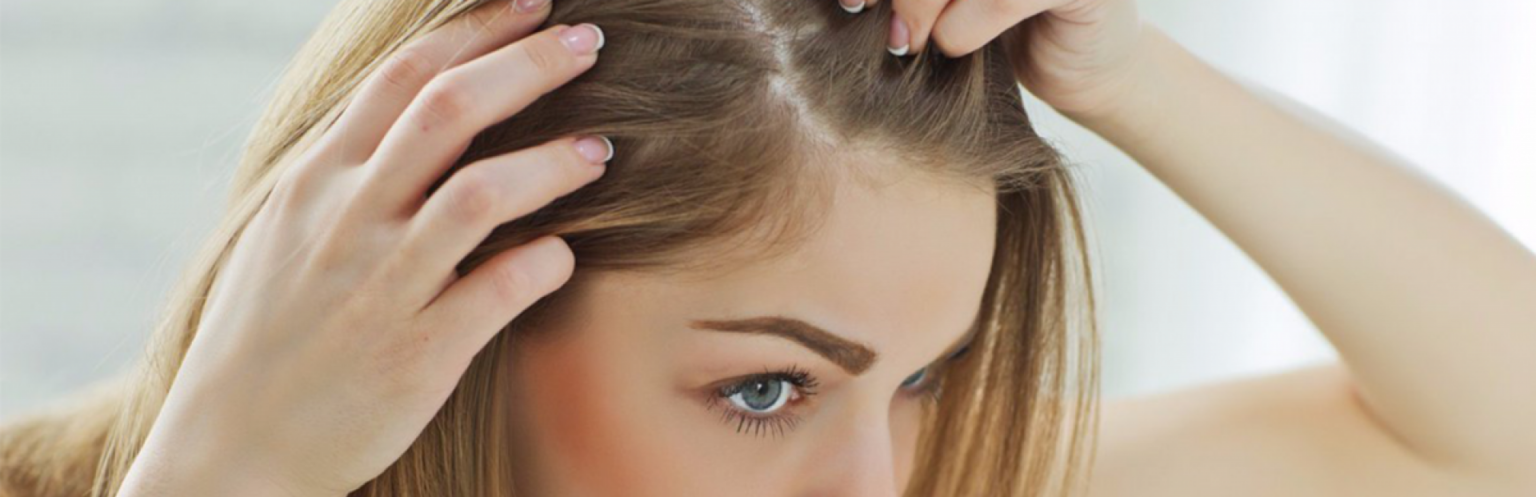
Permanent makeup and medical micropigmentation treatment for alopecia areata is a protective medical aesthetic service based on camouflaging the asymmetric contrast and bare skin appearance caused by sudden, localized circular hair loss on the scalp, eyebrows, or beard lines due to alopecia areata pathology. This is achieved by injecting plant-based, anti-allergenic organic pigments into the basal layer of the epidermis using microneedles to create illusionistic hair and follicle effects.
What is Permanent Makeup for Alopecia Areata?
In medical literature, the disease known as alopecia areata (commonly referred to as hair loss or spot baldness) is an autoimmune dermatological pathology that develops when the immune system perceives its own hair follicles as a foreign threat and attacks them. This process causes hair roots to abruptly enter the dormant phase, leading to smooth, bare focal areas on the skin about the size of a coin. Permanent makeup for alopecia areata (medical micropigmentation) is a microscopic dermal illusion discipline developed to eliminate the resulting contrast difference and shiny skin reflection during phases when hair transplantation or medication treatments fail to yield results, or while these processes are still ongoing. By processing bio-compatible pigments specially formulated for the epidermis layer of the skin, the image of freshly shaved dense hair follicles or natural hair strands is mechanically reconstructed in the area.
- Medical Camouflage Power: Equalizing the radical tone difference between the hairless area and donor hair using optical refraction techniques.
- Herbal Pigment Stability: Heavy-metal-free organic dyes that do not irritate delicate skin with alopecia and do not turn blue or green over time.
- Non-Invasive Nature: Epidermal micro-touches that do not involve surgical hair transplantation surgeries and do not require anesthesia injections.
How is Permanent Makeup Applied for Alopecia Areata Appearance?
The medical permanent makeup workflow, conducted in a polyclinic environment, is executed through sequential stages designed to alleviate the patient’s anxiety thresholds and target the highest microscopic precision. First, the anatomical structure of the area is registered as smooth using antiseptic liquids, and topical numbing creams are thoroughly absorbed into the skin to ensure no pain is felt. Next, pigment molecules are infiltrated into the deeper layers of the skin via microneedles attached to digital micropigmentation devices. During the application, the growth direction, diameter thickness, and vascular shadow densities of the donor hair are simulated, and the alopecia areata area is completely outlined optically using either dot-by-dot (dotting technique) or fine lines (hair stroke technique).
- Topical Anesthesia Block: Completely desensitizing the skin against injection pain for 30 minutes with the help of lidocaine-based medical creams.
- Microneedling Frequency: Robotic device tips executing thousands of strokes per minute, opening only micro-pores without tearing the skin.
- Layered Depth Setting: Stopping the needle precisely at the basal layer at a depth of 0.5 – 1 mm to ensure the dye is permanent but does not blur or spread.
Who is Permanent Makeup for Alopecia Areata Suitable For?
Medical permanent makeup courses aimed at eliminating aesthetic asymmetries caused by alopecia areata are medically suitable for all pediatric and adult patients who have localized bald patches on their scalp, eyebrows, mustache, or beard corridors, and who restrict their facial expressions and experience anxiety in social settings due to these losses. Since the procedure does not impose systemic drug loads on the body and does not involve surgical incisions, it acts as a complete protective shield for individuals with delicate immune balances. However, direct pigmentation is contraindicated during the active, continuously expanding inflammation phase of alopecia areata, or in acute phases where redness and crusting persist on the skin; the process must be applied during chronic periods when the lesion has stabilized or under physician supervision.
- Alopecia Patients with Eyebrow Loss: Male and female patients whose facial expressions have faded because alopecia areata has completely claimed the eyebrow area.
- Those Unable to Have a Hair Transplant: Individuals whose hair density in the donor area is insufficient for a transplant surgery or who are hesitant about surgical risks.
- Those Wishing to Return to Social Life Quickly: Individuals desiring instant camouflage without waiting for the results of long-term cortisone or injection treatments.
How is Permanent Makeup Used for Appearance Changes Caused by Alopecia Areata?
In treating the radical external appearance damages created by alopecia areata pathology in human facial anatomy, permanent makeup is the most visionary medical illusion instrument that restores symmetry without damaging tissue integrity. Alopecia areata can circularly strip away not only hair but also beard lines or eyebrow arches. Permanent makeup technology responds by adapting its identity according to the hair morphology of the applied area. In our clinical table below, the preference criteria for permanent makeup techniques based on the appearance changes caused by alopecia areata are listed:
| Anatomical Loss Area Caused by Alopecia Areata | Preferred Medical Permanent Makeup Technique | Expected Ultimate Optical and Cellular Output from the Application |
|---|---|---|
| Scalp (Occipital / Vertex Region) | Hair Simulation (Scalp Micropigmentation / Dotting Effect) | The appearance of shaved dense hair follicles is registered in the bald area, neutralizing the contrast. |
| Eyebrow Arch (Supraorbital Margin) | Microblading / 3D Hair Stroke Technique | Three-dimensional hair lines are woven fully parallel to the natural eyebrow curves, reinforcing facial expressions. |
| Beard and Mustache Corridors | Combination of Micro-Shading and Dotting | In male patients, gaps in the beard cross lines are outlined, preserving masculine contour symmetry. |
| Multiple Widespread Patches (Alopecia Multilocaris) | Holistic Dermal Micropigmentation | Patches in different quadrants are equalized with the donor hair color, establishing a holistic illusion of hair density. |
How is the Assessment Done Before Permanent Makeup for Alopecia Areata?
The pre-operative examination performed in the diagnostic chair is the most vital analytical stage that monitors the boundary stabilization of the alopecia areata lesion and measures the pigment absorption binding capacity of the skin. During the examination, the physician performs gentle pull tests on the hair strands at the margins of the lesion to verify whether the disease has a tendency to spread actively. At this stage, the thickness biotype of the skin and the presence of scar tissue (fibrosis hardening) are meticulously scanned; because dye absorption parameters vary in excessively hardened fibrosis areas, the device needle depths are calibrated at the micron level based on these data.
- Lesion Activity Verification: Dermatological confirmation that alopecia areata has completed its spreading phase and transitioned into a chronic stagnant phase.
- Dermal Allergy Test (Patch Test): Injecting a micro-dose of the pigment substance behind the ear and monitoring it for 48 hours for any allergic reactions.
- Donor Hair Diameter Measurement: Measuring the thickness of existing hair to select the needle calibration (0.2 – 0.3 mm) to be used in the simulation.
What Are the Techniques Used in Permanent Makeup Applications?
In medical micropigmentation practices, different bio-technological methodologies are deployed according to the facial coordinates where the alopecia areata area is located and the structural character of the remaining healthy hair. The goal is not to impose a single mechanical coloring template, but to weave layered artistic drawings with balanced light transmittance and a sense of depth. The precision of the techniques used is supported by software automation that eliminates human eye error rates.
- Micro-Dotting: Processing micron-sized pigment dots into the skin with specialized device tips to create a shaved hair follicle appearance on the scalp.
- Medical Hair Stroke: Drawing lines that perfectly mimic the natural curves and bends of the hair in eyebrow and beard areas using flexible diamond blades or ultra-fine needles.
- Powder Ombre / Shading: Placing a light depth background behind the hair strokes to hydraulically absorb and mute the white reflective glare of the bare skin.
How is a Natural Appearance Achieved in Alopecia Areata Areas?
The seamless, natural form stability that ensures no artificial coloring can be detected from the outside when looking in the mirror depends on the rules of “asymmetric curving” and “three-dimensional depth perception.” The most major medical misconception is the act of completely closing the bald area with a single dark color tone as if painting a wall; this creates a harsh helmet look or an artificial drawing appearance across the face and mouth areas. Naturalness is verified by gradually reducing pigment density at the transition lines where the lesion boundaries merge with the donor hair (razor-edge transition technique) and by processing different micro-tones of dye layer upon layer.
“The secret to flawless naturalness in alopecia areata areas is not to paint the skin, but to place light and shadow games around the pigment, turning bare skin into a smooth forest of hair follicles.”
How is Permanent Makeup for Alopecia Areata Planned?
The planning of the medical camouflage workflow is conducted through a step-by-step medical algorithm based on the width of the lesion area in mm, the patient’s skin phototype (Fitzpatrick Scale), and the density stability of the donor hair series. The planning process is never rushed; all steps are shaped by taking into account the potential of alopecia areata to regrow hair (chance of recovery) in the future. In planning, incorporating 3-4 week rest periods—which corresponds to the epithelial cell renewal rate of the skin—between sessions reinforces process safety.
- Phase 1 (Phototype and Scale Tuning): Determining the skin’s undertone color (warm/cool) to eliminate the risk of the dye turning red or purple in the future via specialized software.
- Phase 2 (Anatomical Boundary Drawing): In cases of eyebrow or hairline loss, establishing the symmetrical preliminary draft on the skin with water-based pens according to facial golden ratio parameters.
- Phase 3 (Gradual Session Distribution): Monitoring the saturation coefficient of the color absorption by the skin and shifting the coloring density homogeneously across the session schedule.
How is Color Selection Made in Permanent Makeup for Alopecia Areata?
The color selection phases represent an analytical stage that zeroes out the light illusions of the human eye and calculates in advance the biochemical color changes the dye will display when it encounters subcutaneous pH fluids. The chosen color tone must be calibrated completely parallel to the root shadow color (under-tone color) at the moment the hair is shaved shortest, rather than the patient’s current full-length hair color. While the hair root of a black-haired individual produces a leaden blue-gray reflection subcutaneously, this tone shifts toward an ashy dark blonde in blondes; the color selection is registered according to this optical integrity.
- Pigment Blending Protocol: Preparing tailored micro-tone mixtures in the laboratory appropriate to the patient’s hair shaft melanin ratio, rather than using a single pre-made color.
- Oxidation Coefficient Calculation: The rule of mathematically accounting for the darkening and drying margin the dye will be exposed to during the first week while the skin heals.
What is Scalp Micropigmentation and How is it Applied?
Scalp micropigmentation is an advanced medical illusion procedure aimed at sealing the wide and bare crater areas opened by alopecia areata on the scalp. During the application, unlike the drill motors used in hair transplant units, robotic guns with microneedles that only inject dye are deployed. During the procedure, the scalp is kept strictly isolated from moisture balance; because excessive sweating or fluid leakage causes the pigment to spread by seeping between cells. This method shades wide alopecia areata patches in a single session, providing the patient with immediate visual comfort and unshakeable aesthetic reassurance.
How Long Does the Permanent Makeup Procedure for Alopecia Areata Take?
Thanks to the practicality of the robotic units in the session room, medical camouflage interventions are among the most dynamic dental and medical processes that adapt perfectly to the heavy time constraints of modern city life. The stages of camouflaging a single, coin-sized alopecia areata lesion by scanning it dot-by-dot following the absorption of the anesthesia cream usually take a microscopic duration of only 30 to 45 minutes per session; the duration is shaped flexibly when the area extends across the jawline or the entire head.
How Many Sessions of Permanent Makeup are Applied for Alopecia Areata?
The total number of sessions for platelet or pigment injection courses requires a stable calendar hierarchy in medical literature, depending on the speed at which the skin’s macrophage (scavenger) cells eject foreign dye molecules from the body. In a single session, a portion of the dye is removed from the line along with the scabs as the skin renews itself; therefore, scheduling the processes as a holistic program of at least 2 or 3 sessions repeated at 4-week intervals is an absolute medical rule to achieve fully leakproof color saturation.
- Session 1 (Foundation Building): The low-density initial phase where the color tone and needle depth are tested on the skin.
- Session 2 (Saturation and Stabilization): The main session where the remaining gaps from the first session are scanned, and full color matching with the donor hair is established.
- Session 3 (Touch-up and Calibration): The final step where margin transitions are examined one last time to verify smooth, natural form integrity.
How Does the Healing Process Progress After Permanent Makeup?
The post-operative tissue recovery phase is extremely fast, predictable, and comfortable due to the absence of scalpel incisions and stitches. During the first 48 hours following the procedure, the development of a slight darkness and a thin, subtle scab layer in the injection area due to the closure reflex of the micro-holes is a completely natural physiological cell repair reaction given by the extracellular matrix. Healing is swift; on the 4th day, mucosa and skin scabs flake off, revealing the smooth, soft, and completely natural matte tone of the dye fully integrated with the skin.
What Should Be Considered After Permanent Makeup for Alopecia Areata?
To render the aesthetic success of the camouflage session permanent and support the pigment molecules injected under the skin to remain without dissolving, there are some strict medical maintenance rules the patient must follow in the home environment after the procedure. It must never be forgotten that the tissue walls transition into a phase open to external leakage during the first days due to micro-needle entry holes.
The points that must be meticulously observed at home during the critical post-procedure period are as follows:
- For the first 3 days following the application, the procedure area must absolutely not come into contact with water and no baths should be taken, in order to prevent the pigment from binding to water molecules and leaking out of the skin.
- The forming micro-scabs must never be scratched with fingernails or peeled off; if scabs are removed prematurely, they pull the dye out with them, leaving white spots on the skin.
- For at least 1 week, the consumption of cigarettes, tobacco products, and alcohol must be completely ceased so as not to paralyze the capillary vessel repair rate at the wound site.
- In the early days, there should be no direct exposure to the sun’s ultraviolet (UV) rays; a hat should be used, or high-factor medical barrier creams should be applied to prevent the dye from fading.
What Factors Affect the Longevity of Permanent Makeup Application?
The ability of medical pigmentation to remain for long years within oral and facial tissue boundaries without fading or changing color depends directly on the patient’s metabolic rate and daily lifestyle habits. Permanent makeup does not contain lifelong permanent heavy metals like tattoo dyes; this is actually an advantage, because when alopecia areata heals and your own original hair emerges from underneath, it is desired that the dye dissolves and leaves the area over time.
- Skin Sebum (Oil) Coefficient: In patients with excessively oily skin biotypes, the rate at which macrophage cells clear the dye from the line is swifter.
- Sun and UV Exposure: The risk of solarium or unprotected sunbathing breaking the pigment crystal bonds and dulling the color prematurely.
- Metabolic Cell Renewal Rate: Since cell turnover is fast in young patients, the longevity of the dye’s permanence is registered as slightly shorter compared to older patients.
What is the Difference Between Hair Simulation and Permanent Makeup for Alopecia Areata Appearance?
The most radical differences between medical hair simulation device technologies used in alopecia areata treatment and conventional cosmetic permanent makeup (beauty tattooing) applications are the needle geometries used, the molecular weights of the dyes, and the histological boundaries of the tissue depth layers where the procedures terminate. Cosmetic permanent makeup dyes can remain superficial or tattoo dyes can go too deep and turn bluish; medical simulation, however, yields fully stable results with robotic tips manufactured solely for hair follicle replication. In the comparison table below, the clinical parameters of the two superior camouflage classes are listed:
| Clinical, Chemical, and Technical Evaluation Criteria | Medical Hair Simulation (Scalp Micropigmentation) | Classic Cosmetic Permanent Makeup (Beauty Tattoos) |
|---|---|---|
| Used Needle Tip Diameter Calibration | 0.2 – 0.25 mm; micro tips that replicate only the hair follicle pore size exactly. | 0.35 – 0.45 mm; flexible needles for thicker line drawings or lip/eyeliner filling purposes. |
| Biochemical Structure of Pigment Molecules | Medical dyes free of heavy metals and alcohol, which do not cause color deviation (turning green) in saliva and pH fluids. | Cosmetic dyes that may contain iron oxide in their ingredients, turning red or blue under the sun over time. |
| Subcutaneous Processing Depth Layer | The basal layer, which is the lowest boundary line of the epidermis (stable safety between 0.5 mm – 1 mm). | The more superficial stratum spinosum layer, or conversely, the deepest fat bed of the dermis in tattoos. |
| Average Longevity of the Dye in Tissue | Longer and more stable; preserves its bright form for 3 to 5 years depending on skin structure. | Shorter duration; fades within 1-2 years due to facial wash acids, entering a holistic fading phase. |
What Are the Advantages of Permanent Makeup Application for Alopecia Areata?
The advantages provided by biomedicine and medical camouflage steps to the quality of life of alopecia areata patients go beyond creating an instant visual illusion; they rescue the patient from social anxiety traps in a single session. Offering needle-free comfort and rapid discharge makes this method one of the most visionary preventive aesthetic investments.
- Instant Definite Result: Camouflaging baldness on the same day without waiting for months-long cortisone injection or hair regrowth lotion schedules.
- Process-Independent Safety: Even if your real hair continues to grow from underneath, it poses absolutely no mechanical hindrance to the growth order of the emerging hair strands from the mucosal border.
- Psychological Regeneration: The luxury of granting unshakeable joy and self-confidence to the patient who is rescued from that distressing white patch appearance of alopecia areata when looking in the mirror.
In Which Situations Can Permanent Makeup Be Preferred for Alopecia Areata?
The clinical avenues where medical micropigmentation steps are actively preferred are those insidious stages where the patient is fatigued by cortisone needles and the alopecia areata wounds have become chronic, completely drying out the follicle beds. If the lesion site has not responded to any medical treatment for over 2 years, it means the chance of awakening the stem cells there has weakened medically; permanent makeup is preferred as a primary rule to seal these permanent bald areas, freeing the patient from the bondage of carrying a wig or a hat for life.
How Should the Care Process Be for Permanent Makeup Applications for Alopecia Areata?
The periodontal and facial care routines to be maintained at home starting from the final delivery moment when the course sessions end are the safety steps that keep the clarity of the dye at a enamel-like brilliance with high stability for life. Drying of the skin surface causes the dye to flake off; therefore, moisture balance must be reinforced morning and evening with thin applications via bio-active epithelializing creams recommended by the physician, avoiding harsh rubbing.
What Are the Frequently Asked Questions About Alopecia Areata and Pigmentation?
The most common practical concerns arising in the minds of clients planning to get rid of alopecia areata patches using medical micropigmentation technology, along with their polyclinic medical answers, are presented below:
If I have permanent makeup or simulation done on an alopecia areata area, will this procedure prevent my own hair from growing from underneath or dry out the roots?
No, absolutely not the slightest risk of prevention or root drying is a possibility. Medical micropigmentation needles penetrate only the topmost layer of the skin, the “epidermis” (at a depth of 0.5 mm). The living root factories of your hair (bulbus centers), on the other hand, are hidden in the “dermis” (3-4 mm depth) bed, which is a much lower layer of the skin; therefore, the procedure cannot make any mechanical or chemical contact with the roots, and your hair will continue to grow smoothly from under the dye without experiencing any damage the moment your alopecia areata disease is healed by the immune system.
Are unbearable pain or bleeding triggered while micro-strokes are applied to bare skin during the application?
No, absolutely not. Prior to the procedure, powerful local anesthetic gels and creams of medical standards are applied to the skin walls with alopecia areata, ensuring the area transitions into a completely desensitized phase. Furthermore, since micropigmentation needles are ultra-fine filament tips rather than thick like tattoo needles, and work is conducted in the non-vascular upper layer of the skin, neither a wave of bleeding develops nor a sting of pain awakens during the session; the process is completed in a room of total comfort.
Will these injected or simulated dyes run and spread on my head in the following months due to pool water or sweating?
No, following the 1st week when the permanent makeup and hair simulation procedures are completed and the scabs have shed, the pigment molecules are completely surrounded and trapped by your skin cells. Once this locking mechanism is established, it is physically and chemically impossible for the dye to run, smudge onto clothes, or come off on your hands while taking a shower, swimming in the sea, during heavy sports sweating, or shampooing; color stability is maintained with full stability inside the tissue.
What is the longevity of the alopecia areata simulation on the skin, will it fade away completely over time?
The bright form longevity of the plant-based medical pigments used in our clinics within the tissue is registered with high stability for an average of 3 to 5 years, depending on the patient’s skin biotype. Following this period, the dye molecules fade and dull gradually in harmony with the natural shedding physiology of the skin and are removed from the body without leaving a residue; if it is desired for the color to remain permanent, it is sufficient to have a practical renewal session performed during these periods.
Can I return to my normal business and social life immediately at the exact second the permanent makeup session for alopecia areata ends?
Yes, medical micropigmentation applications are completely local and non-invasive camouflage craftsmanship that does not cloud consciousness, does not slow down motor hand coordination reflexes, and does not involve surgical scalpel incisions; therefore, the very minute the illusion is completed, you can stand up from the chair and return to your normal daily, professional, social, or academic life rhythm instantly, without even needing a companion, with interrupted continuity and high self-confidence relief; there is no obstacle to driving a car immediately.
Who Are We? & Private Demiderm Polyclinic
Private Demiderm Polyclinic is a licensed health institution centered around corporate medical discipline in branches completing modern facial and hair integrity, primarily medical aesthetics, dermatology, laser technologies, hair health solutions, and holistic rejuvenation applications. Instead of abandoning hair losses, mucosal deformations, or facial symmetry erosions to the distressing patterns of insidious and temporary cosmetic concealers, our center gives vital importance to executing “biological tissue-protective surgical and preventive medical” principles with evidence-based clinical data, and unwaveringly runs Digital Diagnostic Mapping and Advanced Technology Medical Micropigmentation ecosystems with calendar discipline from the very beginning to the end of the clinical operation workflow.
Under the roof of Private Demiderm Polyclinic, all diagnosis, digital scanning, design, and microscopic tissue activation interventions are operated in full compliance with medical regulations by charter, ensuring absolute sterilization, high patient safety, transparency, and honesty principles. In our clinical practices, while analyzing the micro and macroscopic follicle quality of the scalp with the help of digital trichoscope units, smart injection stations that coagulate vascular integrity during the operation are applied with millimetric precision under the supervision of our expert physician staff. Our goal is not to impose old-fashioned, slow, distressing analog intervention patterns on our patients; but to meticulously analyze each individual’s facial golden ratio boundaries, occlusion mechanics, and hair follicle Miller density class scores before the operation, obtaining vibrant and lush hair integrity that you will use with maximum session comfort without damaging surrounding soft tissues, a standard of practicality lasting seconds, and unshakeable trust for life. If you are tired of your alopecia areata patches and the fading form of your facial features when you look in the mirror, yet you postpone your checks due to fear of needles or time constraints, and you wish to start your smart digital treatment process from start to finish with scientific assurance in an expert corporate polyclinic environment; you can contact the expert staff of Private Demiderm Polyclinic to safely take your health and facial integrity under protection in line with your detailed examination.