
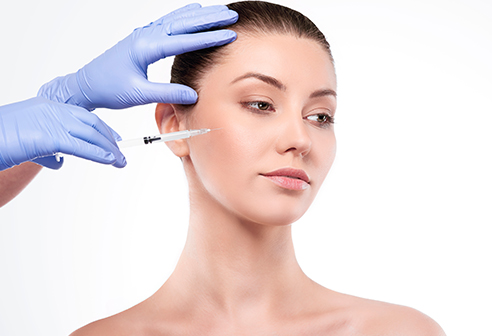
You went to the aesthetic clinic with great excitement, having the procedure done to achieve those lips or sharp jawline you dreamed of. Everything looked great when you left the clinic. But when you woke up the next morning, the reflection in the mirror shocked you: a larger area than you expected, perhaps a little asymmetrical, and feeling hard to the touch… If questions like, “Did something go wrong?”, “Will my lips always stay this big?”, or “Why is my face swollen like a balloon?” start gnawing at your mind, take a deep breath and calm down. The process you are currently experiencing is a perfectly expected, physiological, and temporary condition in medical aesthetic literature. Post-filler swelling is a natural part of the body’s healing journey. So, why does this swelling occur, when does it subside, and when should you worry? In this comprehensive guide, we examine the anatomy of the post-filler healing process in detail.
Why Does Swelling Occur?
Biological Background
To understand the swelling (edema) that occurs after filler injections, it is first necessary to know what the substance injected under the skin is and how it works. 90% of the fillers used today are “Hyaluronic Acid” (HA) based. Hyaluronic acid is a sugar derivative that occurs naturally in our bodies and gives the skin its moisture. The most prominent feature of this substance is its “hydrophilic” or “water-loving” structure. It has the capacity to retain up to 1000 times its own weight in water.
When hyaluronic acid is injected under the skin, two main events occur. First, a microscopic trauma occurs in the tissue due to the needle insertions. The body sends fluid and white blood cells to the area to repair this trauma; this is “traumatic edema”. Second, and more importantly, the injected filler attracts the surrounding water and swells like a sponge. This is “hydrophilic edema”. Therefore, the volume you see after the procedure is not just the filler itself, but the sum of the water retained by the filler and the body’s defense fluids. This doesn’t mean the procedure failed; on the contrary, it’s a sign that the filler is beginning to integrate with the tissue.
Region-by-Region Recovery Process: Not Every Area Swells the Same
Each tissue in our body has a different blood supply, skin thickness, and lymphatic drainage capacity. Therefore, the amount and duration of swelling after filler treatment vary significantly depending on the area where the procedure was performed. Knowing what to expect in each area will reduce your anxiety.
1. Swelling After Lip Filler (Most Intense Area)
The lips are the most vascular and sensitive mucous membrane tissue on our face. Therefore, the lips are the area that swells the most and develops the most edema after filler treatment. Many patients fear experiencing “duck lip” syndrome the morning after the procedure. It is perfectly normal for the lips to appear twice as large, asymmetrical, and feel firm for the first 48 hours. The final shape of the lips will emerge when the edema has completely subsided, which is approximately 2 weeks later.
2. Under-Eye Light Filler and Edema
The area around the eyes is where lymphatic circulation is slowest and the skin is thinnest. This area is very prone to “water retention”. Edema after under-eye light filler may take a little longer to subside compared to other areas. You may notice that your eyes are more swollen when you wake up in the morning, and the swelling decreases as you move around during the day. Patience is very important in this area.
3. Jawline and Cheekbones (Faster Healing)
In deep filler applications on the bone (Jawline, Cheekbone, Chin Tip), swelling is generally less noticeable. Because the subcutaneous tissue is tighter in these areas, edema remains more limited. However, rather than swelling, a “hardness” and “tenderness” felt when touched is more prominent in these areas. This hardness is the process of the filler settling into the tissue and will soften over time.
How Long Does the Swelling Last?
Recovery Schedule
Although the recovery process varies from person to person, depending on metabolic rate and the amount of filler used, there is a generally accepted timeline. Here is a graph of the “mood” and physical changes you will experience after filler treatment:
Day 0 (Procedure Day): Moderate swelling. The result looks great, there is slight fullness.
Days 1-2 (Peak Period): You may be shocked when you wake up in the morning. Swelling is at its maximum level. The area may be tense, hard, and sensitive. This is the most difficult part of the process. Don’t panic.
Days 3-5 (Relaxation Period): Swelling begins to subside rapidly. Bruises, if any, turn yellowish. Asymmetries begin to decrease.
Days 7-10 (Settling Period): 80% of the edema is gone. The filler begins to soften and integrate with the natural tissue.
Day 14 (Final Result): What you see now is the actual result. It’s time to see your doctor for a “follow-up appointment” if you have any asymmetry or lumps.
What to Do to Reduce Swelling? (Important Tips)
The process is fastWhile you can’t completely control your comfort and ease of use, you can minimize the cost by taking certain precautions. Here are the doctors’ golden tips:
- Cold Application (Ice Compress): Applying ice for 10-15 minutes every hour for the first 24 hours (wrapped in a cloth, without direct contact with the skin) significantly reduces swelling and bruising by constricting blood vessels.
- Sleeping with a High Pillow: Keeping your head higher than heart level for the first 2 nights, i.e., sleeping with two pillows, prevents fluid accumulation with the help of gravity.
- Drinking Plenty of Water: Although it may seem contradictory, drinking plenty of water activates the body’s edema-reducing mechanism and accelerates lymphatic drainage.
- Avoiding Heat and Steam: For the first 3 days, stay away from activities such as Turkish baths, saunas, solariums, and very hot showers. Heat dilates blood vessels, increasing swelling.
- Avoiding Salt and Alcohol: Consuming salty foods (pickles, chips, etc.) and alcohol for a few days after the procedure causes the body to retain water, which increases swelling in your face.
Normal vs. Abnormal: When to See a Doctor?
The biggest dilemma for patients is that they cannot distinguish whether what they are experiencing is a normal healing process or a complication. The following table is a critical guide to help you make this distinction:
| Symptom | Normal Condition (Don’t Worry) | Abnormal Condition (Consult a Doctor) |
|---|---|---|
| Level of Swelling | Swelling that increases in the first 2 days, then decreases. | 3. Swelling that increases suddenly after a day, throbbing. |
| Color Change | Bruising, redness, and then yellowing. | Whitening (paleness) or purplish network-like patterns on the skin (Vascular risk). |
| Pain Sensation | Mild tenderness on touch. | Unbearable, severe, and progressively worsening pain. |
| Increased Heat | Mild localized warmth. | Burning sensation in the area (May be a sign of infection). |
| Hardness / Lumping | A general feeling of hardness. | Distinct, painful, red, and fluid-filled nodules. |
Conclusion: Patience Pays Off
While filler injections provide instant beautification like a magic wand, it is necessary to respect the biological healing process. The swelling you see when you look in the mirror is actually your body’s process of accepting that substance. Never forget the “2-Week Rule”; it is essential to be patient for 14 days to see the real result, evaluate asymmetries, and make a decision after filler injections. Early, hasty interventions or swelling reduction procedures often lead to regret.
If your swelling subsides within the mentioned timeframes and your general condition is good, enjoy the process. Those edemas, which will disappear in a few days, will give way to the aesthetic and vibrant look you’ve always dreamed of. Patience is just as important in your beauty journey as choosing the right doctor.