
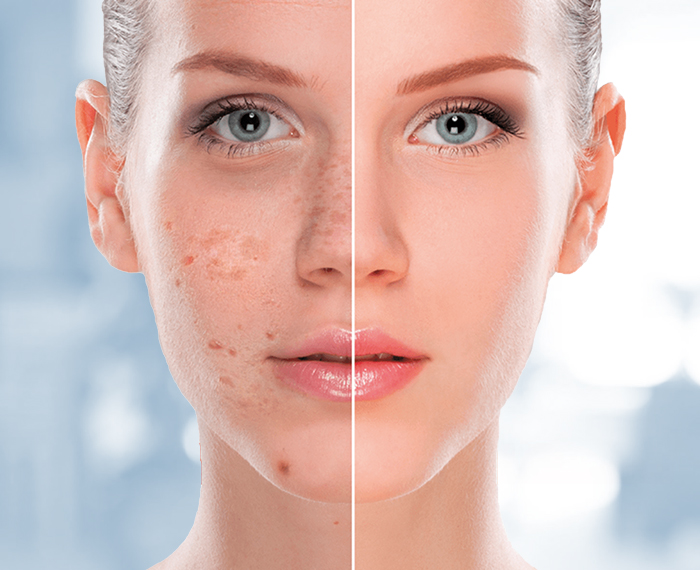
Is it Possible to Even Out Skin Tone with Spot Treatment?
One of the most desirable features in skin health and aesthetics is having a smooth, vibrant, and homogeneous skin tone. The terms “porcelain skin” or “glass skin” basically refer to a texture that is free of blemishes and color unevenness. However, our biological structure, hormonal changes, genetic predisposition, and most importantly, environmental factors (sunlight, air pollution) lead to pigment accumulation in certain areas of our skin, causing spots (hyperpigmentation). These spots, which result from the irregular and excessive production of the color pigment called melanin, can make a person look older and more tired than they are. For many patients, spot treatment can become not only an aesthetic concern but also a psychological burden.
Especially in a city like Izmir, which spends a large part of the year in sunshine and where sea and outdoor culture are central to life, the likelihood of encountering the problem of spots is quite high. The sun’s harmful UV rays constantly stimulate melanocyte cells in the skin, triggering the formation of spots. This situation increases the need for spot treatment and skin tone equalization protocols for individuals living in Izmir. So, is it possible to even out skin tone with advancements in medical aesthetics and dermatology? The answer is; with the correct diagnosis, combined treatments planned specifically for the individual, and a disciplined protection process, “Yes, it is largely possible.” However, this process requires patience and expertise.
How Do Spots Form? Melanin and the Defense Mechanism
To understand spot treatment, it is necessary to know why spots form. The “melanin” pigment that gives our skin its color is produced by cells called “melanocytes” in the epidermis layer.
In fact, melanin production is the skin’s way of protecting itself against the harmful effects of the sun. When we go out in the sun, our skin tans like a shield produced to prevent DNA damage. However, in conditions such as sun damage, hormonal imbalances (pregnancy, birth control pills), inflammation (acne, scars), or genetic predisposition, melanocyte cells “panic” and begin to produce excessive and irregular melanin. This excess pigment clumps in certain areas of the skin, forming dark spots. Spot treatment aims to suppress this overproduction and break down the accumulated pigment.
Types of Spots and Correct Diagnosis
Not all spots are the same, and not all spots are treated the same way. A successful skin tone equalization process begins with a correct diagnosis.
1. Melasma (Pregnancy Mask)
These are irregularly bordered, map-like spots usually seen on the cheeks, forehead, upper lip, and chin. They are caused by hormonal factors and sun exposure. It is a chronic and recurring condition. It is the most difficult type of spot to treat and requires the most patience. Aggressive lasers should be avoided, and suppressive treatments should be preferred.
2. Solar Lentigo (Sun/Age Spots)
These are well-defined, round or oval brown spots that form as a result of years of sun exposure. They are usually seen on the face, backs of the hands, and shoulders. They are epidermal (superficial) in location and are the type of spot that responds most quickly to treatment. 3. Post-Inflammatory Hyperpigmentation (PIH)
These are dark-colored marks left by the skin as it heals after acne, wounds, burns, or incorrect cosmetic procedures. It is an increase in melanin as a response to trauma to the skin. It is more common in people with darker skin tones. Climate Factor and Treatment Timing in Izmir
When planning spot treatment in Izmir, the climatic realities of the city cannot be ignored.
Many spot treatments (Lasers, Peels) make the skin more sensitive to the sun. Therefore, the most suitable time for aggressive spot treatments in Izmir is between October and April, when the sun’s effect is relatively reduced. During the summer months, instead of procedures aimed at peeling the blemishes, protocols that suppress the blemishes (mesotherapy) and protect from the sun (follow-up creams after enzyme peels) are applied. The perception among people in Izmir that “blemish treatments are not done in the summer” is partially incorrect; it is more accurate to say, “Skin peeling procedures are not done in the summer, protective treatments are applied.”
Modern Medical Treatment Methods
There is no single “magic wand” to even out skin tone. Generally, combined protocols using several methods together give the best results.
1. Thulium Laser (Lavieen)
This is one of the most popular technologies in recent years. This laser, with a wavelength of 1927 nm, opens micro-channels at the junction of the dermis and epidermis (the source of the blemish) without peeling the upper layer of the skin. It breaks down melanocytes (blemish cells) and allows the skin to regenerate itself. It is also known as “BB Laser” because it evens out skin tone, giving a glow as if foundation has been applied. It is safely used in many types of spots, including melasma.
2. Q-Switch Lasers
They are the classic and powerful weapons of spot treatment. By targeting the melanin pigment, they break down the pigment into very small particles using the effect of sound waves (photoacoustics).It breaks down pigments into fragments. The fragmented pigments are cleared by the body’s immune cells. It is particularly effective on sunspots.
3. Spot Mesotherapy
This involves injecting lightening and suppressing agents (Vitamin C, Glutathione, Tranexamic acid, Arbutin) under the skin to break the chain of spot formation. It is an indispensable aid to support laser treatments and prevent the return of spots (rebound effect).
4. Chemical Peeling and Enzyme Peeling (Cosmelan/Dermamelan)
It allows for the controlled peeling and renewal of the upper layer of the skin. Enzyme peels not only peel, but also aim to stop the formation of new spots by suppressing the “Tyrolysinase” enzyme that causes spot production.
Comparison Table of Spot Treatment Methods
We have summarized which method is used for which purpose and the healing processes in the table below:
(Photoacoustic).Deep and Superficial Sunspots.Immediate return to social life (or mild peeling).
| Treatment Method | Mechanism of Action | Target Spot Type | Social Life (Healing) |
|---|---|---|---|
| Thulium Laser | Micro-damage and pigment breakdown. | Melasma, Sun Spots, Uneven Tone. | 1-2 days of redness, slight crusting. |
| Q-Switch Laser | Pigment bursting | ||
| Enzyme Peeling | Enzymatic suppression and peeling. | Stubborn Melasma, Deep Spots. | 3-7 days of intense peeling and redness. |
| Spot Mesotherapy | Biochemical suppression. | Supportive for all spot types. | None (Only needle mark). |
Home Care Protocols and Protection
Spot treatment, completed in the clinic It is not a procedure. If 50% of the success is clinical application, then 50% is the care the patient will apply at home.
- Sun Protection: In Izmir conditions, sunscreen should be used even indoors, regardless of summer or winter. Skin undergoing treatment for blemishes is vulnerable; even a single day of unprotected sun exposure can render months of treatment useless.
- Suppressive Creams: Creams (with tyrosinase inhibitors) that continue to suppress blemish production even at home, as recommended by the physician, should be used regularly.
- Moisturizing: Treated skin may become dry and sensitive. It is necessary to support the skin with barrier-repairing moisturizers.
Treatment Process and Realistic Expectations
Blemish treatment is not an “eraser” procedure. Blemishes can be a chronic condition that leaves a mark in the skin’s memory.
The goal is; The goal is to lighten the color of the spot to match the skin’s natural tone, even out the skin tone, and prevent the spot from darkening again. While superficial sunspots may disappear in 1-2 sessions, deep melasma spots may require 4-6 sessions and lifelong protection. The patient needs to be patient and not fall into the misconception of “treatment is finished, I don’t need protection anymore.”
Who is it suitable for?
It is suitable for adult individuals who experience uneven skin tone, have sunspots, acne scars, or pregnancy mask (melasma) and can comply with the treatment process (sun protection discipline). Spot treatment is not applied during pregnancy and breastfeeding, in the presence of an active infection, or while using medications that cause photosensitivity.
Conclusion: A Journey to Smooth Skin
In summary; the answer to the question “Is it possible to even out skin tone with spot treatment?” is a strong “Yes” in the light of science. However, this is more than a one-time procedure; it’s a journey to restore the health and balance of the skin.
In Izmir, despite the sun’s full generosity, having clear and even-toned skin is not a dream thanks to modern medical technologies and expert physician care. Spot treatment is one of the most valuable investments you can make in your skin; because an even skin tone provides a more impressive look than even the best makeup.