
Hair Transplant or PRP? Which is More Sensible in Your 20s?
In your 20s, the most dynamic period of life, hair thinning or receding hairline noticed when looking in the mirror can be a serious source of psychological pressure for young individuals. Androgenetic alopecia (male pattern baldness) that begins at an early age pushes individuals to seek quick and radical solutions. At this point, the first two options that come to mind are usually clear: Hair transplantation, a surgical procedure, or PRP (Platelet Rich Plasma), a non-surgical, supportive treatment? The answer to this question directly affects not only your current appearance but also your hair health in your 30s and 40s.
The Physiological Reality of Your 20s: The Active Hair Loss Phase
The most fundamental concept to understand when planning treatment at a young age is “hair loss stability”. The period between the ages of 20 and 30 is when genetic hair loss is most aggressive and variable. Hair follicles show sensitivity to the hormone dihydrotestosterone (DHT), and this process is not yet complete. Therefore, the hair thinning you see at age 22 may be much more widespread by age 28.
This biological uncertainty plays a decisive role in treatment choice. Hair transplantation, a surgical procedure, transfers permanent follicles to areas of hair loss; however, it cannot preserve existing hair that is still shedding. On the other hand, regenerative treatments like PRP aim to slow down the hair loss process by improving the quality of existing hair. Therefore, the fundamental question for choosing a treatment at a young age is whether to opt for “restoration” (renewal) or “preservation” (protection).
Option 1: Hair Transplantation (Surgical Approach)
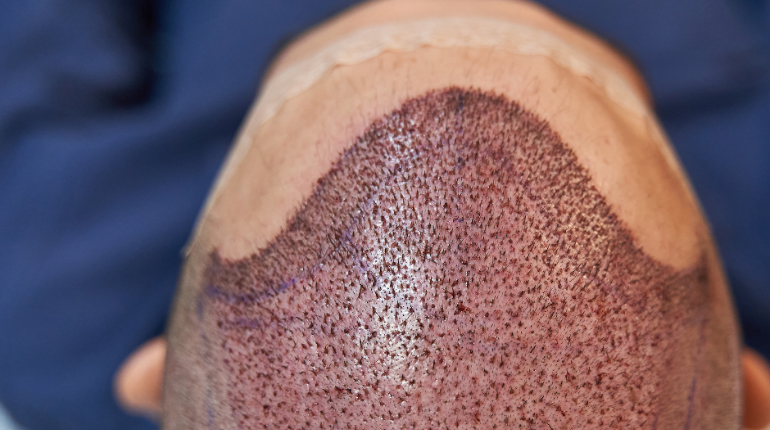
Hair transplantation is the transfer of healthy hair follicles (grafts) taken from the donor area (the nape of the neck) to areas of thinning. This procedure is a microsurgical operation performed under local anesthesia. It is popular because it provides permanent results, but it carries some risks for those in their 20s.
When a hair transplant is performed on a young patient, the transplanted hairs are permanent for life. However, if the patient’s own original hair continues to fall out due to genetic coding, gaps will form behind the transplanted hairs. This can result in an unnatural appearance with a dense strip of hair in the front and baldness in the back.
The Right Timing for Hair Transplantation at a Young Age
Expert physicians generally find the 30s, when the hair loss pattern has settled and slowed down, to be more ideal for surgery. However, there are exceptional cases where hair transplantation can be performed in one’s 20s:
- Hair loss is due to traumatic reasons (scarring, etc.) rather than genetic factors.
- The boundaries of hair loss are very clear and the rate of progression has stopped.
- The patient accepts that they may need a second operation in the future.
Option 2: PRP Treatment (Protective Approach)
PRP (Platelet Rich Plasma) is a procedure where enriched plasma obtained from the person’s own blood is injected into the scalp. This method is not a surgical procedure; it aims to nourish hair follicles, increase blood circulation, and thicken hair in the “miniaturization” phase (hair that is thinning and becoming downy).
Why PRP for 20s?
In young patients, hair follicles are not yet dead, they are only weakened. This stage is when PRP treatment works with the highest efficiency. Follicles that haven’t completely closed can re-enter their healthy cycle when stimulated with growth factors. The fact that it leaves no surgical scars, doesn’t affect daily life, and focuses on preserving existing hair makes PRP a strong candidate for early-stage hair loss.
Comparative Analysis Table
The following technical comparison table will guide you in deciding which method is more suitable for you. Remember, this table contains general information and the final decision should be made after a doctor’s examination.
| Features | Hair Transplantation (Surgical) | PRP Treatment (Medical Aesthetics) |
|---|---|---|
| Main Purpose | To replace lost hair (Restoration). | To protect and strengthen existing hair (Preservation). |
| Application Method | A long operation in one session (or rarely 2 sessions). | Sessions repeated at periodic intervals (e.g., once a month). |
| Healing Process | Crusting and it takes 10-15 days for healing. | There is no recovery period, the person immediately returns to social life. |
| Suitability for Young People | May be risky if hair loss continues (Advanced age recommended). | Shows high effectiveness in early-stage hair loss. |
| Permanence of Results | The transplanted roots are permanent for life. | Maintenance for continued effect (remember)(tma) sessions are required. |
Decision-Making Strategy: Which Path Should You Choose?
These two methods are not alternatives to each other, but rather solutions that address different needs and different times. In fact, in many cases, combined treatments (PRP support after hair transplantation) yield the most successful results. However, if you are in your early 20s, your decision-making process should work as follows:
Situations Where PRP Should Be Prioritized:
If you have general hair thinning but not complete baldness, if your hair strands are thinning and have lost volume, and if the history of baldness in your family has appeared in later years; it is most logical to extend the life of your hair with supportive treatments such as PRP and mesotherapy instead of rushing into surgery. This allows you to save your donor area (your hair reserve in the nape of your neck) for more critical years to come.
Situations Where Hair Transplantation May Be Considered:
If your baldness is very pronounced, your front hairline has completely disappeared, and medical treatments (medication, spray, PRP) are ineffective, hair transplantation may be considered with detailed planning by a specialist physician. However, even in this case, “conservative planning” should be done instead of “maximum grafts,” and the front hairline should be kept conservative, taking into account the possibility of future hair loss.
Conclusion: The Importance of Individual Planning
Hair loss treatment should be as unique to each individual as a fingerprint. “Before-and-after” photos or forum comments on the internet may not match your biological reality. Your 20s are a golden age for saving hair follicles. Managing this period with scientific and medical approaches that support hair health, rather than with irreversible aggressive surgeries, generally provides the highest satisfaction in the long run.
For the most accurate roadmap, consult with a dermatologist or plastic surgeon specializing in hair health; You should have your hair quality, type of hair loss, and donor capacity analyzed using hair analysis devices. Your health and appearance are too valuable to leave to chance.