
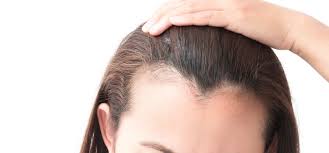
Why is Hairline Design So Important?
While the success of hair transplant operations is usually measured by the number of grafts or the density of the hair, the true signature of aesthetic success is the “hairline.” When you look at a person’s face, the first thing that catches your attention is that thin line where the forehead meets the hair. This line being natural, harmonious with the facial features, and age-appropriate ensures the “discretion” of the operation. If the hairline is not designed correctly, no matter how dense the hair is at the back, the result can be an artificial and aesthetically unappealing look (known colloquially as the “grass man”).
The Frame of the Face: Establishing Anatomical and Aesthetic Balance
The hairline is the frame of the face. Just as displaying a valuable painting with the wrong frame diminishes the impact of the artwork, a wrong hairline can negatively affect a person’s facial expression. Hairline design is not just “where the hairs begin”; It is a biological boundary where a person’s facial muscles end and the range of motion of the forehead muscles is limited.
The first element to consider in a professional design is the forehead muscles (frontalis muscle). Transplanting hair on wrinkles that form on the forehead when a person raises their eyebrows can cause the grafts to move with the movement and result in an unnatural appearance. Therefore, the ideal line should start just above the point where the facial muscles end.
The Golden Ratio and the Leonardo Da Vinci Principle
The “Golden Ratio” (1.618), used for centuries in aesthetic surgery and art, is also the cornerstone of hairline design. An ideal human face is aesthetically divided into three equal parts:
- Part 1: The distance from the tip of the chin to the base of the nose.
- Part 2: The distance from the base of the nose to the middle of the eyebrows (glabella).
- Part 3: The distance from the middle of the eyebrows to the starting point of the front hairline.
In successful hair transplant planning, the goal is for these three parts to be as equal as possible. If the hairline is started too low (narrow forehead), the person may have a more aggressive or primitive appearance than they are. Conversely, if it is started too high (wide forehead), the perception of baldness may not be completely eliminated. The surgeon’s skill lies in adapting this mathematical ratio to the person’s head structure.
Critical Information: In nature, no hairline is perfectly straight as if drawn with a ruler. The secret to naturalness lies in “macro and micro irregularities.” In professional design, a “saw-tooth” model is applied by intentionally creating millimeter-precise indentations and protrusions. This makes it difficult for the eye to follow the line, breaking the perception of artificiality.
Graft Selection and Orientation Strategy
The importance of frontal hairline design doesn’t end with “determining its location”; “which hairs” are transplanted to that line is also vital. Hair follicles (grafts) can structurally contain single, double, triple, or quadruple hair strands. In a natural hair structure, the first 2-3 rows always consist of “single” and “thin” hair strands. As you move towards the back, multiple and thicker grafts begin.
One of the biggest mistakes is transplanting multiple (triple-quadruple) grafts to the frontal hairline. This situation causes the hair to look stiff and clumpy, like a “toothbrush” or “doll’s hair,” when it grows out. Therefore, the surgical team must select the grafts under a microscope and transfer only single, delicate roots to the front hairline.
Natural vs. Artificial: Comparative Analysis
The easiest way to tell if a hair transplant result has been successful is to look at the front hairline. In the table below, we have detailed the differences between a professional approach and amateur mistakes:
It is studied.
| Evaluation Criteria | Natural and Professional Design | Unnatural / Faulty Design |
|---|---|---|
| Line Form | Slightly zigzagging, irregular and asymmetrical transitions (Macro-micro irregularity). | A perfectly straight, sharp line as if drawn with a ruler. |
| Graft Content | Only single hair follicles are used in the front row. | Double or triple (multi) grafts in the front row is placed. |
| Channel Angle | Hair grows horizontally (approximately 15-20 degrees) to the skin and forward. | Hair grows vertically (45-90 degrees) upwards like grass. |
| Temple Connection | It joins the temporal region with a soft curve. | The temporal connection is broken or forms a very sharp corner. |
| Age Matching | A slightly recessed “Maturity Line” is designed to suit the person’s age. | For a 40-year-old patient, an 18-year-old adolescent hairline is created. |
Age Factor and the Concept of “Mature Hairline”
Hairline designOne of the most common mistakes is using photos of the patient from when they were 18-20 years old as a reference. However, the hairline, just like our skin, undergoes a natural change with age. In men, the hairline naturally recedes slightly towards the end of their 20s, and there is a slight thinning at the temples. This is called a “Mature Hairline.”
Giving a 45-year-old individual a hairline as low and straight as they had at 18 would not look aesthetically pleasing. On the contrary, it would create a wig-like appearance that is incompatible with the aging features of the face. The goal in professional planning is a sustainable design that best reflects the patient’s current age, but will not look unnatural on their face even when they age 10-20 years later.
The Importance of Temporal Regions
The front hairline is not just the horizontal line on the forehead. How this line merges with the temporal peaks determines the profile view. If hair transplantation is only performed on the frontal area and the receding temples are left bare, the hair may look good from the front, but from the profile it will stand apart like a “wig.” Closing that triangular point where the frontal hairline meets the temples (temporal recessions) at the correct angle is the final touch that completes the framing of the face.
Conclusion: The Intersection of Science and Art
Frontal hairline design is where hair transplantation transforms from engineering into art. Extracting roots from the donor area or creating channels are technical skills; however, determining where, at what angle, and along what line those channels should be created requires vision. Every face has a story, a character, and its own unique anatomy. A successful hair transplant should complement this story without disrupting it, creating a quiet and natural complement that best suits the person’s face, without shouting “I’m here.”
Therefore, the pre-operative planning phase is as valuable as, or sometimes even more valuable than, the operation itself. To be at peace with your reflection in the mirror and avoid regrets even years later, it is crucial to have detailed communication with your doctor during the design phase and to have realistic expectations that are appropriate for your facial anatomy.