
Does Hair Transplantation Look Natural in Women?
When hair transplantation is mentioned, shaved hair and a noticeable healing process usually come to mind. This image is the biggest reason for hesitation for female patients with high aesthetic concerns when approaching the procedure. Questions such as “Will it be obvious that it’s been done?”, “Will my hairline look artificial?”, or “Will it look like men’s hair?” are the most frequently expressed concerns of female patients in their clinical applications. These concerns are not unfounded; because female anatomy and aesthetics have completely different dynamics than men. However, thanks to modern surgical techniques and artistic design planning, hair transplantation in women can yield extremely natural, smooth transitions and undetectable results.
The Key to Naturalness: Gender-Specific Hairline Design
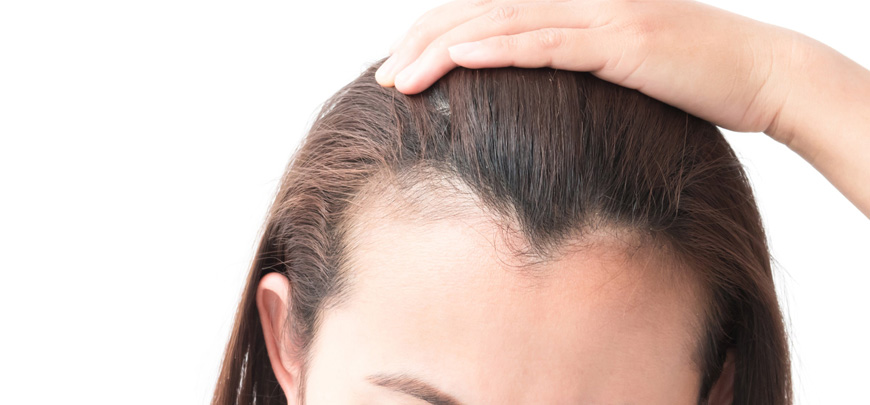
The most critical element determining whether a hair transplant result is natural is the “Hairline”. The structure, shape, and placement of this line are completely different in men and women. If a surgeon plans a male-type hairline for a female patient, the result will be unsuccessful and artificial. The anatomical basis of a natural look in women is as follows:
- Shape Difference: While the hairline in men is generally indented (M-shaped) backwards from the temples; in women, this line follows a more rounded, oval, or straight line. The indentations in the temple area are softer or absent in women.
- Direction and Angle: Women’s hair grows downwards and backwards, especially in the temporal (temple) areas, with natural turns called “cowlicks”. Mimicking these natural directions millimeter by millimeter during transplantation ensures that the hair looks natural when tied up or combed.
Forehead Width: A wide forehead can be an aesthetic feature in women, but excessive width is bothersome. For a natural look, the hairline should not be lowered too much; it should be positioned at the point where the facial muscles end, in accordance with the “Golden Ratio” balance of the face.
Technical Precision: “Thickening” and Shave-Free Application
Hair transplantation in women is generally an art of “thickening” and “camouflage” rather than a “baldness cover-up” procedure like in men. Adding new roots between existing hairs without damaging them is the most important parameter of naturalness.
At this point, the DHI (Direct Hair Implantation) technique comes to the forefront. This method, where channel opening and root placement are performed simultaneously, allows the surgeon to enter between the existing hairs without disrupting the natural angle of hair growth. In addition, thanks to the “Shave-Free Hair Transplantation” protocol developed for female patients, the hairs in the transplanted area are not cut. This ensures that the transplant scars are hidden by the existing hairs even immediately after the operation, making it difficult to detect the procedure from the outside.
Comparative Analysis of Male and Female Aesthetics
To better understand what a natural result means in women, you can examine the key differences between male and female aesthetics in the table below:
| Aesthetic Parameters | Natural Appearance in Women | Natural Appearance in Men |
|---|---|---|
| Line Form | Round, oval, or straight lines are dominant. | “M”-shaped temple indentations are prominent. |
| Graft Selection | Only the thinnest, single grafts are used in the frontal line. | Single grafts are used in the frontal line, and multiple grafts are used towards the back. |
| Temple (Temporal) Region | It can be curved and have a smooth transition, protruding forward. | It is sharp and angled backward. |
| Purpose | To camouflage sparseness (Volume). | To cover open areas (Covering). |
| Density Transition | A very smooth gradient from the frontal line to the crown. |
Factors Threatening Naturalness and Solutions
There are some risk factors that can cause hair transplantation in women to not look natural, and these risks should be eliminated in professional planning:
- Attaching Multiple Grafts to the Front: Hair follicles contain 1, 2, or 3 hair strands. If a thick follicle with 3 strands is implanted in the front, this will cause a “grass man” appearance. In women, the most delicate single follicles, separated under a microscope, should be implanted in the front row.
- Wrong Angle (Perpendicular Growth): Women’s hair generally grows more horizontally and backwards from the skin. Transplanting hair at a vertical (90-degree) angle prevents the hair from taking shape and looks artificial. With DHI pens, horizontal angles of 15-20 degrees can be achieved.
- Protecting the Donor Area: Women usually gather their hair. When taking hair from the nape area, the “window” method should be used, and the extraction should be homogeneous so that a sparse area (moth-eaten appearance) does not form at the back when the hair is gathered.
Perception of Naturalness During the Healing Process
In the first 10 days after the operation, the procedure may be noticeable due to scabbing. However, the fact that women have long existing hair is a great advantage in masking this process. The shock shedding phase (1-3 months) is a temporary process. When permanent hair begins to grow (from the 6th month onwards), these new hairs will be 100% compatible with the existing hair in terms of color, texture, and curliness/straightness, as they are the person’s own genetic hair.
In conclusion, the answer to the question “Does hair transplantation look natural in women?” is definitely “Yes” in the right hands. In procedures performed by a team with a mastery of female anatomy, an artistic vision, and expertise in non-shaving transplantation techniques, the results can be so natural that even the patient’s closest relatives (unless they tell them) may not realize that an operation has been performed. The determining factor here is the mathematical and aesthetic accuracy of the planning specific to the patient’s gender.