
Is Hair Transplant Permanent, or Does It Fall Out?
This is without a doubt the most fundamental and critical question occupying the minds of patients who are in the decision-making phase of a hair transplant procedure: “Will this procedure—into which I invest time, effort, and budget—be permanent, or will the transplanted hair also fall out over time?” This concern is especially valid for individuals experiencing genetic hair loss (Androgenetic Alopecia). After all, having already gone through the experience of losing their natural hair, people understandably fear that the newly transplanted hair may share the same fate. However, the medical foundation of hair transplantation goes far beyond a simple transfer process; it is based on the transplantation of genetic codes.
Scientific Foundation: The Donor Dominance Theory
To understand the permanence of hair transplantation, one must first understand the mechanism of hair loss. Male pattern hair loss occurs when hair follicles develop a genetic sensitivity to the hormone DHT (Dihydrotestosterone). However, not all hair on the human scalp reacts to this hormone in the same way. Hair in the donor area—specifically the nape (the region between the ears) and above the ears—is genetically coded to be resistant (immune) to the destructive effects of DHT.
The “Donor Dominance” theory, introduced in the 1950s by Dr. Norman Orentreich, is the cornerstone of modern hair transplantation. According to this theory, when a hair follicle that is genetically programmed not to fall out (nape hair) is transplanted into an area affected by hair loss (such as the crown), it continues to retain the genetic characteristics of its original location. In other words, even if the hair follicle “changes address,” it does not change its “identity.” For this reason, transplanted hair is theoretically as permanent as the hair in the donor area and can last a lifetime.
The “Shedding” Misconception: Shock Loss vs. Permanent Loss
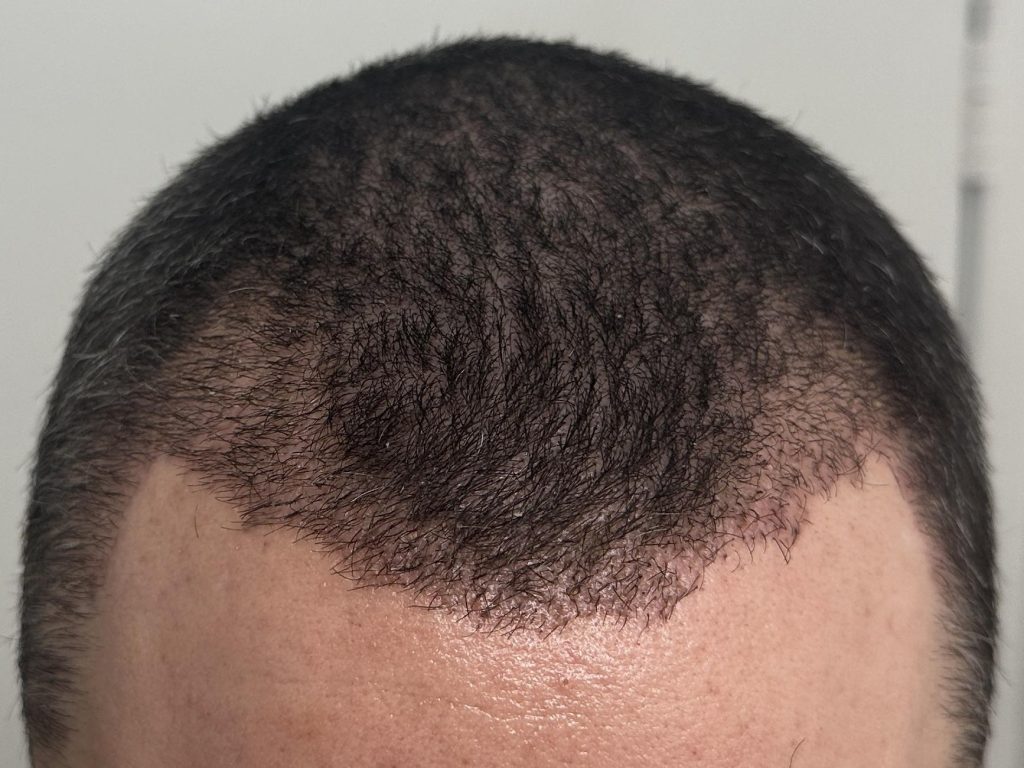
The majority of panic reactions from patients saying “my transplanted hair has fallen out” are caused by a natural part of the post-operative process known as “Shock Loss.” Approximately one month after the procedure, 80–90% of the transplanted hair suddenly sheds. This is a temporary reaction of the follicles to surgical trauma.
The critical distinction to understand here is this: What falls out is only the lifeless hair shaft. The “follicle” (the root), which is the center that produces the hair, remains alive under the skin and enters a resting phase. This condition is temporary, and from the third month onward, the hair begins to grow back permanently. Therefore, the shedding experienced in the first months is not a sign of failure; on the contrary, it is proof that the cycle is functioning properly.
If the patient still has their own original hair around or between the transplanted area, this hair may continue to undergo genetic hair loss. In most cases where patients say “my hair has thinned” years later, the hair that has fallen out is not the transplanted hair but the patient’s original hair. For this reason, preventive treatments are important.
Biological Factors Affecting Permanence
Although transplanted hair is genetically resistant to hair loss, the human body is not static, and the aging process affects all tissues. Factors that influence the concept of “permanence” include:
- The Aging Factor (Senile Alopecia): At advanced ages (over 70–80), a general thinning and reduction can occur in all body hair and scalp hair, independent of hormones. Just as hair in the donor area becomes thinner with age, transplanted hair can also age at the same rate.
- Quality of the Donor Area: If grafts are harvested from outside the “safe zone,” meaning from boundaries that carry a genetic risk of hair loss, these follicles may shed after being transplanted. This is considered a surgical planning error.
- Systemic Diseases and Lifestyle: Severe chronic illnesses, chemotherapy treatments, or excessive smoking and nutritional deficiencies can impair blood supply to hair follicles, causing them to weaken and thin.
Hair Shedding Types and Expectations Table
To clearly outline the types of hair shedding patients may experience and what they mean, you can review the table below:
| Type of Shedding | Timing | Permanence Status | Level of Concern |
|---|---|---|---|
| Shock Loss | 1–3 months post-operation | Temporary (Follicles remain alive) | Normal Process (No Concern) |
| Seasonal Shedding | Certain times of the year | Temporary (Natural renewal cycle) | Low (Vitamin support may be needed) |
| Original Hair Loss | Gradual over the years | Permanent (Genetic process continues) | Moderate (Second transplant may be required) |
| Senile (Aging-Related) Shedding | Advanced age (75+ years) | Permanent (Tissue aging) | Natural physiological process |
What Should Be Done to Extend the Longevity of Results?
A hair transplant is not a “do it and forget it” procedure, but rather an investment that requires ongoing care. Post-operative lifestyle choices are important to maintain the quality of transplanted hair and to slow down the loss of existing native hair.
The most important factor nourishing hair follicles is blood circulation. Avoiding smoking, maintaining a balanced diet, and undergoing supportive treatments such as PRP (Platelet Rich Plasma) or Mesotherapy—when recommended by a physician—can improve hair shaft thickness and vitality. In addition, using hair-friendly vitamins such as biotin and zinc helps transplanted hair maintain its form and strength for many years.
Conclusion: A Scientifically Proven Solution
In summary, the answer to the question “Is hair transplantation permanent?” is “Yes” according to medical literature. Hair that is harvested from the safe donor area using proper techniques and transplanted by an experienced team is resistant to the DHT hormone that causes hair loss. However, a hair transplant is not a “youth elixir” that stops the aging process. Natural, age-related changes in hair texture and color over the years are to be expected. With realistic expectations and proper care, hair transplantation is a permanent aesthetic gain that a person can enjoy for a lifetime.