
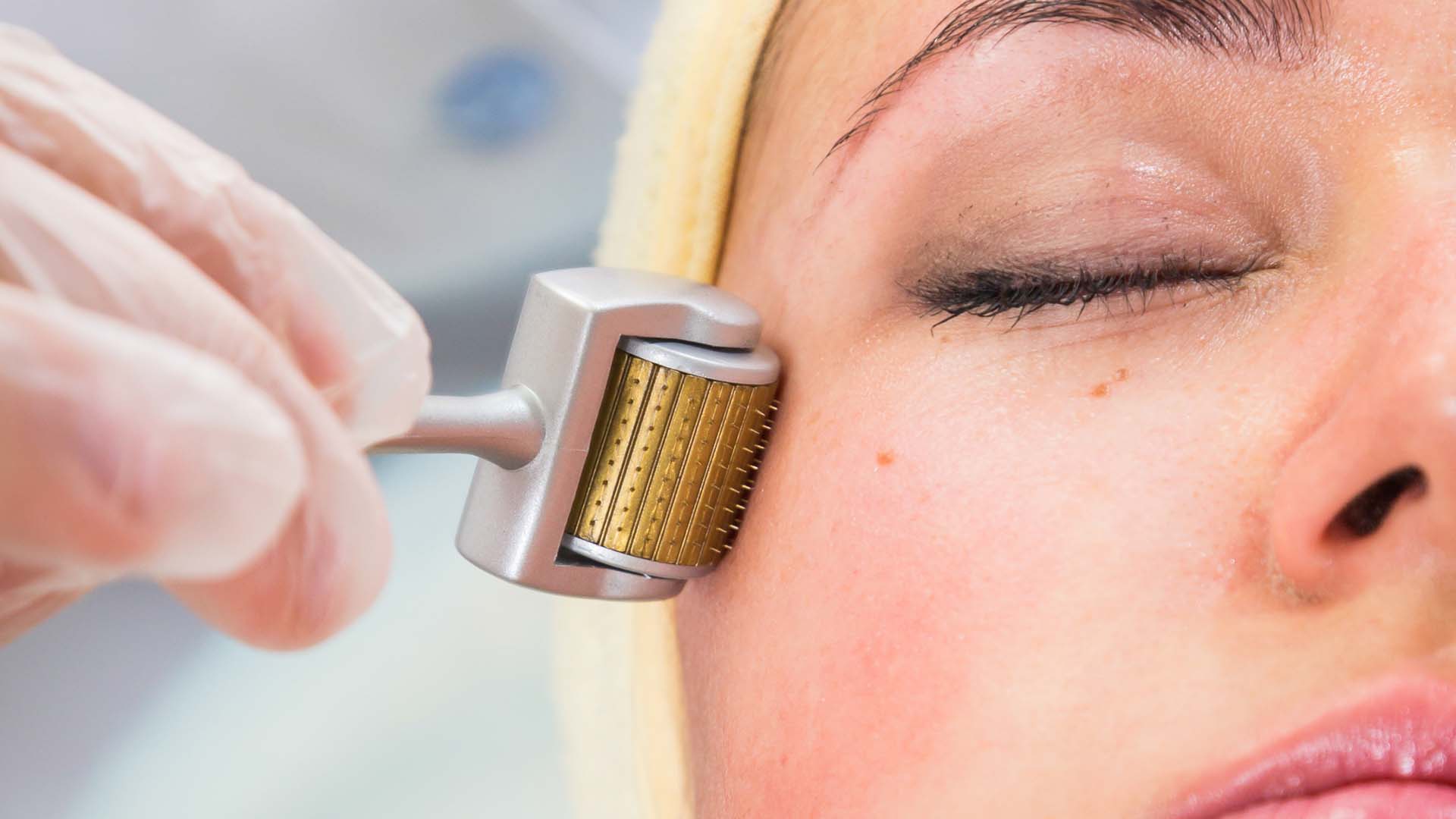
Dermaroller Treatment in Izmir
In the world of dermatology and medical aesthetics, treatments that utilize the skin’s natural healing potential have become a fundamental approach to sustainable skin health. Our skin, in addition to being a protective barrier against external factors, is a dynamic organ with the capacity to regenerate itself. However, this regeneration process can slow down due to factors such as aging, sun damage, acne history, or hormonal changes. The method known in medical literature as “Percutaneous Collagen Induction Therapy” (PCI), and commonly referred to as Dermaroller, is a well-established application that aims to reverse the skin’s biological clock with mechanical stimulation. As Izmir Private Demiderm Polyclinic, we approach skin health from a holistic and scientific perspective. In this comprehensive guide, we will cover the entire process in detail, from the mechanism of action of Dermaroller application to its application areas, from the risks of home use to the differences in clinical protocols.
What is a Dermaroller?
A dermaroller is a manual medical device with very fine and sterile micro-needles, usually numbering between 192 and 540, mounted on a cylindrical drum. These needles are made of stainless steel or titanium alloys and their length can vary between 0.2 mm and 2.5 mm depending on the purpose of the application. The basic design of the device is based on creating thousands of microscopic channels extending from the epidermis to the dermis layer when it is rolled across the skin surface. These channels create controlled “micro-damage” without disrupting the integrity of the skin. The dermaroller does not contain any chemical substances; its effect is entirely based on the biological response initiated by mechanical stimulation.
How Does a Dermaroller Affect the Skin? (Physiological Mechanism)
The working principle of dermaroller application is based on mimicking the body’s natural wound healing mechanism. When the skin is punctured with micro-needles, the brain perceives this as an “injury,” but in reality, there is no permanent damage to the tissue. This perception triggers a complex repair process:
- Hemostasis and Inflammation: Platelets are activated with the needle insertions, and growth factors (PDGF, TGF-beta) are released. These factors attract repair cells to the area.
- Proliferation (Multiplying): Cells called fibroblasts rapidly begin to produce new collagen (Type III) and elastin fibers to repair the area they perceive as damaged. New capillary formation (neovascularization) is also triggered, increasing blood circulation in the skin.
Tissue Regeneration (Remodeling): The newly produced collagen fibers mature over time, transforming into the firmer Type I collagen. The skin thickens, tightens, and surface imperfections are reduced.
Dermaroller Application Process
At Izmir Private Demiderm Polyclinic, Dermaroller application is performed in full compliance with the sterilization chain:
1. Skin Analysis and Preparation: Before the procedure, skin type, problem areas, and needle length are determined. The skin is cleansed of makeup and dirt, then disinfected with antiseptic solutions.
2. Anesthesia: To ensure comfort, topical anesthetic creams are applied 15-20 minutes before the procedure. This minimizes the stinging sensation during the procedure.
3. Application (Scanning): The sterile Dermaroller device is moved across the skin surface in a star-shaped motion (vertical, horizontal, and diagonal). A certain number of passes are made over each area to reach the targeted number of micro-channels per square centimeter.
4. Active Ingredient Supplement: Before the opened channels close, sterile serums (hyaluronic acid, vitamins, salmon DNA, etc.) suitable for the skin’s needs are applied to the skin.
5. Soothing: To alleviate redness (erythema) that occurs after the procedure, cold compresses or soothing peptide masks are applied. Who is Dermaroller Suitable For?
Dermaroller is suitable for most adult individuals who are in good general health and want to improve their skin quality. However, in some cases, its application may be inadvisable (Contraindications):
- Those with active acne (inflammatory pimple) problems (Risk of spreading infection).
- Those with active skin diseases such as eczema, psoriasis, or rosacea.
- Those with blood clotting disorders or those taking blood-thinning medications.
- Those prone to keloid (excessively raised scar) formation.
- Those with active herpes infection.
- Individuals who are pregnant or breastfeeding.
Benefits of Dermaroller Treatment
The biggest advantage of this method is that it provides deep renewal without peeling or burning the epidermis, which is the protective upper layer of the skin. Therefore, the healing process is shorter compared to laser or chemical peels. Its benefits are multifaceted:
- Increases skin elasticity, reduces saggingshines.
- Reduces the appearance of fine lines and wrinkles.
- Reduces the depth of acne scars and blemishes.
- Tightens enlarged pores.
- Evens skin tone and supports blemish treatment.
- Increases blood circulation in the scalp, supporting hair loss treatments.
- Improves the appearance of stretch marks (stria).
Acne Scar Reduction with Dermaroller
Acne-induced pitted scars (atrophic scars) are usually formed by fibrotic bands in the lower layers of the skin pulling the skin downwards. Dermaroller needles physically break down these hardened fiber bands. At the same time, it triggers new collagen production in the area, “filling” the pitted areas. The treatment process requires patience; With repeated sessions, a significant reduction in the depth of scars and improvement in skin surface are aimed for.
Pore Tightening with Dermaroller
Large pores are usually caused by excess oil (sebum) production and loss of elasticity in the pore walls. Dermaroller strengthens the collagen and elastin structure around the pores. The tightened tissue physically narrows the pore opening. In addition, sebum-balancing serums used during the procedure help to control oil production.
Dermaroller and Skin Renewal
With age, the skin’s cell cycle slows down. Dermaroller accelerates this cycle. While enabling the micro-level removal of the upper layer of dead skin, it encourages the emergence of fresh and living cells from below. This increased “turnover” rate makes the skin look brighter, more vibrant, and healthier.
Things to Consider Before and After Dermaroller Treatment
Before the Procedure:
- Blood-thinning medications (with doctor’s approval) should be discontinued at least 3 days before the procedure.
- The use of creams containing retinoic acid or glycolic acid should be stopped.
- If there is a history of herpes, preventive treatment should be started.
After the Procedure:
-
- Water should not come into contact with the application area for the first 24 hours.
- Makeup should not be applied for at least 3 days.
- Sun protection is vital;
High-factor sunscreen should be used.
Hot showers, Turkish baths, and saunas should be avoided.
Dermaroller Recovery Process After Treatment
Dermaroller is among the treatments that “do not affect social life”.
Day 1: Immediately after the treatment, redness similar to sunburn, slight swelling, and a burning sensation are normal.
Day 2: The redness turns pink and subsides.
Day 3: The skin begins to return to normal. Slight dryness or very fine crusting (flaking) may be observed. These dead skin cells should shed naturally and should not be peeled off manually.
Dermaroller Treatment Plan According to the Areas Used
Needle lengths vary depending on the area:
-
-
- Around the Eyes: 0.25 mm or 0.5 mm is used because the skin is very thin.
- Face (Cheeks, Forehead): Generally, 0.5 mm to 1.5 mm is preferred.
- Body (Stretch Marks, Cellulite): Needles between 1.5 mm and 2.5 mm are used because the skin is thicker.
- Scalp: 0.5 mm – 1.0 mm is suitable to increase blood circulation.
-
Reducing Skin Blemishes with Dermaroller
In the treatment of sun spots and hyperpigmentation, Dermaroller works through two mechanisms: Firstly, it breaks down melanin clusters, causing them to disperse. Secondly, the channels opened allow brightening serums (Vitamin C, Arbutin, Tranexamic acid, etc.) to reach the basal layer. This transdermal penetration increases the effectiveness of topical creams hundreds of times.
Dermaroller Treatment for Fine Wrinkles
Expression lines and fine wrinkles are signs of collagen loss in the dermis. The neocollagenesis (new collagen formation) process triggered by the dermaroller thickens the skin as if filling it with a natural filler. Especially in upper lip lines and crow’s feet, with regular applications, a thickening of the skin tissue and a reduction in wrinkles are observed.
Dermaroller Treatment for Hair Loss
Applied to the scalp, the dermaroller stimulates stem cells and increases blood flow to the hair follicles. It also opens channels for hair mesotherapy products or PRP (Platelet Rich Plasma) to reach the hair follicles. This method is used as a supportive treatment, especially in the early stages of genetic hair loss and in improving hair quality.
Dermaroller vs. Dermapen? Comparison
Although both methods are based on the microneedling principle, there are important differences:
| Features | Dermaroller | Dermapen |
|---|---|---|
| Movement Type | Manual, cylindrical rolling. | Automatic, vertical (90 degree) stroke. |
| Entry Angle | Needles enter and exit the skin at an angle (There may be a risk of tearing). | Needles enter and exit perpendicularly (Cleaner channel). |
| Accessibility | Difficult in narrow areas such as the sides of the nose. | Reaches every area with its small head. |
| Needle Adjustment | Fixed (e.g., Only 1.0 mm). | Adjustable (Different depths in the same session). |
| Healing Time | May be a little longer. | Usually longer It is fast. |
Serums Used in Dermaroller Treatment
One of the most important factors that increases the success of Dermaroller is the sterile solutions used during the procedure. The products used while the skin barrier is open are:
-
-
- Hyaluronic Acid: Provides intense moisture and fullness.
- Vitamin C: Provides antioxidant protection and lightens blemishes.
- Peptides: Provides anti-aging effect by increasing cell communication.
- Growth Factor: Accelerates cell renewal.
-
How Does Dermaroller Increase Collagen Production in the Skin?
Micro-trauma causes the body to give an “emergency” signal. The body, sensing that the skin’s integrity has been compromised, directs all its repair mechanisms to that area. Fibroblasts synthesize significantly more collagen than normal during the wound healing process. The collagen produced during this process is actually to “close” the wound, but since there isn’t a real wound, this new tissue serves to rejuvenate, thicken, and tighten the skin.
How Many Dermaroller Sessions Should Be Done?
The number of sessions varies depending on the skin’s needs and the targeted problem.
General Care: 3-4 sessions with 4-week intervals.
Acne Scars / Stretch Marks: 6-8 sessions or more with 4-week intervals.
Since the collagen production process is cumulative, it’s important to stick to the treatment regimen rather than expecting miracles in a single session.
Is Dermaroller Treatment Painful?
Sensitivity varies depending on needle length. Applications up to 0.5 mm are generally tolerated without anesthesia. However, for applications of 1.0 mm and above performed in a clinical setting, a local anesthetic cream must be used. This ensures the patient feels only a slight vibration or pressure, not pain, during the procedure.
Redness and Sensitivity After Dermaroller Treatment
Redness (erythema) after the procedure is an indication that the treatment is working; it shows increased blood flow. This redness usually disappears spontaneously within 12 to 48 hours, depending on the individual’s skin sensitivity. During the sensitivity period, irritating applications (alcoholic tonics, scrubs, etc.) should be avoided.
Can Dermaroller Be Used at Home? Differences Between Clinical and Traditional Applications
Important Warning: Home-use dermarollers sold on the market are generally 0.25 mm or 0.5 mm long. These can only be used to increase product absorption; they are insufficient for stimulating collagen or treating scars. Furthermore, incomplete sterilization at home poses serious infection risks. The use of needles deeper than 1.0 mm carries a risk of bleeding and should therefore only be performed under the supervision of a physician in a clinical setting. Incorrect pressure and technique can lead to permanent scratches and marks (post-inflammatory hyperpigmentation) on the skin.
Dermaroller Side Effects and Safety
It is a safe procedure when performed by expert hands and under sterile conditions. Possible temporary side effects include redness, swelling, temporary dryness, and mild bruising. Serious side effects such as infection, pigmentation changes, or scarring usually occur if hygiene rules are not followed or if the procedure is performed by unqualified individuals.
When Will Dermaroller Results Be Seen?
Although the skin may appear brighter a few days after the procedure, this is only due to swelling and superficial renewal effects. The actual structural change (collagen synthesis) takes time biologically. The first visible results usually appear after the 3rd session (approximately 3 months). Even after the treatment is finished, the skin’s repair process can continue for up to 6 months.
Reducing the Appearance of Stretch Marks with Dermaroller
Stretch marks (stria) are tears in the dermis layer of the skin. Dermaroller initiates an intensive healing process along these tear lines. The success rate is particularly high in stretch marks in the red (stria rubra) stage. While it may not be possible to completely eliminate whitened (stria alba) stretch marks, it is possible to reduce their width and make them less noticeable by improving their harmony with the skin tone. Since longer needles (1.5 mm – 2.0 mm) are used in body applications, it must be performed in a clinical setting.
Dermaroller Treatment in Izmir Climate
Izmir’s high number of sunny days requires extra attention for patients undergoing Dermaroller treatment. The skin is vulnerable to UV rays after treatment. Therefore, treatment should be performed during the summer months.If this is done, complete sun protection is essential. Generally, autumn and winter months are safer options for deep scar treatments.