
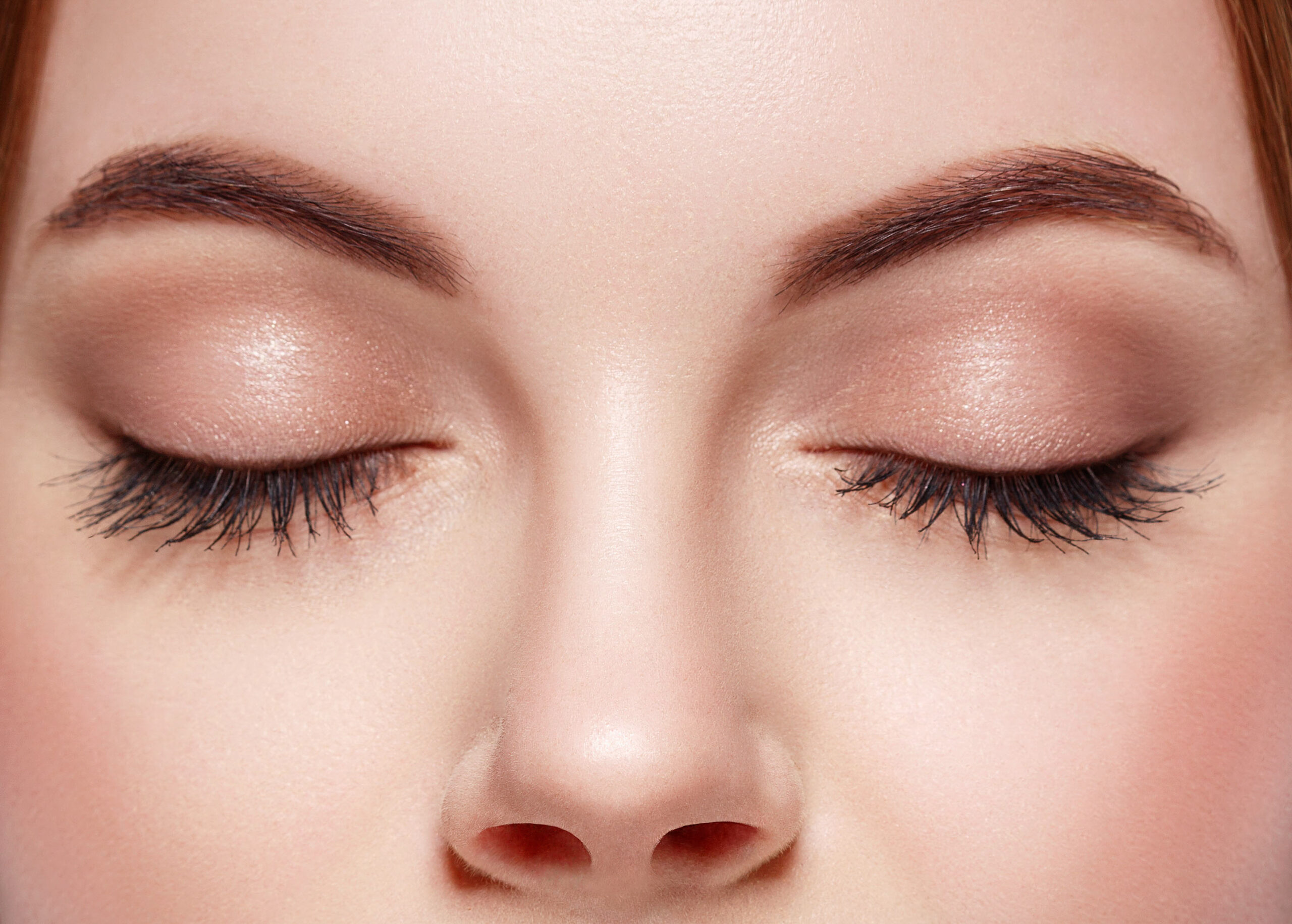
Izmir Eyebrow Transplantation
If the eyes are the mirror of the soul in facial aesthetics, then eyebrows are the frame of this mirror. Eyebrows are not just functional hairs that protect the eyes, but one of the most important anatomical structures that express emotions, determine the character of the face, and add depth to the gaze. Thinning, deformation, or complete loss of eyebrows can occur due to genetic factors, hormonal changes, past incorrect plucking, traumas, burns, or some dermatological diseases. This can cause a person to look tired, old, or expressionless. As Izmir Private Demiderm Polyclinic, we treat eyebrow aesthetics not as a simple cosmetic procedure, but as a “tissue transplantation” and “artistic design” process requiring micro-surgical precision. Eyebrow transplantation, which is far from the artificial look of permanent makeup and is performed with the person’s own hair follicles, is one of the most refined applications of modern medicine in the field of aesthetics. In this comprehensive guide, we will examine all the details you might be curious about regarding eyebrow transplantation, from technical details and recovery processes to golden ratio design and aftercare recommendations, all in light of scientific data.
What is Eyebrow Transplantation?
Eyebrow transplantation is the process of transplanting healthy hair follicles (grafts) taken from a donor area (usually the scalp at the nape of the neck), which is genetically coded not to fall out, into gaps in the eyebrow area or to a redesigned eyebrow line. While this procedure is based on similar principles to hair transplantation, it requires much greater precision, technical skill, and aesthetic vision.
Unlike hair transplantation, the selection of grafts used in eyebrow transplantation, the angle and direction of channel opening are much more critical. Eyebrows emerge from the skin at a very narrow angle (approximately 10-15 degrees) and change direction from the center of the face outwards. Therefore, eyebrow transplantation can be described as a “micro-level architectural” study. The aim is not only to fill gaps but also to create a natural and aesthetic form that suits the facial features.
In Which Cases Is Eyebrow Transplantation Preferred?
Eyebrow transplantation is a versatile treatment that can be applied for both aesthetic and reconstructive (repair) purposes. It is generally preferred in the following cases:
- Over-Plucking: The trauma to the hair follicles due to incorrect and excessive plucking of the eyebrows over many years, and the failure of the hairs to grow back.
- Genetic Thinning: Naturally weak, thin, or sparse eyebrow structure.
- Scars and Marks: Hair loss on scar tissue in the eyebrow area due to accidents, burns, surgical scars, or piercings.
- Diseases: Those who experience permanent eyebrow loss due to alopecia areata (hair loss), thyroid disorders (hypothyroidism), or chemotherapy (after the active phase of the disease has passed).
- Deformity: Those who have a low eyebrow structure and want to make their eyebrows appear more lifted and arched.
Those Dissatisfied with Permanent Makeup: Tattoo or Those who are tired of the artificial look of procedures like microblading and want to return to a natural look.
Eyebrow Transplantation Techniques: FUE and DHI Approaches
The two most current methods used in eyebrow transplantation today are FUE (Follicular Unit Extraction) and DHI (Direct Hair Implantation) techniques. However, due to the delicate structure of the eyebrow, the DHI method is one step ahead.
In the classic FUE method, roots are collected from the donor area with a micromotor. Then, channels are opened in the area to be transplanted with sapphire tips or slits, and the roots are placed in these channels. The FUE method can be used for transplanting larger areas, but in areas requiring slanted-angle transplantation, such as eyebrows, there is a risk of damaging existing eyebrows (shock shedding) during the channel opening process. DHI (Choi Pen) Method
This is considered the “Gold Standard” method for eyebrow transplantation. In the DHI method, the harvested grafts are placed inside fine-tipped pens called “Choi Implanter Pens”. Thanks to these pens, the channel opening and root placement process is done in a single step.
Advantages:
– Since no channels are opened beforehand, tightening can be done between existing eyebrows without damaging them.
– The eyebrow’s growth angle (10-15 degrees) and direction can be perfectly adjusted with the pen.
– The healing time is much faster and crusting is minimal. Preliminary Design Process for Natural Eyebrow Shape
The success of eyebrow transplantation is 50% technical, 50% design. The design phase is where the patient’s wishes meet anatomical realities. At Izmir Private Demiderm Polyclinic, the design process includes the following steps:
The patient’s facial symmetry is examined while they are in a sitting position.
Expressions (surprise, frowning) are observed; Eyebrows should be in harmony with the movement of facial muscles. Using special calipers and rulers, the starting point (line of the nostril), the highest point (arch/apex), and the ending point (line of the eye corner) of the eyebrow can be determined.is determined.
- The drawing is evaluated with the patient in front of a mirror, and the procedure is not started without approval.
Principles of the Golden Ratio in Eyebrow Design
In facial aesthetics, the “Golden Ratio” (1.618) is the most pleasing mathematical balance. In eyebrow design, this ratio is used as follows:
– The distance between the starting point and the arch point of the eyebrow should be approximately 1.618 times longer than the distance between the arch point and the ending point.
– The distance between the two eyebrows should be equal to the width of one eye.
Adhering to these ratios ensures a more balanced and aesthetic appearance of the face.
Preparations Before Eyebrow Transplantation
The preparation phase is important for the success of the operation:
– Blood thinners (under doctor’s supervision), vitamin E, fish oil, and herbal teas should be discontinued 1 week before the procedure.
– Alcohol and smoking should be restricted at least 3 days beforehand as they affect circulation.
– Comfortable clothing with front buttons or zippers should be worn on the day of the procedure (to avoid friction against the scalp).
– Any active eczema or infection in the eyebrow area should be treated.
Procedure Stages: Graft Harvesting and Implantation Process
1. Local Anesthesia: Both the donor area (nape) and the recipient area (eyebrow) are numbed with local anesthesia. The patient does not feel pain during the procedure.
2. Graft Harvesting: Since eyebrows have fine hairs, the finest hair follicles from the lowest part of the nape area are selected. Only “single grafts” (those containing a single hair follicle) are harvested. Multiple grafts do not look natural on the eyebrow.
3. Implantation: Using DHI pens, the follicles are transplanted according to the determined design. In the inner part of the eyebrow, the roots are directed upwards, in the middle part horizontally and outwards, and in the tail part downwards and outwards.
How Long Does an Eyebrow Transplant Take?
Although eyebrow transplantation requires fewer grafts than hair transplantation, the duration varies depending on the number of grafts because it requires much more delicate workmanship. An average eyebrow transplantation operation is completed in 2 to 4 hours. This time includes preparation, design, and breaks.
How Many Grafts Are Needed? Personalized Planning
The number of grafts required varies depending on the condition of the existing eyebrow and the desired thickness.
Scar/Wound Concealment: 100 – 300 grafts.
Partial Tightening: 300 – 500 grafts.
Full Eyebrow Creation: 600 – 1000 grafts (or more).
Because excessively dense hair transplantation can lead to nutritional deficiencies (necrosis), the ideal density is determined by the physician.
Eyebrow Transplantation Recovery Process
The recovery process is quite fast:
First 24 Hours: Water should not come into contact with the eyebrow area. Mild swelling may occur.
Days 2-3: Crusting begins.
Week 1: The scabs fall off.
Weeks 2-3: The shock shedding phase begins. The transplanted hairs fall out (the roots remain inside).
Month 3: New eyebrows begin to grow.
Months 6-8: The final result is seen.
How to Create a Natural Eyebrow Growth Angle?
The most challenging part of eyebrow transplantation is the angle. While hair grows from the skin at a 45-degree angle, eyebrows grow almost parallel to the skin (10-15 degrees). If the roots are implanted vertically, the eyebrows will grow upright like a “hedgehog,” creating an unnatural look. Our expert physicians ensure this natural angle by holding the DHI pens very close to the skin. Additionally, a “fishbone” pattern is created at the points where the eyebrows meet, ensuring natural transitions.
Itching, Redness, and Crusting After Eyebrow Transplantation
Itching is normal as a sign of healing after the procedure. However, scratching can dislodge the newly implanted roots. Redness may last 3-4 days depending on skin type. Crusting consists of tiny clots that form at the needle insertion sites. These scabs will be removed within a week with gentle washing using lotions recommended by the physician.
Permanence of Eyebrow Transplantation and the Time it Takes for Results to Settle
Since the roots taken from the nape area are genetically coded not to fall out, they retain this characteristic when transplanted to the eyebrow area. In other words, eyebrow transplantation is permanent. It may take up to 8 months for the results to fully settle and for the eyebrows to take on their natural form. The first eyebrows may be a little unruly, but over time they adapt to the character of that area.
Things to Consider After Eyebrow Transplantation
- For the first 3 days, do not sleep on your stomach; sleep on your back with your head elevated.
- For the first week, do not touch or rub the eyebrow area.
- Avoid Turkish baths, saunas, pools, and the sea for 2 weeks.
- Protect yourself from the sun’s rays and wear a hat.
- Avoid strenuous sports for 10 days (increased blood pressure can dislodge the roots).
Eyebrow Transplantation Washing and Care Routine
The first wash is usually done at the clinic. For home washing afterwards:
1. Gently apply the recommended lotion and let it sit.
2. Rinse with lukewarm water without pressing down.
3. Lather the medicated shampoo and apply with dabbing motions (without rubbing).
4. Dry with a towel.Without rubbing, the moisture is removed with a paper towel.
This routine continues until the scabs fall off.
Solution for Thinning Eyebrows Due to Previous Eyebrow Plucking
Continuously plucking eyebrows from the same spot (removing hair follicles) causes trauma to the hair follicle, and the root dies. It is usually not possible to regrow eyebrows in these areas with medical treatments (almond oil, garlic, etc.). The only permanent solution is the transplantation of new and healthy roots to that area. Eyebrow transplantation is the most guaranteed way to bring back sparse eyebrows.
Who is Not Suitable for Eyebrow Transplantation?
- Those with active “Alopecia Areata” (Hair loss) disease (Transplantation cannot be performed while the disease is ongoing).
- Those with trichotillomania (Eyebrow pulling disorder) (Transplantation cannot be performed until psychological treatment is completed).
- Those with blood clotting disorders.
- Those with serious autoimmune diseases.
- Those with insufficient or very weak donor area (nape hair).
Combination of Eyebrow Transplantation and Eyebrow Mesotherapy
To ensure faster nourishment of transplanted eyebrows, increase the retention rate, and strengthen existing eyebrows, Eyebrow Mesotherapy or PRP (Platelet Rich Plasma) application is recommended 1 month after transplantation. These procedures accelerate tissue healing and improve hair quality.
Naturalizing Facial Expression with Eyebrow Transplantation
Eyebrows that are too arched, too straight, or too thin for the face can make a person’s expression harsh or make them look older than they are. The aim of restoration with eyebrow transplantation is to achieve the softest and most aesthetic expression that best suits the patient’s facial features. A correct design can even give the face a “lifting” effect.
Graft Retention Rate in Eyebrow Transplantation
The eyebrow area is a region with very good blood supply. Therefore, the survival rate of grafts transplanted with the correct technique (without traumatization) is quite high, around 90-95%. The DHI technique maximizes this rate.
Differences Between Eyebrow Transplantation and Eyebrow Contouring (Microblading)
| Features | Eyebrow Transplantation | Eyebrow Contouring (Microblading/Tattooing) |
|---|---|---|
| Materials | Your own living hair follicles. | Chemical dye/pigment. |
| Appearance | 3D, realistic and natural. | 2D, drawing image. |
| Permanence | Lifespan height. | 1-2 years (Solar, changes color). |
| Maintenance | Hairs need to be trimmed as they grow. | Requires annual touch-up. |
Eyebrow Transplantation in Men: Differences and Expectations
Eyebrow transplantation design in men is completely different from that in women. Male eyebrows should be thicker, straighter, and without a curve. A curved design leads to a feminine look. Also, since eyebrows in men have a more sparse and bushy structure, the density and direction of the transplantation should be adjusted accordingly.
Returning to Sports, Makeup, and Daily Life After Eyebrow Transplantation
The patient can return to their social life 1-2 days after the procedure (can be camouflaged with a hat or sunglasses). To apply eyebrow makeup, you should wait for the scabs to completely fall off and the skin to heal (approximately 10-14 days). Sweaty sports should be avoided for 2 weeks.
Things to Know Before Getting an Eyebrow Transplant
The most important point is this: Since the transplanted hairs are hair follicles, they grow faster than the original eyebrows. Therefore, people who have had eyebrow transplants will need to trim (maintain) their eyebrows with scissors every 10-15 days. However, over time (years), the transplanted hair follicles begin to mimic the character of the area they go to (the eyebrow) and their growth rate may slow down (Recipient Dominant Theory).
The content on this page is for informational purposes only. It does not constitute diagnosis or treatment. Eyebrow transplantation is a surgical procedure and should be performed by specialist physicians in a sterile clinical environment.