
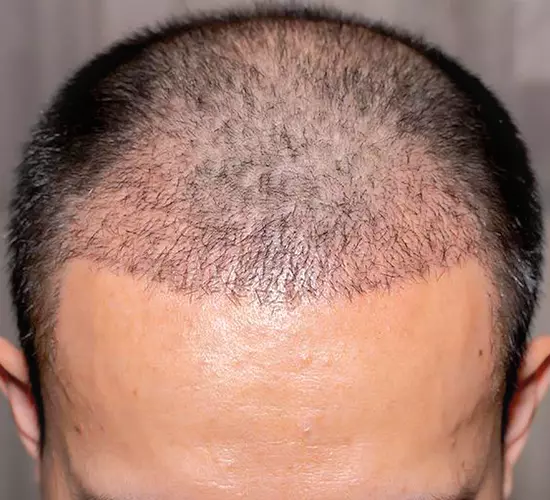
Izmir FUE Hair Transplantation
Hair loss (alopecia) is one of the most common conditions that humanity has sought solutions for throughout history, both aesthetically and psychologically. Hair loss, which occurs as a result of a combination of genetic factors, hormonal changes, stress, and environmental factors, can deeply affect a person’s self-image. While the scars and long recovery times left by surgical methods (such as FUT) used in the past deterred patients from seeking treatment, the FUE (Follicular Unit Extraction) technique, developed in the early 2000s and continuously optimized, is considered a milestone in hair surgery. As Izmir Private Demiderm Polyclinic, we view hair transplantation not only as an aesthetic procedure but also as a “tissue transplantation” process based on micro-surgical principles. In this comprehensive guide, we will examine all the details of the FUE technique, from its biological foundations to its operational processes, from donor area management to long-term results, in light of scientific data.
What is FUE Hair Transplantation? A Modern Hair Restoration Method
FUE (Follicular Unit Extraction) is the process of individually collecting hair follicles (grafts) from the donor area, which is genetically coded not to fall out and is located on the nape of the neck and above the ears, and transplanting them to hairless or thinning areas (responder area). The main reason this method is called “modern” is that it does not require cutting and removing a strip of skin from the donor area (incision) as in older methods.
In the FUE technique, special medical devices called micromotors are used. At the tip of these devices are very thin “punch”s (hollow needles) with diameters ranging from 0.6 mm to 0.9 mm. Thanks to these thin tips, the hair follicle is cut cylindrically from the dermis layer of the skin along with the surrounding microscopic tissue and removed. The fact that the procedure is performed at the micro level minimizes tissue damage, accelerates the healing time, and ensures that no visible scar remains in the donor area. FUE is currently the most widely applied and proven gold standard method in the world and in our country.
How is FUE Hair Transplantation Performed? Step-by-Step Procedure
At Izmir Private Demiderm Polyclinic, the FUE hair transplantation process is performed within a standard medical protocol, ensuring full compliance with the sterilization chain. The operation process basically consists of five main stages:
1. Consultation and Planning
The foundation of a successful hair transplant is correct planning. The physician analyzes the patient’s hair loss type (according to the Norwood scale), the density of the donor area, the thickness of the hair strands, and the elasticity of the scalp. The front hairline design is determined according to the patient’s facial anatomy and age.
2. Preparation and Local Anesthesia
On the day of the operation, the patient puts on a special gown and their hair is shaved to a number 1 length (except for unshaven FUE). Then, local anesthesia is applied to the donor area to ensure a comfortable operation. Thanks to modern anesthesia techniques, the sensation of pain is minimized.
3. Graft Harvesting (Extraction)
This stage is the most critical part of FUE. Hair follicles are loosened one by one with the help of a micromotor and collected with special forceps. The collected grafts are kept in special nourishing solutions (Hypothermosol or Isotonic) at +4 degrees to maintain their viability. Separation (counting) of the grafts according to whether they contain single, double or triple roots is done at this stage.
4. Channel Opening (Incision)
After local anesthesia is applied to the area to be transplanted, sockets (channels) are opened where the collected grafts will be placed. In this process, which is done using sapphire tips or slits, the angle, direction and depth of the channels are the main factors determining the natural appearance of the hair that will emerge.
5. Implantation (Transplantation)
The separated grafts are placed one by one into the opened channels. Generally, single grafts are placed in the front hairline for a natural look, while multiple grafts are placed in the back areas to provide density. This stage requires patience and precision.
Who is Suitable for FUE Hair Transplantation? Suitable Candidate Criteria
Not every person experiencing hair loss may be a suitable candidate for hair transplantation. The ideal candidate criteria for the FUE method are as follows:
- Donor Area Sufficiency: The hair density in the nape area must be sufficient to cover the thinning area.
- Status of Hair Loss: It is preferable that the hair loss process has reached a certain stage or that the hair loss has slowed down. Planning should be done carefully in patients who are very young (early 20s) and whose hair loss is progressing aggressively.
- Health Status: The patient should not have, or should have under control, any chronic illness that would prevent surgery (advanced heart failure, uncontrolled diabetes, blood clotting disorders, etc.).
- Expectations: It is important for the patient to have realistic expectations. In a patient with limited donor space…a very high hair density cannot be promised.
Advantages of the FUE Method: Why is it Preferred?
The FUE method has significant medical and aesthetic advantages compared to older techniques (FUT) and other alternatives:
- No Scarring: Since no stitches are placed in the donor area, a horizontal incision scar is not formed. Even if the hair is cut short after healing, the donor areas are not visible.
- Fast Healing: Since it is a microsurgical procedure, tissue healing is very fast. The patient can return to their daily life within 3-7 days.
- Pain Comfort: Postoperative pain is minimal and can be managed with simple painkillers.
- Flexibility: Allows hair transplantation from body hair (beard, chest) (Body Hair Transplant).
- Number of Grafts: Allows for the harvesting of a high number of grafts (4000-5000 grafts) in one session.
Differences Between FUE and DHI: Which Method is More Suitable?
One of the most frequently asked questions by our patients is the difference between FUE and DHI (Direct Hair Implantation). In fact, DHI also uses the FUE technique in the follicle harvesting stage; the difference is in the implantation stage.
| Features | Classic FUE Method | DHI (Pen) Method |
|---|---|---|
| Channel Opening | First, channels are opened, then the roots are placed. | Channel opening and root placement are done simultaneously. |
| Instruments Used | Sapphire tip or metal slit, forceps. | Choi Implanter Pen (Special pen). |
| Shaving Condition | Generally, all hair is shaved. | Unshaven transplantation It is more suitable for. |
| Passage Density | High density is achieved. | There is potential for denser transplantation. |
| Duration | Can be completed in a shorter time. | It is a longer procedure. |
| Cost | More economical. | Higher cost. |
Natural-Looking Hairline Design with FUE Hair Transplantation
The success of hair transplantation is measured not only by the number of hairs that grow, but also by how natural these hairs look. The most important determinant of naturalness is the “Hairline” design. At Izmir Private Demiderm Polyclinic, the following principles are considered in hairline design:
- Forehead Muscles: The mimic lines (frontal muscles) that form when the patient raises their eyebrows are identified, and the hairline should not fall over these muscles.
- Facial Proportions (Golden Ratio): Aesthetic balance is achieved by analyzing the third sections of the patient’s face (forehead, nose, chin).
- Zig-Zag Technique: No hairline in nature is perfectly straight as if drawn with a ruler. Therefore, a natural transition is achieved by creating micro-indentations and protrusions (macro and micro irregularities).
Use of Single Grafts: Single, fine-stranded grafts must be implanted at the very front of the hairline. If thick and multiple grafts are implanted in the frontal area, a “grass man” appearance will be created.
FUE Hair Transplantation Preparation: What Should Be Considered?
There are rules that the patient must follow for the success of the operation and to reduce the risk of complications:
-
- Blood-thinning medications (aspirin, coraspin, etc.) should be discontinued at least 7 days before the operation under the supervision of a physician.
- Alcohol consumption should be stopped at least 3 days before the operation as it increases the risk of bleeding and delays healing.
- Smoking should be reduced or stopped before and after the operation as it impairs tissue oxygenation.
- Comfortable clothing with front buttons or zippers should be worn on the day of the operation (to prevent friction on the head area).
- Complete information about chronic diseases and medications used should be given to the physician.
FUE Hair Transplantation Post-Recovery Process and Expectations
The post-operative period is a time that requires patience. While the healing process varies from person to person, it is generally as follows:
-
-
- First 3 Days: There will be slight redness in the transplant area and a bandage in the donor area. Rest is recommended. Swelling may occur in the forehead area.
- 3-10 Days: This is the crusting period. The crusts gradually fall off, starting with the first wash.
- 10-15 Days: This is the period when the crusts have completely fallen off and the hair appears short (fallow).
- 1-3 Months (Shock Shedding): The transplanted hairs fall out suddenly. This is an expected process. The roots are alive under the skin.
- 3-4 Months: New hairs begin to grow thinly.
- 6. Month: 50-60% of the hair will have grown back, volume will increase. 12th Month: Final result is seen. Hair thickens and takes shape (Full result in the crown area at 18(It may take up to a month).
-
Crusting and Shedding Process After FUE Hair Transplantation
After the procedure, a blood clot and tissue fluid the size of a pinhead dries and forms a crust around each transplanted root. These crusts are a natural dressing that protects the grafts from external factors. However, if these crusts remain for more than 10-12 days, it can prevent the roots from breathing. Therefore, these crusts should be gently cleaned with daily washes using special lotions and shampoos recommended by the doctor. The scalp is completely cleaned with a “crusty wash” performed at the end of the 10th day.
What is Shock Shedding After FUE Hair Transplantation?
The phase in which the transplanted hair strands break and fall out, starting from the 2nd week after the operation and lasting until the 2nd month, is called “Shock Shedding”. Medically known as “post-operative telogen effluvium,” this condition is a defense and resting mechanism of the hair follicles in response to the trauma they have experienced. Patients may worry during this period about whether the transplanted hairs have taken root; however, this is completely normal and temporary. Only the hair shaft is shed; the follicle (bulb), the production center, is preparing to produce new and strong hair under the skin.
How Many Grafts Are Transplanted with FUE Hair Transplantation?
The number of grafts to be transplanted is determined according to the balance of “need” and “capacity.” Need depends on the width of the baldness (cm²); capacity depends on the density of the donor area. On average:
Mild Baldness (Front area): 1500 – 2500 grafts.
Medium Baldness (Front and crown): 2500 – 3500 grafts.
Severe Baldness: 3500 – 5000 grafts (or more).
However, exceeding 4500-5000 grafts in a single session is generally not recommended, as it can lead to permanent thinning and circulatory problems (risk of necrosis) in the donor area. If very high numbers are required, the procedure can be divided into two sessions.
How are FUE Hair Transplant Prices Determined?
Hair transplant prices are not like the price of a standard product; it is a medical procedure planned specifically for each individual. Factors affecting the price include:
-
-
- Number of Grafts: Some clinics price per graft, while others offer package pricing.
- Technique Used: The costs and materials used for classic FUE, Sapphire FUE, or DHI techniques differ.
- Operation Time: How long the procedure will take and the effort the team will expend.
- Additional Treatments: PRP, mesotherapy, or laser-assisted treatments applied in conjunction with the operation.
-
According to Ministry of Health regulations, it is not legal to share net price information on websites. For the most accurate pricing, you need to come to our clinic and have a free hair analysis.
FUE Hair Transplant Approach in Fine Hair
In patients with fine hair, achieving fullness may require more grafts than in patients with thick hair. Because a thick hair strand provides 2-3 times more coverage than a thin one. When performing FUE on fine hair, very fine punches (0.6 – 0.7 mm) should be used, and extra care should be taken to avoid damaging the donor area. Furthermore, medical treatments to strengthen the hair after transplantation (Biotin, Mesotherapy) become even more important in these patients.
FUE Hair Transplantation in Women: Special Approaches
Hair loss in women is usually diffuse thinning, not like male pattern baldness (recession of the hairline). Female patients generally do not want to shave their heads completely. In this case, “Shave-Free FUE” or “Window Method” is applied. Only a small area in the nape of the neck, which can be hidden among the hair, is shaved, and the roots are collected from there. In the area to be transplanted, the hair is tightened by entering between the hairs (DHI method is advantageous in this regard).
FUE Hair Transplant Risks and Side Effects
As with any surgical procedure, FUE hair transplantation carries some risks, but these are minimal in expert hands:
-
-
- Edema: Temporary swelling around the forehead and eyes.
- Infection: May occur if performed in a non-sterile environment.
- Necrosis: Tissue loss due to circulatory problems (seen if performed by inexperienced individuals).
- Asymmetry: Aesthetic problems due to planning errors.
- Cyst/Acne: Ingrown hair under the skin during new hair growth.
-
FUE Hair Transplantation and Beard and Moustache Transplantation Applications
The FUE technique is successfully applied not only to the scalp but also to hair loss in the facial area. In cases of baldness, scarring, or sparse beard growth, fine hair follicles taken from the nape of the neck are transplanted to the beard and mustache area at angles (more flattened) that conform to the facial anatomy. Because the facial area has excellent blood supply, healing is rapid and the retention rate is high.
Donor Area Analysis Before Hair Transplantation
The “capital” of hair transplantation is the donor area. If the donor area is insufficient, the transplantation will fail or an unpleasant “moth-eaten” appearance may occur in the nape area.The analysis measures the number of follicles per cm² (density) and hair thickness in the donor area. Considering the possibility of continued hair loss in the future, the donor area’s capacity should not be used recklessly; a “reserve” should always be left.
FUE Hair Transplant Permanence: Long-Term Results
The hair from the nape and above the ears, chosen as the donor area, is genetically insensitive to the DHT (Dihydrotestosterone) hormone. That is, it is coded not to fall out. These roots retain this “non-shedding” characteristic even when transplanted to the front or crown of the head (Donor Dominant Theory). Therefore, the results of a successful FUE hair transplant are considered permanent for life. However, since the patient’s own original hair may continue to fall out, new bald patches may form behind the transplanted area in later years.
Sports and Daily Life Recommendations After FUE Hair Transplantation
- First 3 Days: Rest at home and keep your head elevated.
- 10-15 Days: Avoid heavy lifting, sexual intercourse, and activities that cause sweating (Increased pressure can dislodge grafts).
- 1st Month: Light walking and running can be started.
- 3rd Month: Month: Sports with a risk of head trauma, such as football and basketball, can be started.Sun and Sea: Direct sun exposure and swimming in pools/the sea should be avoided for the first month.
The Right Time for FUE Hair Transplantation: When Should It Be Done?
The “right time” for hair transplantation is when the type of hair loss is pronounced and the person is psychologically ready. There is no seasonal restriction; it can be done in summer or winter. The important thing is to comply with post-operative care rules (sun protection, wearing a hat, etc.). Generally, instead of rushing during periods when hair loss is very active (telogen effluvium attack), stabilizing the hair loss with medical treatments first and then planning the surgery yields healthier results.
The content on this page is prepared for informational purposes only. It does not constitute diagnosis or treatment. Hair transplantation and treatments are medical procedures that should be planned individually for each person. To determine your eligibility and for a detailed analysis, it is recommended that you consult the specialist physicians at Izmir Private Demiderm Polyclinic.