Izmir Spiderweb Aesthetics
Gravity, an inevitable effect of time, combined with the decrease in collagen and elastin fibers in our skin, causes sagging, loss of contour, and fine wrinkles on the face. While traditionally the only solution to this condition was considered to be surgical facelift operations, thanks to developing medical aesthetic technologies, “non-surgical” solutions have come to the forefront. One of these solutions, and also known as “Thread Lift,” is Spiderweb Aesthetics, an advanced application that provides both mechanical tightening and biological renewal thanks to biocompatible threads placed under the skin. As Izmir Private Demiderm Polyclinic, we offer Spiderweb protocols, based on scientific principles, preserving anatomical structure, and aiming for natural results, to our patients seeking non-surgical rejuvenation. In this comprehensive guide, we will examine all the details, from the biochemistry of the threads to the application techniques, healing processes, and their effects on skin quality.
What is Spiderweb Face Lift?
Spiderweb Face Lift (Polydioxanone – PDO Thread Application) is a procedure where medical threads, which are completely absorbable by the body, are placed under the skin (dermis or subcutaneous tissue) using fine-tipped needles or cannulas. The procedure gets its name from the fact that the threads are placed under the skin in a mesh-like structure. This mesh structure acts as a skeleton supporting the skin.
This procedure not only physically lifts sagging skin; its main power comes from triggering the skin’s biological response mechanism. Because no surgical incision is made, general anesthesia is not required, and the recovery time is quite short, it is one of the most popular applications in the “Non-Surgical Face Lift” category.
How Does Spiderweb Face Lift Work?
The mechanism of action of the application is based on the “Foreign Body Reaction” principle. However, this reaction is not harmful to the body, but a restorative process.
Mechanical Effect: As soon as the threads are placed, they create support within the tissue and physically lift sagging areas (especially when barbed threads are used).
Biological Effect: The body recognizes the threads placed under the skin and begins to surround them. During this process, reparative cells called “fibroblasts” accumulate around the threads. Fibroblasts create new collagen, elastin, and new capillaries (angiogenesis) around the threads. Even if the threads dissolve and disappear within 6-8 months, these newly formed “natural collagen tunnels” take their place. This leads to skin tightening and improved quality.
PDO Thread Face Rejuvenation Technique
Polydioxanone (PDO) is a biocompatible substance with proven reliability that has been used for years as a suture in cardiovascular surgery. It is eliminated from the body over time (through hydrolysis) by converting into water and carbon dioxide without causing any allergic reaction. The PDO threads used in spiderweb facelift create a kind of “scaffolding” on the skin, allowing for skin restructuring.
Which Areas Can Spiderweb Facelift Be Applied To?
It can be applied to almost all areas affected by gravity:
Face Area: Sagging cheeks, jawline, nasolabial folds, eyebrow lift, forehead lines.
Neck Area: Sagging chin and horizontal lines on the neck.
Body Area: Inner arms, abdominal sagging (postpartum), inner thighs, and wrinkles above the knees.
Who is Spiderweb Facelift Suitable For?
This procedure is ideal for individuals who are too early for surgical facelift but have begun to lose skin elasticity.
– Individuals aged 30-65 with mild to moderate sagging.
– Those beginning to lose their facial oval.
– Those experiencing thinning and lifelessness in their skin.
– Those who do not want surgical intervention and general anesthesia.
However, surgical options may be a more appropriate choice for patients with very advanced skin excess and sagging.
Procedure Stages: Application Process and Materials Used
At Izmir Private Demiderm Polyclinic, the process works as follows:
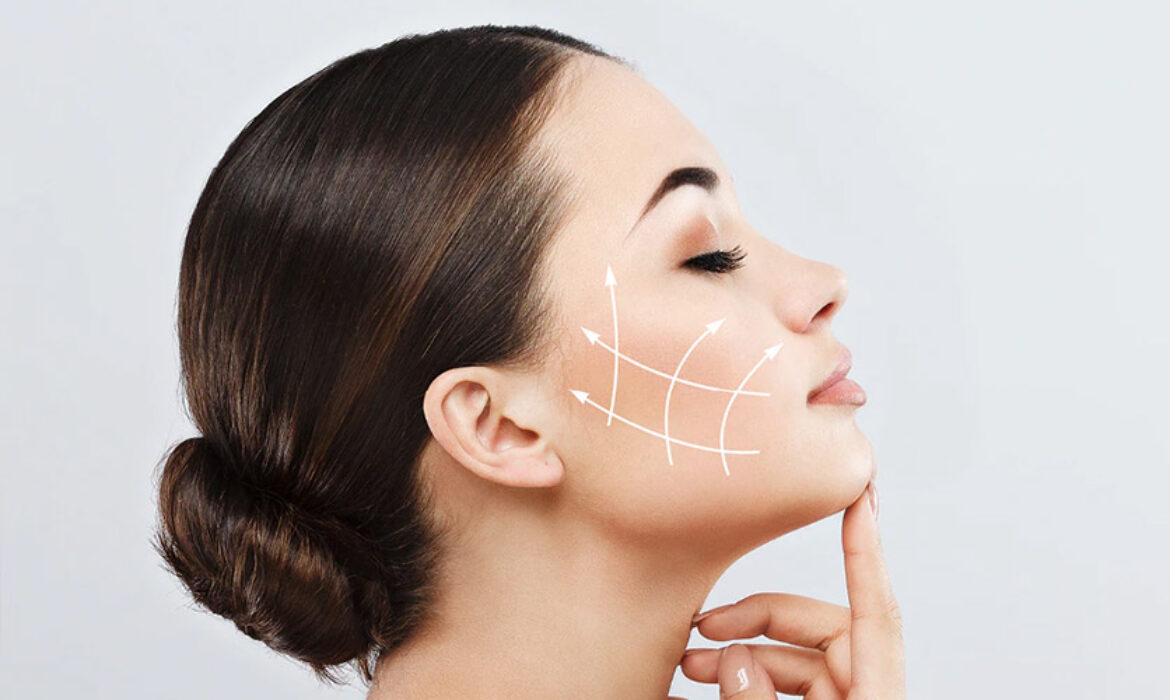
1. Analysis and Planning: The physician identifies the sagging vectors on the patient’s face and draws the lines where the threads will be placed.
2. Anesthesia: The area to be treated is cleaned and a topical anesthetic cream is applied. If necessary, the entry points are numbed with local anesthetic needles.
3. Application: Threads inside fine-tipped needles or cannulas are placed under the skin along the planned vectors. When the needles are withdrawn, the threads remain under the skin.
4. Finishing: The area is cleaned and a cold compress is applied.
The Role of Spiderweb Aesthetics in Facial Tightening
Skin tightening is the most noticeable long-term result of the procedure. The fibrotic tissue that forms around the threads tightens the skin as if it were “ironed”. Pores tighten, fine wrinkles are reduced, and the skin acquires a more compact structure. This eThe effect increases the skin’s resistance to sagging.
Recovery Process After Spiderweb Aesthetics
The procedure can be described as “lunchtime aesthetics”; the patient can return to their daily life after the procedure.
First 3 Days: Mild swelling, redness, and bruising at the needle insertion sites may occur.
Week 1: Swelling subsides, but a feeling of tightness in the skin may continue. It is normal to feel restricted in facial expressions.
Week 3: The threads integrate with the tissue, and a natural look begins to settle.
Effect of Increasing Collagen Production in the Skin
The biggest investment of the spiderweb is “Neocollagenosis”. PDO threads continuously stimulate collagen production while they remain under the skin (6-8 months). When the threads dissolve, what remains is a fresh and strong collagen network produced by the person themselves. This way, the effect of the procedure continues even after the threads disappear.
Spiderweb Aesthetics: A Solution to Sagging Problems
Especially in cases of sagging around the chin, known as “Bulldog” cheeks, and deepening of the nasolabial folds, a mechanical lifting procedure is performed using barbed (Cog) threads. These threads adhere to the tissue thanks to the microscopic notches on them, and as the physician pulls the threads upwards, the sagging tissue is also lifted.
How is Natural-Looking Rejuvenation Achieved?
The biggest advantage of this procedure is that it does not change the facial expression. Unlike filler applications, no extra volume (puffiness) is added to the face. Only the displaced tissues are moved back to their original position, and the skin quality is improved. The result is a more youthful and fresh appearance where the person’s own facial features are preserved.
Spiderweb Aesthetics to Define the Facial Oval
The V-shaped face form, which deteriorates with age, can be restored with the spiderweb technique. Threads placed along the jawline sharpen the jawline and clarify the separation between the neck and the face. This provides a younger and more aesthetic profile.
Spiderweb Application in the Eye Area, Cheeks, and Neck
Eye Area: Used for eyebrow lifting for “Fox Eyes” or “Almond Eyes” aesthetics.
Cheeks: Tightens the mid-face, erasing tired expressions.
Neck: Tightens sagging in the neck, contributing to a “Nefertiti Neck” appearance.
Things to Consider After Spiderweb Facelift Treatment
- For the first 3 days, do not lie face down; lying on your back is preferred.
- For the first week, avoid exaggerated facial expressions (excessive smiling, yawning) and chewing hard foods.
- Do not massage or rub your face vigorously.
- Hot baths, Turkish baths, and saunas are prohibited for the first 3 days.
- Procedures that require opening the mouth wide, such as dental treatments, should be postponed for 2 weeks.
How Many Sessions Does Spiderweb Facelift Treatment Require?
It is generally a single-session procedure. However, in mono thread applications performed to improve skin quality, touch-ups can be done after 1-2 months as needed, or the procedure can be repeated at certain intervals.
Pain and Discomfort During the Procedure
Thanks to topical anesthetic creams and local anesthesia, the procedure is quite comfortable. Patients may feel slight pressure or stinging during the placement of the threads, but this is not unbearable pain.
How Long Does the Effect of Spiderweb Aesthetics Last?
The threads dissolve in an average of 6-8 months. However, the collagen tissue and lifting effect created by the threads last between 1.5 and 2 years, depending on the person’s metabolism, age, and lifestyle (smoking, sun exposure, etc.). After the effect wears off, the procedure can be safely repeated.
Combined Use with Other Aesthetic Procedures
Spiderweb aesthetics are perfectly compatible with other medical aesthetic procedures.
With fillers: Total facial rejuvenation is achieved by applying fillers to areas with volume loss and threads to areas with sagging.
With Botox: While wrinkles on the upper face are smoothed, the lower face is tightened with threads.
With Mesotherapy/PRP: The effectiveness of the threads is enhanced by improving skin quality.
Side Effects and Safety of Spiderweb Facelift
PDO threads are medical and safe materials. Possible side effects are temporary: Bruising, edema, slight asymmetry (due to edema), or dimpling at the thread entry sites. Serious complications (infection, thread protrusion) are very rare when performed in a sterile environment and by expert physicians.
Differences Between PDO, PCL, and PLLA Threads
| Thread Type | Material | Dissolution Time | Features |
|---|---|---|---|
| PDO (Polydioxanone) | Synthetic Polymer | 6-8 Months | Most common, safe, tissue regenerating. |
| PLLA (Poly-L-Lactic Acid) | Biocompatible Polymer | 12-18 Months | Stronger collagen stimulation, volume effect. |
| PCL (Polycaprolactone) | Biodegradable Polyester | 18-24 Months | Longest timeStrength, strong connective tissue formation. |
What Age Range is Spiderweb Aesthetics Suitable For?
While there is no definite age limit, the 30-60 age range, when the skin’s self-renewal capacity is still active, is the period when the most effective results are obtained. It is applied for preventive purposes in the 30s and for therapeutic (lifting) purposes in the 40s and 50s.
Spiderweb Effect in Increasing Skin Elasticity
Elastin fibers determine the skin’s elasticity. The spiderweb application stimulates fibroblasts, increasing not only collagen but also elastin production. In this way, the skin acquires a firmer and tighter structure that immediately returns to its original form when pressed with a finger.
Is it Suitable for Pregnant and Breastfeeding Women?
Due to hormonal changes during pregnancy and breastfeeding, and the effects of the anesthetics used, this procedure is not recommended as a precaution. It can be safely performed after these periods are over.
Spiderweb Facelift Prices and Factors Affecting Them
Pricing varies depending on the type of thread used (Mono, Screw, Cog), the number of threads (50 or 100?), the size of the application area, and the doctor’s plan. According to Ministry of Health regulations, it is not appropriate to provide price information on the website. For personalized planning and pricing, you can contact Izmir Private Demiderm Polyclinic for a free analysis.
Things to Know Before Getting a Spiderweb Facelift
This procedure is not a surgical facelift; it does not cut away excess skin. It supports and tightens the skin from below. Having realistic expectations increases satisfaction. It is normal to feel tightness in the face immediately after the procedure, and this indicates that the threads are working. When performed by skilled hands, it offers a natural and elegant result that defies the years.
The content on this page is for informational purposes only. It does not constitute diagnosis or treatment. Before any medical aesthetic procedure, you should always consult a specialist physician to evaluate your personal health status and skin type.