
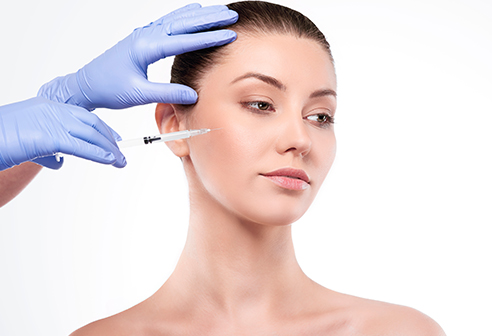
Izmir Fibrocell Stem Cell Treatment
The human body is a perfect biological machine with the capacity to repair and regenerate itself. However, the passage of time, environmental factors, and our genetic codes slow down this regeneration process. Fibroblast cells, which produce collagen and elastin – the basic building blocks that keep our skin looking young, firm, and vibrant – decrease in number and lose their function with age. At the cutting edge of modern medicine and biotechnology, instead of synthetic fillers or temporary solutions, “Regenerative Medicine” applications, based on the principle of multiplying and restoring a person’s own cells, are coming to the forefront. One of the strongest and most scientifically grounded of these applications is Fibrocell (Autologous Fibroblast Implantation) treatment. As Izmir Private Demiderm Polyclinic, we offer this advanced technology treatment, which combines tissue engineering with aesthetics, with high laboratory standards and our expert medical staff. In this comprehensive guide, we will examine all the details of Fibrocell treatment, from the laboratory process to the cellular mechanism of action, from application areas to long-term results.
What is Fibrocell Stem Cell Treatment?
Fibrocell, technically known as “Autologous Fibroblast Cellular Therapy,” is a procedure where fibroblast cells taken from the person’s own tissue (usually from behind the ear) are multiplied in laboratories approved by the Ministry of Health and adhering to GMP (Good Manufacturing Practices) standards, and then reinjected into the person’s skin.
Although this method is known as “Stem Cell Therapy” among the public, it is actually a specific process of multiplying fibroblasts, which are the main cells of connective tissue. Fibroblasts are “worker cells” that synthesize collagen and elastin fibers, which form the scaffold of the skin. With Fibrocell treatment, the number of these worker cells, which decrease with age, is increased by millions and returned to the skin. The aim is to turn back the skin’s biological clock and maximize the skin’s self-repair capacity. Since no foreign substance is introduced, it is a completely natural and biological rejuvenation process.
Skin Renewal Mechanism with Fibroblast Cells
Fibroblasts, located in the dermis, the middle layer of the skin, are responsible for the skin’s youthfulness. However, from the age of 25, we experience approximately 2% collagen loss each year, and fibroblasts go into dormant mode (senescent cells). When millions of young and active fibroblast cells, multiplied in a laboratory environment, are injected into the skin with Fibrocell treatment, the following mechanism works:
- Signaling: The newly arrived young cells communicate with other cells in the tissue, emitting repair signals.
- Production (Neocollagenesis): The injected fibroblasts rapidly begin to produce new Type 1 and Type 3 collagen fibers.
- Matrix Repair: Hyaluronic Acid synthesis, which fills the intercellular space, increases, which improves the skin’s moisture retention capacity.
- Elasticity: With the production of elastin fibers, the skin gains resistance against sagging.
Effects of Stem Cell Treatment on the Skin
The effects of Fibrocell treatment are not based on providing instant volume like fillers; it provides a cumulative and permanent “tissue healing” that is spread over time.
- Significant increase in skin quality and radiance.
- Reduction of fine wrinkles (around the eyes, above the lips).
- Repair of deep acne scars and wound scars.
- Increased skin elasticity and tightening of sagging skin.
- Evening out skin tone and reducing blemishes.
- Slowing down the aging process in the long term (Preventive effect).
How is Fibrocell Treatment Applied?
Fibrocell is a multi-stage protocol requiring high technology. At Izmir Private Demiderm Polyclinic, the process is managed with the patient’s safety and comfort in mind. The procedure consists of two main stages: clinical and laboratory. It involves not only injection but also a biotechnological production process.
Treatment Process: Cell Collection, Laboratory Production, and Application
The treatment process consists of three main stages:
1. Tissue Sample Collection (Biopsy)
Under local anesthesia, a lentil-sized (approximately 3-4 mm) piece of tissue (punch biopsy) is taken by the physician from the area behind the patient’s ear that has not been exposed to sunlight and has the least genetic damage. A small amount of blood is also taken from the patient. This tissue and blood are sent to a Ministry of Health-approved laboratory using special transfer kits that comply with cold chain regulations.
2. Laboratory Production (Culture Process)
In the laboratory, the tissue sample is separated, and fibroblast cells are isolated. These cells are then fed with serum obtained from the patient’s own blood and multiplied in special incubators. This process takes approximatelyThe process takes 3-5 weeks. The goal is to obtain millions (usually between 20-40 million) of pure fibroblast cells. Once production is complete, the cells undergo quality control.
3. Injection (Application)
The multiplied cells are returned to the clinic via cold chain. After numbing the skin, the physician injects these live cells into the dermis layer of the skin using very fine needles (mesotherapy technique). Treatment is usually planned in 3 sessions, and the cells arrive fresh from the laboratory for each session.
Who is Fibrocell Suitable For?
Fibrocell is suitable for individuals who want to rejuvenate naturally using their own tissue, who do not have an allergy risk, and who want to make a long-term investment.
- Those with deepening lines and loss of elasticity on their face.
- Those with persistent acne scars (pitted scars).
- Those with chickenpox or traumatic scars.
- Those with signs of aging in the neck and décolleté area.
- Those experiencing hair loss (to strengthen the roots).
- Those seeking permanent biological repair instead of temporary solutions like fillers or Botox.
The Role of Fibrocell in Skin Rejuvenation
In anti-aging treatments, Fibrocell is considered the “gold standard” among autologous (self-taken) methods. Instead of simply tightening or filling the skin, it restores the skin’s “youth memory.” The injected cells continue to work in the area they go to and replenish the collagen stores that the skin has lost over the years.
Fibrocell for Fine Line and Wrinkle Reduction
Filler applications, especially in areas with thin skin such as around the eyes (crow’s feet) and around the lips (barcode lines), can sometimes look artificial or cause swelling. Fibrocell improves the quality of the skin in these areas and thickens the dermis, allowing wrinkles to smooth out naturally. This is an improvement “from the inside out”.
Stem Cell Treatment for Acne Scars and Wound Scars
Atrophic (pitted) acne scars and wound scars are formed as a result of tissue loss. The collagen structure is damaged in these areas. With Fibrocell treatment, fibroblasts injected into the scars create new and healthy connective tissue in that area, lifting the base of the scar upwards. When combined with methods such as laser or dermapen in the treatment of deep scars, the success rate is very high.
Fibrocell for Increased Skin Elasticity
Elastin fibers provide the skin’s elasticity and firmness. Fibrocell prevents skin sagging by stimulating elastin production. It is effective in tightening the facial oval and making the skin look firmer.
The Duration and Result Time of Fibrocell Treatment
Fibrocell is the transplantation of living, active cells. It takes time for the injected cells to attach to the tissue and begin producing collagen. The first effects usually begin to be seen after the 2nd session (1-2 months after the application). The full result reaches its peak within 6-12 months.
Durability: Unlike other medical aesthetic procedures (fillers, Botox), the effect of Fibrocell can last up to 4-5 years. This is because the collagen produced is the person’s own natural tissue and slowly decreases with the aging process.
Differences Between Fibrocell and PRP
These two autologous methods are often confused, but their mechanisms are completely different.
| Features | PRP (Platelet-Rich Plasma) | Fibrocell (Fibroblast Stem Cells) |
|---|---|---|
| Contents | Growth factors (Stimulates existing cells). | New, young, and living cells (Worker cell supplementation). |
| Process | Taken and applied the same day. | Requires 3-5 weeks of production in the laboratory. |
| Potential Effect | Existing cells whips. | Increases cell count to millions. |
| Persistence | Average 6-12 months. | Average 3-5 years. |
Safety of Stem Cell Therapy: Side Effects and Risks
Because Fibrocell is produced entirely from the person’s own tissue and blood (autologous), it does not carry the risk of allergy or tissue rejection. Its production in FDA and Ministry of Health approved laboratories guarantees sterility. Possible side effects are only temporary redness, bruising, or swelling at the injection site. It does not carry a risk of cancer or transform into cancer cells.
The Effect of Fibrocell on Skin Tone Unevenness and Blemish Problems
As the skin renews itself, melanin distribution also becomes more regular. Fibrocell improves the overall quality of the skin, providing a brighter, more vibrant, and more even-toned appearance. It is a powerful source of “biological radiance” for dull and pale skin.
Things to Do Before Fibrocell Treatment
-
- Blood-thinning medications (under doctor’s supervision) should be discontinued before the biopsy procedure.
- Any active skin infection (herpes, etc.) should be treated.
- The procedure is not performed during pregnancy and breastfeeding.
Post-Procedure Recovery Process and Care Recommendations
A small bandage is applied behind the ear where the biopsy was taken and can be removed the next day. The patient can immediately return to their social life after the injection.
– Water should not come into contact with the application area and makeup should not be applied for the first 24 hours.
– Sun protection is very important.
– Drinking plenty of water supports the functioning of the cells.
– Hot baths and Turkish baths should be avoided for a few days.
How Many Fibrocell Sessions Are Required?
The standard protocol is the application of cells produced in the laboratory in 3 sessions at intervals of 3-4 weeks. In total, approximately 20-40 million cells are given to the skin. A single biopsy is sufficient for 3 sessions.
The Place of Fibrocell in Anti-Aging Treatments
Fibrocell is one of the top steps in the anti-aging pyramid. Botox relaxes muscles, fillers add volume; Fibrocell improves “skin quality.” Therefore, it is both a complement and a foundation for other treatments. Treatment performed on high-quality tissue always yields better results.
Fibrocell Application in Eye Area Rejuvenation
The skin around the eyes is very thin and is the first area to show signs of aging. Fibrocell thickens this thin skin, reducing the appearance of dark circles and repairing fine lines.
Stem Cell Treatment in the Neck and Décolleté Area
The neck and décolleté are the most challenging areas for aesthetic interventions. Fillers or lasers may sometimes be insufficient. Fibrocell biologically repairs the thin and loose skin in these areas, providing the most natural rejuvenation.
Fibrocell Use Against Hair Loss
It can also be applied to the scalp to strengthen the vascular structure and connective tissue that nourish the hair follicles. Especially when combined with hair transplantation or in the early stages of hair loss, it strengthens the roots and thickens the hair strand.
Changes Seen in the Skin After Fibrocell Treatment
Our patients generally report feeling an “indescribable vitality” in their skin starting from the 3rd-4th month. The skin becomes firmer, pores shrink, and facial features become clearer. This is not like a surgical lift, but a “well-rested and rejuvenated” appearance.
Fibrocell Prices and Determining Factors
Pricing is determined according to laboratory production costs and the number of sessions to be applied. Because it is a high-tech laboratory process, the cost is higher than standard mesotherapy. Due to Ministry of Health regulations, it is not appropriate to provide price information on the website. You can contact our polyclinic for detailed information.
Procedures That Can Be Combined with Stem Cell Treatment
Fibrocell can be combined with laser, radiofrequency (Gold Needle), PRP, and filler applications. For example, if the skin surface is renewed with laser while the subcutaneous tissue is repaired with Fibrocell, the results are much more impressive.
Things to Know Before Getting Fibrocell Treatment
- This is not a filler treatment; do not expect immediate swelling or changes; results will appear over time.
- It is a biological process that requires patience.
- The laboratory process (3-5 weeks) should be considered in treatment planning.
- It is one of the methods that gives the most natural and long-term results.