
Exosome Therapy in Izmir
Advances in biotechnology and medical aesthetics have brought to the forefront methods in anti-aging treatments that aim not only to mask symptoms but also to repair the root cause of the problem at the cellular level. One of the most exciting and scientifically sound developments in this field is undoubtedly “Exosome Therapy”. Exosomes, a gift of stem cell technology, are nano-sized vesicles that facilitate intercellular communication. As Izmir Private Demiderm Polyclinic, we offer regenerative (renewing) applications, considered the future of medicine, to our patients within the framework of scientific protocols and ethical values. In this comprehensive article, we will detail the entire process from the biological world of exosomes to their clinical applications.
What is Exosome Therapy? Effects on Skin and Hair
Exosomes are extracellular vesicles (EVs) secreted by almost all cell types in our bodies, ranging in diameter from 30 to 150 nanometers (approximately 1000 times smaller than a cell). For many years, these structures were thought to be the “garbage cans” of cells, but Nobel Prize-winning research in the last 20 years has shown them to be “postmen” facilitating intercellular communication.
Exosome therapy involves the therapeutic use of these vesicles, which are usually isolated and purified from young and healthy mesenchymal stem cells (cord blood, adipose tissue, etc.) in a laboratory setting. These vesicles contain DNA, RNA (mRNA, miRNA), growth factors, proteins, and lipids. When applied to the skin or scalp, they enter target cells (e.g., fibroblasts or hair follicle cells) carrying commands to “renew,” “repair,” and “rejuvenate.” They increase collagen synthesis in the skin while activating dormant hair follicles.
Cellular Rejuvenation with Exosomes: How Does It Work?
The aging process is fundamentally a breakdown in intercellular communication and a decrease in the cells’ capacity for self-renewal. Aging cells enter a “senescent” (sleeping) mode and can no longer produce collagen. The working principle of exosomes is based on the “Paracrine Signaling” mechanism.
Externally applied concentrated exosomes combine with aged or damaged cells. They transfer the youth codes (mRNA and growth factors) they contain to these cells. This transfer reprograms the metabolism of the aged cell. For example, an exosome entering a fibroblast cell instructs it to produce Type 1 and Type 3 collagen again. This is not just a superficial glow, but a biological rejuvenation process.
Who is Exosome Therapy Suitable For?
What are the Advantages?
Exosome therapy is suitable for a wide range of patient profiles. It is preferred by individuals, regardless of gender, who show signs of aging or who want to maintain the quality of their skin as part of preventive medicine.
- Skin Aging: Those with loss of elasticity, sagging, and fine wrinkles.
- Blemish Problems: Those experiencing melasma, sunspots, and uneven skin tone.
- Acne and Scars: Cases where active acne needs to be soothed and acne scars need to be repaired.
- Sensitive Skin: Skin with rosacea, eczema, or barrier damage (due to the strong anti-inflammatory effect of exosomes).
- Hair Loss: Those experiencing androgenetic alopecia (male pattern baldness) or telogen effluvium (seasonal hair loss).
Advantages: When not of human origin (plant-based or synthetic), the risk of allergy is low; because it does not contain cells, tissue rejection is low. They pose no risk and, being very small, easily penetrate the skin barrier.
Changes Seen in the Skin After Exosome Treatment
When the treatment protocol is complete and the biological process begins, multi-layered changes are observed in the skin. First, the dullness of the skin gives way to a healthy glow. In the following weeks, pores tighten, skin tone evens out, and the texture feels firmer. As inflammation decreases, redness subsides. In the long term, it is noticed that fine wrinkles are reduced and the skin’s resistance to gravity increases.
A New Era in Spot, Wrinkle, and Scar Treatment with Exosomes
The biggest challenge in spot treatment (hyperpigmentation) is the recurrence of the spot. Exosomes suppress excessive melanin production by regulating melanocyte cells. In acne scars, they help fill in the pits by repairing the hardened fibrotic tissue under the scars and triggering healthy collagen production. Especially when combined with laser treatments, it increases the healing rate and improves the success rate in treating blemishes and scars.
Exosome Application Against Hair Loss
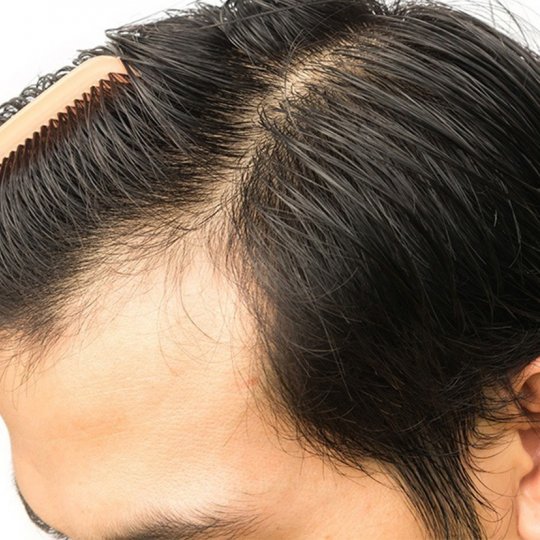
In hair loss treatment, exosomes target the “Dermal Papilla” cells of the hair follicle. They prolong the Anagen phase, which is the hair growth cycle, and the resting phase.It shortens the telogen phase. This allows hair to remain in the growth phase for a longer period. It also increases blood circulation in the scalp (angiogenesis), ensuring better nourishment of the hair follicles. It significantly contributes to the thickening of miniaturized (thin) hairs and slows down hair loss.
How Many Sessions of Exosome Therapy Are Needed? How Long Do the Effects Last?
The number of sessions is individually planned by the physicians at Izmir Private Demiderm Polyclinic according to the patient’s age, the extent of skin damage, and the desired result.
General Protocol: Generally, 3-5 sessions are recommended at intervals of 2 to 4 weeks.
Duration of Effect: The first effects begin to be seen from the 2nd session onwards. Since biological repair continues, full results peak within 3-6 months after the completion of the treatment. The improvement achieved can last for 1 year or longer, depending on the individual’s lifestyle. Annual booster sessions (maintenance) help maintain the results.
Differences Between Exosome & PRP: Which is More Effective?
PRP (Platelet Rich Plasma) and Exosome therapy are often compared. Both are regenerative treatments, but their mechanisms and contents differ.
| Features | PRP (Platelet-Rich Plasma) | Exosome Therapy |
|---|---|---|
| Source | Patient’s own blood (Autologous). | Usually produced in a laboratory environment from young stem cell cultures. |
| Contents | Growth factors (Amount depends on the person’s age/health). | Billions of nanoparticles, mRNA, miRNA, growth factors (Standard and high dose). |
| Potential | The person’s own blood It is limited by its values. | It carries a stronger and more concentrated regeneration signal. |
| Age Factor | If blood quality decreases in advanced age, its effect may decrease. | Because it is obtained from young stem cells, it has a high potential for effect even in elderly patients. |
| Anti-Inflammatory | Moderate level. | Very strong anti-inflammatory effect. |
Exosome Anti-Aging Applications: Anti-Aging Support
The modern understanding of anti-aging has evolved into the concept of “Well-Aging”. Exosomes are one of the most powerful tools that help reverse the biological age of the skin. By exhibiting a “senolytic” effect, it helps to remove aged cells from the tissue and replace them with younger cells. This means not only reducing wrinkles but also improving the overall health, immunity, and resistance of the skin.
Does Exosome Therapy Hurt? Procedure and Comfort
The procedure is usually performed using microneedling (Dermapen/Gold Needle) methods or very fine mesotherapy needles. Thanks to the local anesthetic creams applied before the procedure, the sensation of pain is minimized. Patients find the procedure quite comfortable. The application time, excluding the waiting time for anesthesia, is approximately 20-30 minutes.
Improving Enlarged Pores and Skin Texture with Exosomes
Enlarged pores are usually caused by loss of skin elasticity and excessive sebum (oil) production. Exosomes strengthen the collagen structure surrounding the pore walls, thus tightening the pores. They also regulate the functioning of the sebaceous glands, contributing to a more matte and smooth appearance of the skin.
Exosome Therapy Side Effects and Safety Information
Exosome products do not carry a risk of tissue rejection because they do not contain cellular material (nucleus, DNA). They are produced under sterile laboratory conditions. Possible side effects are generally temporary redness, mild edema, or tenderness depending on the application method (needling). These subside spontaneously within 24-48 hours. Using reliable brands and products approved by the Ministry of Health is the most critical point in terms of safety.
Most Current Protocols in Exosome Application
Protocols are constantly updated in light of scientific studies. Currently, one of the most effective methods is to increase the permeability of the skin by opening micro-channels (microneedling or fractional laser) and then applying the exosome serum topically. Thanks to the nano-size of exosomes, they quickly penetrate the dermis layer through the opened channels and reach the target.
Combined Applications: Exosome + Mesotherapy Effect
Exosome therapy can be combined with classic mesotherapy products such as hyaluronic acid, vitamins, or salmon DNA. This “cocktail” approach allows the skin to receive both the building blocks (vitamins/minerals) and the worker components (exosomes) simultaneously. This synergy increases the effectiveness of the treatment.
Skin Barrier Repair and Moisture Support with Exosomes
Skin with a compromised barrier becomes red, itchy, flaky, and vulnerable to external factors. Exosomes repair the skin barrier by increasing ceramide synthesis in the epidermis and strengthening the intercellular mortar. This feature is particularly important…It provides great comfort for patients experiencing chronic redness and sensitivity.
The Effect of Exosome Therapy on Collagen
Studies show that exosome application significantly increases the production of Type 1 Collagen (Strength) and Type 3 Collagen (Elasticity/Infant collagen) in the skin. It also stimulates the synthesis of elastin fibers, restoring the skin’s “stretching” capacity.
Post-Exosome Care: What to Pay Attention To?
- First 24 Hours: Do not apply water or makeup to the skin.
- Sun Protection: The skin may be sensitive to UV rays after the procedure; a high-factor sunscreen must be used.
- Product Use: Except for the restorative creams recommended by the physician, products containing irritating acids (AHA/BHA) or retinol should be avoided for 3-4 days.
- Heat: Sweating activities such as Turkish baths, saunas, and strenuous sports should be avoided for 48 hours.
Reducing Fine Lines and Wrinkles with Exosomes
Especially around the eyes, upper lip (barcode lines), and neck Wrinkles in areas with thin skin, such as the face, respond very well to exosome therapy. Improving skin quality in these areas softens the lines. It can be combined with filler applications for deep wrinkles.
Which Areas Can Be Treated with Exosome Therapy?
The application is not limited to the face.
Face: General rejuvenation.
Neck and Décolleté: Repair of thin skin.
Back of Hand: Removal of signs of aging.
Scalp: Hair loss treatment.
Body: Stretch mark (stria) and scar treatment.
New Approaches in Acne and Scar Treatment with Exosomes
In active acne, the strong anti-inflammatory effect of exosomes is used to reduce inflammation. In acne scars (atrophic scars), it supports skin regeneration by promoting tissue regeneration. When applied in combination with gold needle radiofrequency, very successful results are obtained in acne scars.
The Healing Role of Exosomes After Hair Transplantation
Exosome application after hair transplantation operations ensures both rapid healing of the donor area (the area from which the grafts are taken) and increases the retention rate (graft viability) of the transplanted roots (grafts). It reduces postoperative edema and crusting time, increasing patient comfort.
Exosome Treatment Prices and Affecting Factors
Since exosome treatment is a high-tech product, its costs vary depending on the brand of the product used, the number of exosome particles it contains (billions), its purity, and the conditions of cold chain transportation. The number of sessions applied and other combined procedures (laser, dermapen, etc.) also affect the price. A personalized treatment plan and pricing require a consultation with a physician.
Exosome Therapy Results: When Will They Be Noticeable?
The improvement, which begins at the cellular level, may not be immediately noticeable externally. A glow and hydration are felt in the skin during the first week. After 3-4 weeks, as collagen production increases, the skin begins to tighten and smooth. In hair treatment, hair loss stops in 4-6 weeks, and new hair growth and thickening are observed from the 3rd month onwards. Treatments completed patiently yield the most satisfying results.