Izmir Permanent Makeup Correction
Permanent makeup (micropigmentation), when applied with the right techniques and by expert hands, is an aesthetic procedure that simplifies life, accentuates facial features, and boosts self-confidence. However, inexperienced applications, incorrect pigment selection, faulty technique use, or chemical changes in the pigment under the skin over time can result in undesirable appearances. Reddish eyebrows, asymmetrical lip contours, smudged eyeliners, or artificial-looking shapes can cause serious aesthetic concerns and psychological distress. As Izmir Private Demiderm Polyclinic, we not only perform new applications but also offer a scientific and technical approach in the field of “Corrective Micropigmentation” to correct faulty procedures. In this comprehensive guide, we will cover the entire process in detail, from the causes of faulty permanent makeup to solutions, from laser removal technologies to color neutralization (camouflage) techniques.
What is Permanent Makeup Correction?
Permanent makeup correction is the revision of micropigmentation procedures that have been previously performed but are not satisfactory in terms of shape, color, symmetry, or technique. This process is a much more complex, advanced application requiring technical knowledge and color science (coloristics) expertise than performing a procedure from scratch. The correction process may include one or more steps such as removing the existing pigment from the skin (removal), changing its color (neutralization), or reshaping its form (camouflage/shaping).
Correction procedures are not just an aesthetic retouch; they also involve protecting skin health and healing the traumatized tissue. The deeper and more intense the faulty procedure, the more planned and gradual the correction process should be.
How to Correct Incorrectly Done Permanent Makeup?
There is no single “magic wand” for correcting incorrect applications. Different strategies are determined according to the source of the problem. The correction process generally revolves around the following three main methods:
- Removal: If the pigment is too dark, the shape is completely wrong, or the pigment has spread (migrated) on the skin, the existing dye must first be removed from the skin. For this, Q-Switch lasers or special chemical solutions are used.
- Color Neutralization (Color Correction): If the shape is correct but the color is wrong (for example, if the eyebrows have turned red or gray), the pigment color is neutralized using contrasting colors (complementary colors) and brought to natural tones.
- Camouflage and Shaping: Minor asymmetries or shape irregularities are corrected with skin-colored pigments (used carefully) or with additions made with the correct color.
Techniques Used in Correction Procedures
At Izmir Private Demiderm Polyclinic, combined techniques are applied for correction procedures. Our physicians and specialists utilize the following technologies depending on the skin condition:
- Q-Switch Nd:YAG Laser: It is the gold standard in breaking down dark, gray, blue, or black pigments. It breaks down the pigment into microparticles and allows it to be eliminated through the body’s lymphatic system.
- Enzyme or Acid-Based Solutions: These are solutions used in some colors that the laser cannot see (e.g., beige, white, green) or in areas where the laser is not suitable, and they expel the pigment to the skin surface.
- Color Correction with Micropigmentation Device: This is a procedure performed using special needles and corrector pigments.
In Which Cases is Permanent Makeup Correction Necessary?
The situations that necessitate correction are:
- Color Change: The eyebrows turning orange, red, purple, blue, or gray over time.
- Deformity and Asymmetry: The eyebrows, lips, or eyeliner not conforming to the facial anatomy, one side being different from the other.
- Pigment Migration (Blowout): Especially in eyeliner applications, the spreading of the dye onto the eyelid.
- Excessively Dark and Artificial Look: Intensely colored applications that look like they were drawn with a marker pen, called “block brows.”
- Incorrect Technique: Using powdering instead of a microblading technique, or vice versa.
Pigment Correction and Color Neutralization Process
This process is, in essence, a color science (coloristics) application. The principle of contrasting colors on the color wheel is used:
- Red/Orange Eyebrows: Neutralized with pigments containing green/olive tones to turn them brown.
- Purple/Blue Eyebrows: Warmed with pigments containing orange/yellow (warm) tones to turn them brown.
Gray Eyebrows: With orange-based correctorsThe gray tone is broken down and a warm coffee tone is obtained.
This process is based on the principle of “layering” the correct color over the existing incorrect color. However, if the underlying color is too dark, it is necessary to lighten the color with a laser first.
Differences Between Permanent Makeup Removal and Correction
Removal aims to completely eliminate the pigment and is usually done with lasers or solutions. Correction, on the other hand, aims to transform the existing pigment or revise the shape. In most cases, a successful correction requires first a partial removal (color fading) procedure, followed by new pigmentation. Applying paint directly over it usually results in a “muddy” and dirty look.
Lip Contour Correction Procedures
Lip corrections are one of the most delicate procedures.
Excessive Frame: Contours applied too far outside the lip line do not make the lip look natural. These excess parts should be removed with solutions, not lasers (Laser can darken the lipstick).
Bruised Lips: Lips can appear purple due to incorrect pigment selection or deep treatment. Lip color is warmed by neutralizing with orange-based pigments. Eyebrow Contour Correction: Symmetry and Color Problems
This is the most common correction request.
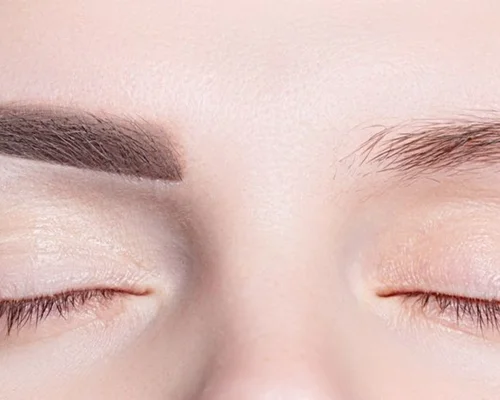
Asymmetry: If one eyebrow is higher or thicker than the other, the excess parts are removed, and missing parts are added.
Hair Stroke Correction: Old and scattered hair strokes can be covered with a powdering technique to create a smoother transition.
Color: Eyebrows whose color has been altered with several laser sessions are redesigned with the correct pigment selection.
Eyeliner Correction Applications
Eyeliner corrections are high-risk and require expertise.
Migration: If the dye spreads to the eyelid via the bloodstream, the dispersed portions are cleaned with very precise laser pulses or special solutions.
Tail Correction: Low or asymmetrical tails are redesigned by removing them with laser or solution.
Warning: Protective lenses and safety precautions must be maintained at the highest level during procedures around the eyes.
Pre-Correction Analysis and Color Evaluation
At Izmir Private Demiderm Polyclinic, a detailed analysis is performed before the procedure. The skin’s undertone (warm/cold), the depth of the existing pigment, and the chemical structure of the pigment (whether it is iron oxide or carbon-based) are evaluated. This analysis is vital in determining the method to be used (Laser or neutralization?).
Correction Solutions for Dark or Grayish Pigments
Gray color is usually caused by the pigment being penetrated too deeply or by the use of dyes containing black (Tyndall effect). To correct gray eyebrows, the pigment must first be broken down and the color lightened with a Q-Switch laser. After sufficiently lightening the gray base, a warm-toned (orange-based) brown dye is applied again. Direct dyeing will result in a darker and matte gray.
Correction Methods According to Skin Type
Oily Skin: It disperses and grays the pigment more quickly. Powdering techniques after correction are more permanent and provide clearer results on these skin types.
Dry/Thin Skin: It responds more quickly to laser treatment but carries a higher risk of sensitivity. Low doses should be used.
Sensitive Skin: Solution wiping may be preferred, or soothing protocols may be applied after laser treatment.
Healing Process After Permanent Makeup Correction
Because the correction procedure involves processing the skin a second time, the healing process requires care.
After Removal: Crusting, redness, or temporary darkening of the color may occur in the area. Avoid contact with water and protect from the sun for 1 week.
After Neutralization: The color may appear very vibrant (orange/red) in the first few days. Once the crust falls off, the color will settle and become natural.
Psychological and Aesthetic Effects After Incorrect Procedure
A permanent mistake on the face can cause a person to avoid mirrors, withdraw from social life, and lose self-confidence. Our approach at the clinic is not just a technical correction, but a reassuring and transparent process management that will support our patients in overcoming this traumatic process. “Patience” is the key to this process.
Touch-up Requirements and Repeat Sessions
Correction procedures are generally not completed in a single session. Especially in cases requiring removal, 3-5 sessions may be needed to completely remove the pigment. In color neutralization procedures, complete coverage is achieved in the 2nd or 3rd session, depending on the dominance of the underlying color. A waiting period of 4-6 weeks is necessary for the skin to heal between each session.
Safety and Hygiene in Permanent Makeup Correction
The correction procedure is an invasive procedure that affects the integrity of the skin. There is a risk of infection and scarring. Therefore, it is mandatory that the procedure be performed in a sterile environment, with single-use needles and medical devices. “Coverting with skin-colored dye” done in unlicensed places is a risk.This procedure is absolutely not recommended as it leads to permanent stains that cannot be removed even with laser in the future.
Post-Correction Color Settling Process
The color seen immediately after the procedure is not the final result.
Week 1: Crusting and darkening.
Week 2: Crusting and fading of color.
Week 4: Pigment emerges to the surface and the true color settles.
Patience is required during this process, and early intervention should be avoided.
How Many Sessions Does Permanent Makeup Correction Take?
The number of sessions varies depending on the density and depth of the existing pigment, the content of the dye used, and the speed at which the person’s immune system eliminates the pigment.
Minor Color Changes: 1-2 Sessions.
Dark Block Eyebrows: 3-6 Laser Sessions + 1 Reconstruction Session.
Smudged Eyeliner: 2-4 Sessions.
Different Correction Techniques for Light and Dark Pigments
Dark pigments (black, dark brown) absorb laser light well and are easier to remove. Light pigments (beige, yellow, white, green) do not reflect the laser and are very difficult to remove. Correcting faulty procedures, especially those covered with skin-colored dye under the name of “camouflage,” is the most challenging process. In these cases, special acidic solutions (enzyme peeling) are used.
The Importance of Pigment Selection in Correction
The pigments used in the correction process are from the “Corrector” series. These pigments are special formulas with high coverage that neutralize contrasting colors. For example, the “Olive” pigment turns red eyebrows brown. Choosing the wrong pigment makes the situation even more complicated (for example, applying brown to red eyebrows can make the color even redder).
Devices and Equipment Used in Correction Procedures
The Q-Switch laser devices used in our clinic target only the pigment without damaging the skin by firing at nanosecond or picosecond speeds. Our micropigmentation devices have precise motors that place the dye in a controlled manner without tearing the skin.
Correction Prices and Influencing Factors
Correction is more costly and labor-intensive than doing it from scratch. Pricing is determined according to the type of procedure to be performed (removal + renewal or just neutralization?), the number of sessions, and the technology used. Due to Ministry of Health regulations, it is not appropriate to provide price information on the website. For a personalized plan and price, you need to apply to our clinic for an analysis.
Things to Know Before Getting Permanent Makeup Correction
Correction is a process; expecting a miracle in a single session is not realistic.
– Avoid using skin-colored dye for camouflage; this is a mistake that is very difficult to reverse.
– Temporary graying of eyebrow hairs after laser treatment is normal, and the hairs will grow back to their original color.
– The “color knowledge” and “removal experience” of the specialist performing the procedure are very important.
– You must be patient and adhere to the protocol determined by the specialist.
Comparison Table of Correction Methods
| Method | Area of Use | Advantage | Disadvantage |
|---|---|---|---|
| Laser (Q-Switch) | Dark, black, gray, navy blue pigments. | Fast results, leaves no trace, does not cause hair loss. | Does not see some colors (green, white). |
| Solution (Removal) | Colors not seen by laser, around the lips. | All colors May cause vomiting. | Healing time is long, it is crusted. |
| Color Neutralization | Red, orange, purple color changes. | Provides color correction without removal. | Does not work on very dark eyebrows. |
| Camouflage | Minor shape irregularities. | Quick solution. | May change color in the sun, it is risky. |