Izmir PRP Treatment
What is PRP Treatment?
PRP (Platelet Rich Plasma) is the therapeutic use of plasma fluid obtained from the person’s own blood (autologous), containing a much higher concentration of platelets (blood platelets) than normal blood values. While our blood normally contains approximately 200,000 platelets per milliliter, this number is increased to 1,000,000 and above in the plasma obtained as a result of the PRP process. This concentration process increases the power of the “Growth Factors” contained in the platelets many times over, creating a strong repair signal in the area where it is applied.
PRP does not contain any drugs or synthetic substances. Because it consists entirely of the person’s own biological material, it is a “natural” treatment method. It does not cause immunological reactions such as allergy risk or tissue rejection. It is safely used in a wide range of fields, from aesthetic dermatology to orthopedics, dentistry to wound treatment.
How is PRP Prepared? Stages and Techniques
The PRP preparation process follows a standard protocol requiring laboratory precision and sterilization. The process applied at Izmir Private Demiderm Polyclinic is as follows:
- Blood Collection (Phlebotomy): Approximately 10-20 cc of blood is taken from the patient’s arm vein (venous), as if giving a standard blood test. This blood is transferred to sterile tubes specially produced for PRP, containing special anticoagulant substances (citrate, etc.).
- Centrifugation Process: The tubes are placed in a special centrifuge device. The device rotates at a specific speed (RPM) and time, separating the blood into its components. In this process, the heavier red blood cells (erythrocytes) settle to the bottom due to gravity, while the lighter plasma and platelets remain at the top.
- Separation: The “Buffy Coat” layer, where platelets are most concentrated, and the plasma are separated from the red cells using a special technique. This yellow, platelet-rich liquid obtained is PRP.
- Preparation for Application: The obtained PRP is prepared for injection. In some cases, activators such as calcium chloride may be added to activate the platelets.
Mechanism of Action of PRP Treatment
The therapeutic power of PRP lies in the bioactive proteins and growth factors released by the breakdown (degranulation) of platelets. These factors are:
- PDGF (Platelet Derived Growth Factor): Stimulates cell growth, new blood vessel formation, and collagen production.
- TGF-Beta (Transforming Growth Factor): Supports the formation of the intercellular matrix and tissue repair.
- VEGF (Vascular Endothelial Growth Factor): Increases blood flow and nourishment to the tissue by promoting new capillary formation.
- EGF (Epidermal Growth Factor): Accelerates skin cell renewal and wound healing.
- FGF (Fibroblast Growth Factor): Promotes tissue repair and collagen synthesis.
When these factors are administered to the tissue, the body perceives an “injury” in that area and activates its repair mechanisms to the maximum level. It activates stem cells, promotes new blood vessel formation, and stimulates fibroblasts to produce collagen.
What Problems is PRP Used For?
PRP treatment is used for a wide variety of indications in the aesthetic and dermatological fields:
-
- Skin rejuvenation and anti-aging.
- Hair loss treatment and improvement of hair quality.
- Treatment of acne scars and wound scars.
- Sun spots and uneven skin tone.
- Dark circles and bags under the eyes.
- Fine wrinkles and loss of elasticity.
- Stretch mark (stria) treatment.
- Rapid skin recovery after procedures such as laser or peeling.
to ensure healing.
Who is PRP Treatment Suitable For?
PRP is suitable for adult individuals with good general health, normal platelet counts, and realistic expectations. It is an ideal option, especially for patients who are hesitant about chemical or synthetic fillers and are seeking a natural and biological treatment.
PRP Application in Skin Rejuvenation
With aging, collagen production in our skin decreases, the skin thins, loses moisture, and becomes dull. PRP in skin rejuvenation is a popular application also known as “Vampire Facelift”. When PRP is injected into the dermis layer of the skin, it stimulates fibroblasts, increasing the synthesis of new collagen (Type 1 and Type 3) and elastin fibers. This biological stimulation tightens the skin, increases its elasticity, and reduces fine lines. In addition, the skin’s moisture retention capacity increases, resulting in a brighter and more vibrant appearance.
PRP Treatment Against Hair Loss
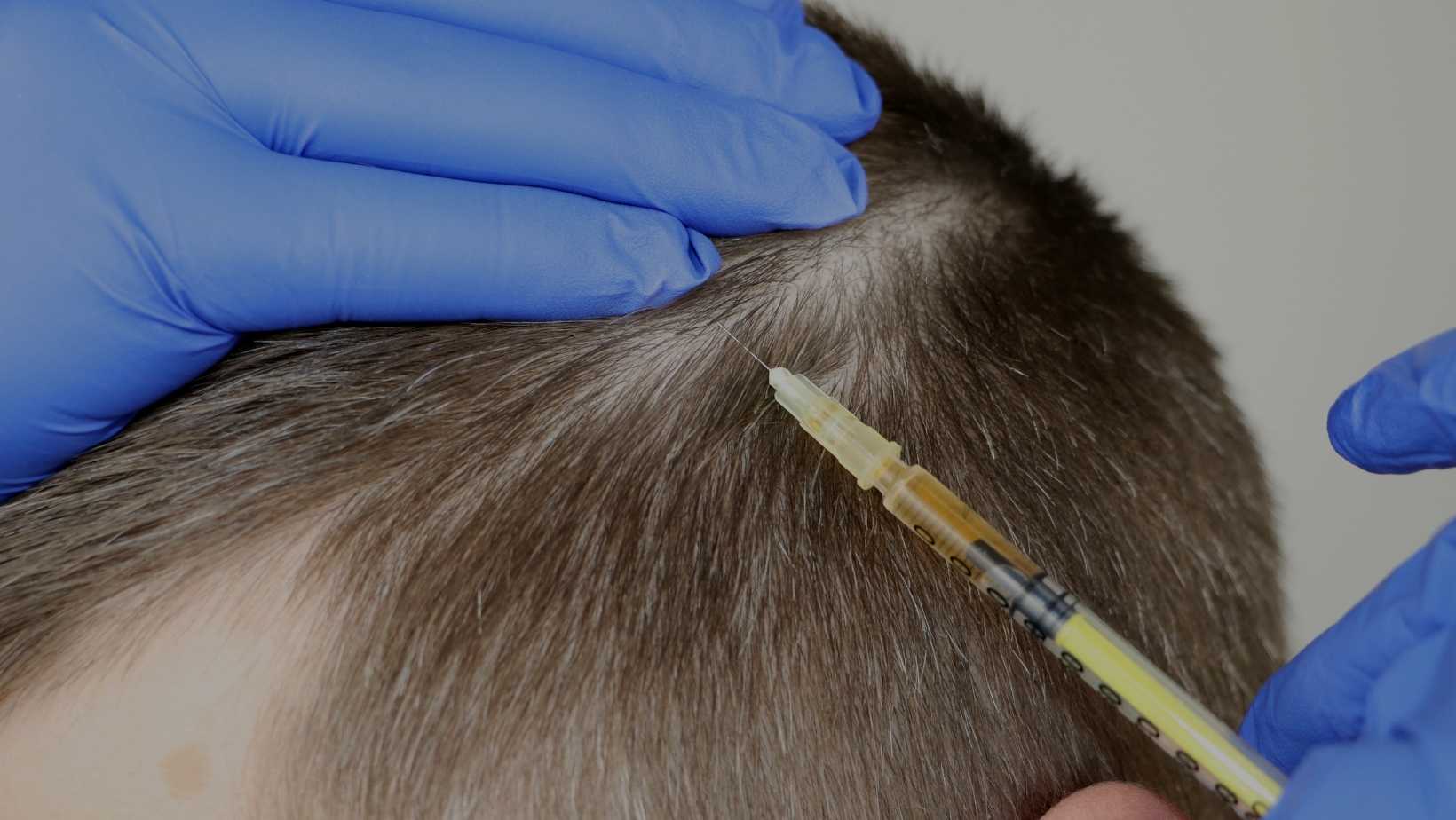
PRP is one of the most effective supportive methods in hair loss treatment. Growth factors injected into the hair follicles revitalize weakened and miniaturized hair follicles. By increasing blood circulation in the scalp, it ensures better nourishment of the roots.
Effects:
– Slows down or stops hair loss.
– Thickens and increases the volume of the hair strand.
– Accelerates healing after hair transplantation and increases the viability of transplanted roots.
– Transitions roots from the dormant phase (telogen) to the growth phase (anagen).
PRP and Collagen Production: Skin Renewal
Collagen is the main protein that forms the skeleton of the skin. The most fundamental task of PRP is to activate fibroblast cells, which are the collagen production center. Studies show that collagen density in the skin increases significantly after PRP application. This increase thickens the skin, tightens pores, and increases the skin’s resistance to external factors. The effect is not to provide instant volume like fillers, but to improve skin quality and rejuvenate it over time.
PRP Application Areas and Usage Areas
PRP can be safely applied to almost any area of the body:
Face: Forehead, eye area, cheeks, upper lip, chin.
Neck and Décolleté: For fine wrinkles and sagging.
Back of Hand: For signs of aging and volume loss.
Scalp: The entire scalp.
Body: Inner thighs, arms, abdomen (for stretch mark treatment).
PRP Treatment Process and Session Planning
PRP is not a miracle cure in a single session; it is a treatment that shows a cumulative effect.
Initial Treatment: A course of 3 to 6 sessions, usually applied every 2-3 weeks, is recommended.
Maintenance Treatment: After the completion of the treatment, it is recommended to have booster doses every 3-6 months or once a year to maintain and ensure the continuity of the results obtained.
PRP for Fine Line and Wrinkle Reduction
While fillers or Botox may be more suitable for deep wrinkles, PRP is quite effective for superficial fine lines (especially around the eyes and upper lip). With skin restructuring, the depth of these lines decreases and the skin becomes smoother. When combined with Dermapen (microneedling), its success in wrinkle treatment increases exponentially.
PRP for Acne Scar and Blemish Treatment
Acne scars are formed as a result of irregular collagen production during the skin’s healing process. PRP helps fill in pits and erase scars by regulating tissue repair in this area. In the treatment of blemishes, growth factors contribute to evening out skin tone by balancing melanin production. Especially when applied in conjunction with laser treatments, it increases the healing rate in blemish treatment.
PRP Post-Treatment Recovery Process and Care Recommendations
PRP is classified as a “Lunchtime Procedure” that doesn’t affect social life. Things to keep in mind after the procedure:
– Avoid contact with water and makeup in the application area for the first 24 hours.
– Avoid hot baths, Turkish baths, saunas, and strenuous sports activities on the day of the procedure.
– Take care to protect yourself from the sun and use a high-factor sunscreen.
– Mild redness or small bruises may occur in the application area; these are temporary.
When Does PRP Treatment Show Results?
Because PRP initiates a biological process, results are not immediately visible. A brightness and vitality are felt in the skin after the first session (Cinderella effect). However, the real structural improvement becomes noticeable after the 3rd or 4th session, when collagen production increases. In hair treatment, while the reduction in hair loss is noticeable from the 3rd session onwards, the improvement in hair quality becomes clear at the end of the treatment.
Does PRP Treatment Hurt?
The procedure is performed with very fine (30G) mesotherapy needles. Patients usually describe a sensation as “a slight mosquito bite” or “tingling”.They do. It’s not an unbearable pain. To increase comfort, a local anesthetic cream is applied to the skin before the procedure and left to sit.
Safety and Possible Side Effects of PRP
Because PRP is obtained from the person’s own blood, it has the lowest side effect profile among medical aesthetic applications. There is no risk of allergy. Possible side effects are only temporary conditions related to the injection technique:
– Mild redness and swelling (passes in a few hours).
– Small bruises at the needle insertion sites (passes in a few days).
– Risk of infection (very low when performed under sterile conditions).
Differences Between PRP and Mesotherapy
Both methods are applied similarly (by injection), but their contents are different.
| Features | PRP (Platelet-Rich Plasma) | Mesotherapy |
|---|---|---|
| Contents | Growth factors obtained from your own blood. | Externally prepared cocktail of vitamins, minerals, and hyaluronic acid. |
| Source | Autologous (Natural/From you). | Synthetic/Herbal Mixture. |
| Mechanism of Action | Cell renewal and repair. | Disadvantages Replacement and nourishment. |
| Usage | Tissue repair is prioritized. | Skin nourishment and moisturizing are prioritized. |
Combined Treatments: PRP + Dermapen / Mesotherapy
The most frequently used method to increase the effectiveness of PRP is combined treatments. Thousands of micro-channels are opened in the skin with Dermapen (micro-needling) and PRP is applied on them. In this way, the absorption of PRP is increased by up to 300%. In addition, the alternating application of PRP with mesotherapy creates a synergistic effect by both repairing the skin and nourishing it with vitamins.
The Place of PRP in Anti-Aging Treatments
In the anti-aging world, PRP is positioned as a “protective and restorative” treatment. Unlike Botox or fillers, it doesn’t provide instant reshaping; instead, it works to reverse the skin’s biological age. It repairs the wear and tear of years and slows down the aging process. It’s the best anti-aging investment for those who prefer natural results.
Which Age Range is Suitable for PRP Treatment?
There is no definite age limit for PRP.
20-30 Years: For acne scars, the onset of genetic hair loss, or for prevention.
30-50 Years: For the first signs of aging, fine lines, and to improve skin quality.
50+ Years: As a supportive treatment for deepening lines and loss of elasticity.
Is PRP Applied During Pregnancy and Breastfeeding?
Although PRP is a natural process, it is generally not recommended during pregnancy due to changes in hormonal balance and the immune system. During breastfeeding, apart from the use of local anesthetic creams, there is no risk of PRP passing into breast milk or harming the baby; However, it is best to have it done with a doctor’s approval.
Permanence and Duration of Effect of PRP Treatment
The improvement achieved with PRP is permanent; that is, the repaired tissue does not immediately return to its original state. However, since the aging process continues, the skin or hair will need support again over time. Regular maintenance sessions ensure that the effect lasts for years. Lifestyle (smoking, diet, sleep) is the most important factor affecting the permanence.
Who is Not Suitable for PRP Treatment?
- Those with very low platelet count (Thrombocytopenia).
- Those undergoing active cancer treatment.
- Those using blood thinners (if they cannot be discontinued under doctor’s supervision).
- Those with active infection in the application area.
- Those with chronic liver disease.
Things to Know Before Getting PRP Treatment
- The quality of the PRP kit used is very important. Procedures performed with ordinary laboratory tubes are not PRP; special kits must be used.
- Drinking plenty of water before the procedure facilitates blood flow.
- Alcohol and smoking reduce the quality of platelets; they should be avoided during the treatment process.
- Expectations should be realistic; PRP is not a surgical lifting procedure, it is a biological repair.
PRP Prices and Influencing Factors
The prices of PRP treatment vary depending on the brand and quality of the kit used, the number of sessions, the size of the application area, and other combined procedures. According to Ministry of Health regulations, it is not appropriate to provide price information on the website. For a personalized treatment plan and pricing, you can apply to Izmir Private Demiderm Polyclinic for a free analysis.