Alexandrite Laser Success in Light Skin – Dark Hair Type
Scientific Basis: Selective Photothermolysis and Melanin Interaction
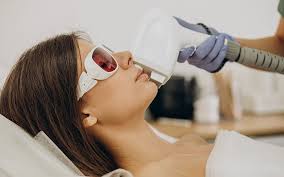
To understand the success of the Alexandrite laser on light skin and dark hair, it is necessary to examine the concept of “Selective Photothermolysis,” the working principle of the laser. This principle refers to the selective heating and destruction of a specific target (chromophore) with the correct wavelength and energy, without damaging the surrounding tissues. In laser hair removal, the target chromophore is the “Melanin” pigment.
Alexandrite lasers produce light at a wavelength of 755 nanometers (nm). This wavelength is very strongly absorbed by melanin.
Why Light Skin? In light-skinned individuals (Fitzpatrick Type I and II), the amount of melanin in the epidermis, the upper layer of the skin, is very low. This allows laser light to pass through the skin surface without losing energy.
Why Dark Hair? Dark hair contains a very high concentration of melanin (especially eumelanin). The energy passing through the skin surface is attracted like a magnet by this dense melanin in the hair follicle.
As a result, the energy hits its target (the hair follicle) precisely, without damaging the surrounding tissue (skin). This physical advantage is the main reason why Alexandrite lasers are considered the “Gold Standard” for light-skinned and dark-haired individuals.
Seasonal Planning for Fair-Skinned Individuals in Izmir
Izmir is a city on the Aegean coast that enjoys sunshine for much of the year. However, for individuals with fair skin and dark hair, this sunny climate requires careful planning in the laser hair removal process.
The greatest success of the Alexandrite laser depends on the “Color Contrast” between the skin and the hair. When a fair-skinned person is exposed to the sun and tans, their skin color darkens, and this contrast decreases. Because melanin in the skin increases, the laser light begins to target not only the hair follicle but also the skin. This increases the risk of burns and reduces effectiveness.
Therefore, for fair-skinned patients living in Izmir, Alexandrite laser applications can generally be safely performed during the autumn and winter months when the sun’s effect is reduced, or year-round in areas that do not receive sunlight (underarms, genitals, etc.). In the summer months, sessions can continue provided that the individual is not tanned and high-factor sunscreens are used.
Fitzpatrick Skin Scale and Ideal Candidate Profile
In dermatology, skin types are classified from 1 to 6 according to the Fitzpatrick scale. The group in which Alexandrite laser performs best is Type I, Type II, and Type III.
- Type I (Very Fair Skin): Skin that always burns in the sun, never tans, and has freckles. If the hair color is dark, it is an excellent candidate for Alexandrite.
- Type II (Fair Skin): Skin that burns easily in the sun and is difficult to tan. This group, frequently encountered in Türkiye and Izmir, gets maximum benefit from the treatment if they have dark hair.
Type III (Wheat Skin): Skin that sometimes burns in the sun, then tans. Very successful results are obtained with Alexandrite laser when the colors lighten in the winter months.
Anatomical Structure of Hair: Thickness and Depth
Simply having a dark color is not enough; the thickness of the hair also affects the success.
Alexandrite laser is more effective on thick and deeply rooted hairs. Thick hairs absorb laser energy better because they contain more melanin, and transmit heat to the hair follicle (bulb) more efficiently. In fine or vellus hairs, the effectiveness of Alexandrite laser may decrease because there is less melanin. Therefore, even if you have light skin…Expert evaluation is necessary for areas with fine hairs, such as the face. Dark and thick hairs on body areas (legs, armpits, genitals, back) are the ideal target for this type of laser.
Alexandrite Laser Performance Table According to Skin and Hair Type
The following table summarizes the expected performance of the Alexandrite laser in different combinations:
| Skin Type | Hair Color / Texture | Alexandrite Laser Suitability | Expected Effectiveness |
|---|---|---|---|
| Light Skin (Type I-II) | Dark and Thick (Black/Brown) | Excellent (Ideal Candidate) | Maximum energy delivery, high success rate. |
| Light Skin (Type I-II) | Fine or Light Brown | Medium / Low | Hair follicle may not reach sufficient heat. |
| Wheat Skin (Type III) | Dark and Thick | Very Good | High success is achieved if there is no tan. |
| Dark Skin (Type IV+) | Black and Thick | Risky / Not Suitable | Nd:YAG or Diode should be preferred due to the risk of burns on the skin. |
| All Skin Types | White / Gray / Red | Ineffective | Laser not detected because there is no melanin. |
Application Process and Session Intervals
In individuals with light skin and dark hair, the number of sessions is usually less than in other skin types because the laser energy reaches the hair follicle without loss.
The hair growth phases (Anagen, Catagen, Telogen) are another factor determining the success of the laser. The laser only affects hairs in the active growth phase (Anagen). In patients with light skin and dark hair, a large portion of the hairs in the anagen phase are successfully destroyed in each session. In clinics in Izmir, an average of 6-8 sessions are generally recommended for body areas, and 10-12 sessions for the face. However, these numbers may vary from person to person depending on hormonal status and genetic factors.
Things to Consider Before the Procedure
Even if you have this ideal combination, you need to follow some rules for continued success:
- Stop Using Hair Removal Methods: The laser targets the hair follicle. You should stop using waxing, tweezers, or epilators at least 3-4 weeks before the procedure. Only razors or trimmers should be used.
- Sun Protection: Do not allow your skin to darken in the İzmir sun. A tanned complexion means that the “light skin” advantage for Alexandrite laser is lost.
- Do Not Use Hair Bleaching Products: Lightening the color of the hairs reduces melanin, which is the target of the laser, and decreases its effectiveness.
Conclusion: Take Advantage of the Laws of Physics
In summary; “The success of Alexandrite laser on light skin and dark hair is not a coincidence, but a physical reality. Individuals with this profile are among the fortunate group who can benefit to the fullest extent from the possibilities offered by laser technology. Thanks to high contrast, hair follicles can be effectively targeted while protecting the skin.
Individuals with light skin and dark hair considering laser hair removal in Izmir are advised to take care to protect themselves from the sun to preserve these advantages and to choose hygienic and professional healthcare facilities that use FDA-approved devices. With the right technology and expert hands, smoothness is an achievable and sustainable result for this skin type.