
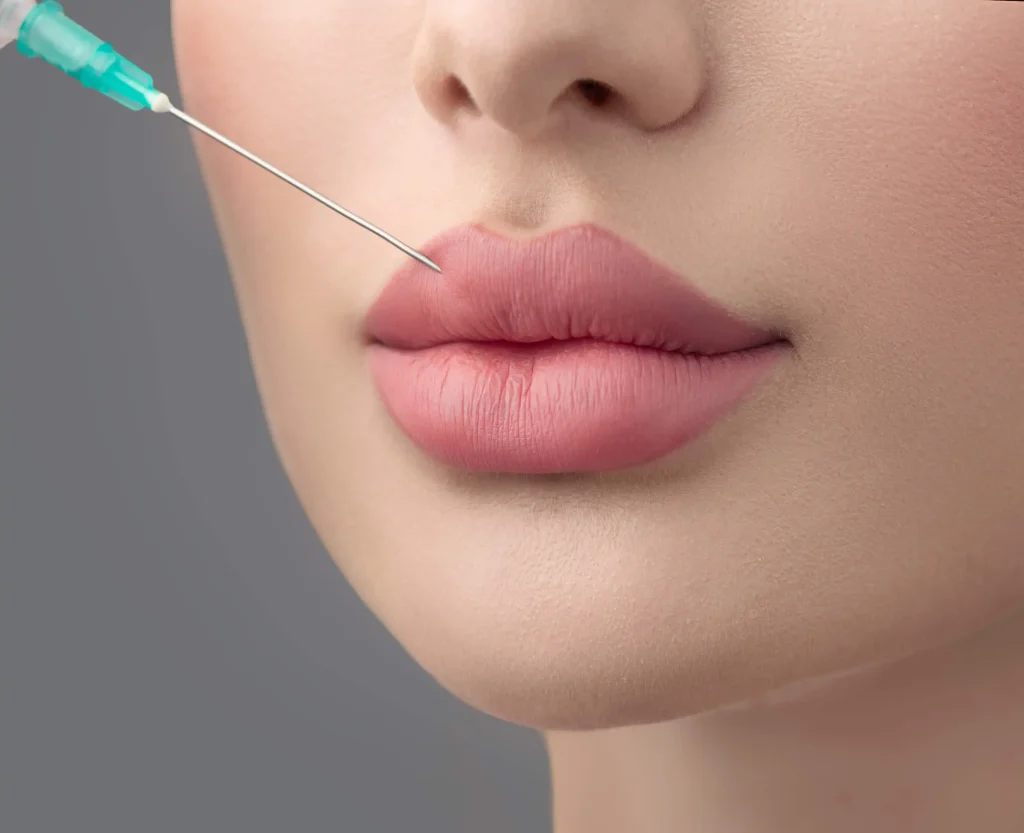
Cannula filler and needle filler are the application of the same filler material with different tools: the tip of a cannula is a blunt, flexible small tube, while a needle is a thin tool with a sharp tip. Which one will be used is determined by the area to be treated, the intended effect and the doctor’s technique. Neither is better than the other in every situation; in this article we explain the differences, which one is preferred in which area, and who makes the choice.
The short answer: what are a cannula and a needle
A needle is a sharp-tipped tool used to pierce the skin and leave the filler material at a specific point. A cannula is a long, flexible small tube with a rounded tip; it is advanced inside through a small entry point made in the skin.
- Needle: It allows a pinpoint and precise application.
- Cannula: It makes it possible to work over a wide area from a single entry point.
Both are tools in the doctor’s hands and can often be used together in the same procedure.
What is dermal filler, and how is hyaluronic acid filler done
Dermal filler is a gel-like product injected under the skin and used to add volume, contour or moisture. One of the most commonly used types is hyaluronic acid filler; hyaluronic acid is a substance that is also naturally found in the body.
The procedure generally goes through these steps:
- Assessment: The doctor examines your face, listens to your expectations and discusses what can be done in which area.
- Preparation: The area is cleaned; if needed, a numbing method that the doctor considers suitable is applied.
- Injection: The filler material is placed in the planned layer with a needle or cannula.
- Shaping: The doctor gently shapes the area.
- Check: Care recommendations are given after the procedure.
We described how filler works in our article how filler applications work. For our service page, you can look at İzmir filler applications.
Differences between a cannula and a needle
The difference between the two tools lies in the application technique and ease of use in certain areas. The table below compares, in broad lines, the points looked at when deciding.
| Point | Needle | Cannula |
|---|---|---|
| How it works | Pierces the skin with a sharp tip, injects at a specific point | Advances with a rounded tip through the small entry that is made |
| Number of entry points | Usually more than one | Usually one or a few |
| Who and where it is preferred | For delicate, pinpoint work such as fine lines and the lip contour | In wide areas such as the cheek and jawline |
| Tendency to bruise | Bruising may occur if it meets a blood vessel | Generally less bruising is seen, but it does not disappear completely |
| Precision | Pinpoint precision is high | Gives a soft transition over a wide area |
| Duration and care | Swelling and redness may last a few days | Swelling and redness may last a few days |
As seen in the table, the two tools cannot replace each other in every situation. The choice is made according to the area and the targeted result.
Which is preferred in which area
The structure of the area and the desired effect are the main factors that determine the tool. In general there is a tendency like this:
- Around the lips and fine lines: A needle is often preferred because precise work is needed.
- Cheek and cheekbone: A cannula can be used because volume will be given over a wide area.
- Jawline: A cannula, a needle or both together can be used according to the doctor’s plan. We describe this area on our page İzmir jawline filler.
- Under the eye: Because it is a thin and delicate area, the choice of technique depends on the doctor’s experience. You can look at the page İzmir under-eye filler application.
This list is a general tendency; the final choice is made by the doctor who sees your face.
Techniques used in cheek filler
The option most often heard of for cheek filler is the cannula, but a deep single-point application with a needle can also be used. The aim in the cheek is to distribute the volume in a balanced way and to achieve a natural look.
A cannula can spread the filler by advancing over a wide area; a needle can be used to support a more defined point. In some plans both tools are used. You can read how a natural look is preserved in the article how naturalness is preserved in facial fillers.
Assessment in terms of bruising and swelling
A cannula is often associated with less bruising, but whichever tool is used, bruising and swelling can be seen. This is related to the small blood vessels under the skin and varies from person to person.
- There may be mild swelling and redness in the first days.
- Small bruises may form in some people.
- These signs mostly decrease within a few days.
If you are wondering how long swelling lasts, you can look at the article is swelling after filler normal, and how long does it last. If the signs increase, or if findings such as severe pain, a marked darkening of the skin color or a vision problem appear, reach a doctor without losing time.
Is cannula filler less risky than a needle?
A cannula can reduce the chance of vessel injury in some areas; however, it is not right to regard any tool as free of risk. How risky a procedure is depends less on the tool itself than on the doctor’s knowledge of anatomy, the product used and the technique.
For this reason, before the question “cannula or needle,” look at the question “who will do the procedure.” You can ask the doctor the following:
- Which tool do you recommend for this area, and why?
- What is the filler material to be used?
- What are the possible side effects, and what is done if a problem occurs?
Care after the procedure and when the result is seen
After the procedure the result is often noticed right away, but the real look of the filler settles after the swelling passes. This time varies with the person and the area.
- On the first day avoid hard pressure and massage on the area, and do not do anything other than what the doctor recommends.
- In the first days stay away from activities that increase warming, such as intense exercise, sauna and hammam.
- Do not fiddle with the area; follow the doctor’s recommendation on cold application.
- Come to the check-up appointment; a small additional correction can be planned if needed.
How long a filler lasts varies with the product, the area and the person. No filler is considered permanent; hyaluronic acid fillers are absorbed by the body over time. For this reason, whether a renewal is needed at certain intervals is discussed with the doctor. To understand how long the result lasts, you can look at our article how long jawline filler lasts.
Information to prepare for the doctor before filler
Preparing a few pieces of information when you go to the exam helps the doctor choose the tool and product that suit you.
- Fillers or aesthetic procedures you have had before
- The medications you use, especially blood thinners
- Your known allergies and skin problems
- Pregnancy or breastfeeding status
- Your expectations and your concerns about this procedure
This information affects the choice of both the tool and the product. A procedure done with incomplete information can lead to unexpected results. For this reason, do not treat any detail as unimportant and leave it out at the exam; the doctor includes the answer to every question asked in the plan.
Who makes the choice
The doctor chooses the tool; you share your expectations and concerns. At the exam, your facial structure, the condition of the skin and the result you want are evaluated together.
We explained how the amount of filler is determined in the article how the amount of filler is determined. Our article what first-time filler patients should pay attention to may also be useful.
Which is suitable for whom
| Situation | Method that comes to mind more often |
|---|---|
| Lip contour or correcting a fine line | Needle |
| Volume in the cheek and overall facial balance | Cannula (together with a needle according to the doctor’s plan) |
| Defining the jawline | Cannula, needle or both together |
| Delicate areas such as under the eye | The doctor’s technical preference and experience decide |
The matches in the table show general tendencies, not a personal decision.
Frequently asked questions
What is dermal filler, and how is it done?
It is a gel-like product injected under the skin. After an assessment, the doctor prepares the area, applies the filler with a needle or cannula and shapes the area.
What is hyaluronic acid filler?
It is a type of filler made from hyaluronic acid, which is also naturally found in the body. It is used to add volume, contour and moisture.
Is cannula filler less risky than a needle?
A cannula can reduce the chance of vessel injury in some areas but does not remove the risk. What really decides is the knowledge and technique of the doctor who does the procedure.
With which technique is cheek filler done?
A cannula is often preferred; depending on the plan, a deep point application with a needle can also be done. The doctor makes the choice.
For an exam, you can create an appointment or reach Özel Demiderm Polikliniği through our contact page.