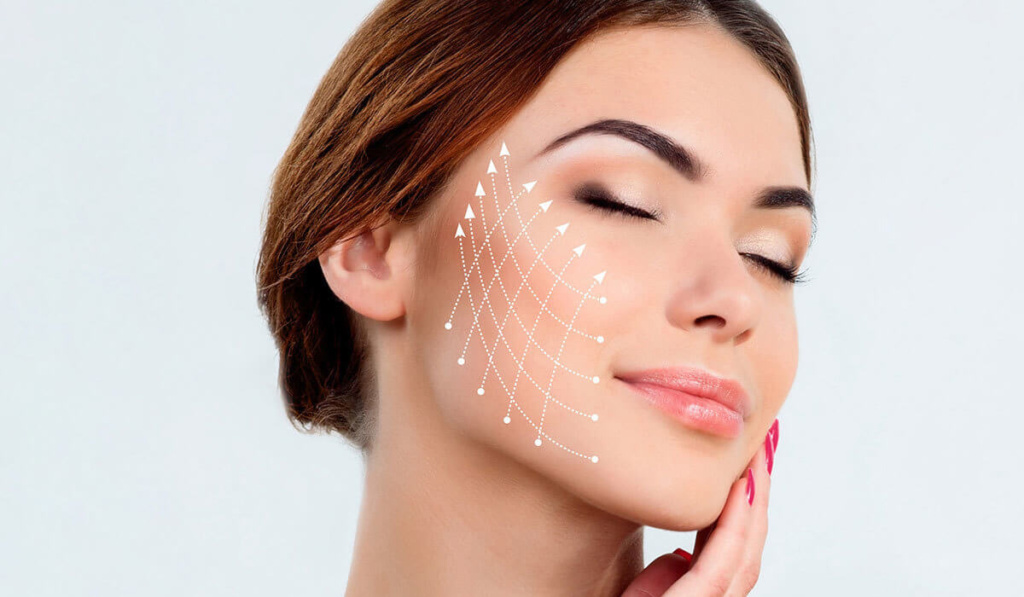
PRP skin treatment is the application to the skin of platelet-rich plasma obtained from your own blood. It aims to support the tone, texture and vitality of the skin; on its own it does not remove advanced sagging or deep wrinkles. For this reason, the right answer to the question ‘does it rejuvenate’ is: ‘skin quality may improve, but expectations should be adjusted to the person and the skin condition’.
What is PRP skin treatment and how is it prepared from your own blood
PRP is platelet-rich plasma obtained by separating a small amount of blood taken from the patient in a special device. Platelets carry growth factors that play a role in the tissue repair process.
The process briefly goes like this: blood is drawn from your arm, the blood is separated by a centrifuge, and the separated plasma is applied to the skin with fine needles or with microneedling. Since the product is prepared from the person’s own blood, it does not contain a foreign substance. For a broader summary, you can take a look at our article what is PRP treatment.
What PRP targets on the face: tone, texture and fine lines
On the face, PRP mostly targets the overall quality of the skin: dullness, uneven texture, a thinned look and fine lines. The aim is to support the skin’s own capacity for renewal.
The main benefits of PRP for the face can be summarised as follows:
- A more lively look in dull and tired-looking skin
- A more balanced impression in skin tone
- Softening of superficial, fine lines
- Support in skin texture and the feeling of elasticity
These effects develop gradually and vary from person to person. PRP can also be used in thin-skinned areas such as under the eyes; the evaluation of this area is made separately at the doctor’s examination.
Is PRP good for pores
PRP does not eliminate pores, but because it supports skin texture it can contribute to pores looking less noticeable. Genetic structure, oil production and acne history are influential in pore size.
If the pore problem is marked, PRP is often planned together with methods such as microneedling. Which one suits your skin is determined by the doctor by looking at your skin type.
What role PRP plays in scar treatment
In scar treatment, PRP is used less as a solution on its own and more as a helper that supports tissue healing. Especially in superficial acne scars, when applied together with microneedling, it can contribute to tissue renewal.
For deep and pitted scars, stronger methods are generally needed. To understand the options according to your scar type, you can look at our acne scar treatment page.
How to choose between PRP and laser
PRP and laser serve different purposes, so one is not an option that replaces the other. PRP supports the skin’s own repair process; laser applies energy aimed at a targeted problem, for example spots, scars or surface renewal.
- For general vitality, texture and fine lines: PRP stands out.
- For marked spots or the surface of scars: laser and similar methods come into question.
- If there is both a texture and a scar problem: the two methods can be used together according to the doctor’s plan.
There is no single answer to the question ‘which gives a better result’; skin type, complaint and your healing time are decisive.
Who it is suitable for and who it is not
PRP may be suitable for people who have dullness, texture irregularity and fine lines in their skin and who prefer a method prepared from their own blood. Definite suitability is determined at the doctor’s examination by taking your health history.
In the following situations the procedure is generally not done or is postponed:
- Blood clotting disorders or diseases related to platelets
- Use of blood-thinning medication (the doctor must be told)
- Active infection or active skin disease in the area to be treated
- Pregnancy and breastfeeding
- A history of active cancer or serious systemic diseases
This list does not cover every situation; it is important to share the medications you use and the illnesses you have had with your doctor.
How results vary from person to person and how many sessions are planned
PRP results vary from person to person according to age, skin condition, lifestyle habits and frequency of application; the effect is not sudden but becomes noticeable over time. For this reason a programme of sessions is generally planned instead of a single session.
The number of sessions and the interval are determined at the examination according to the level of your complaint. Since the cost also depends on the treated area and the number of planned sessions, clear information is given at the examination. Habits such as sun protection and skin care are important in maintaining the result.
When to apply for a doctor’s evaluation
If dullness, fine lines, scars or texture irregularity in your skin bother you and you do not know which method is suitable, it is time to apply for a doctor’s evaluation. At the examination your skin type, your expectation and your health history are considered together.
For detailed information about PRP procedures at Özel Demiderm Polikliniği, you can look at our PRP service page, and for your questions you can make an appointment.
Frequently asked questions
Does the skin really rejuvenate with PRP?
Because PRP supports the quality, vitality and texture of the skin, it can give a younger look. However, on its own it may not be enough for problems such as sagging and deep wrinkles.
Is PRP effective on pores when applied to the face?
It does not close pores completely; by strengthening skin texture it can contribute to pores looking less noticeable. For marked pores it is generally planned together with methods such as microneedling.
What are the benefits of PRP for the face?
Less dullness, a more balanced skin tone, softening of fine lines and support in texture quality are the main benefits. The effects develop gradually and vary from person to person.
Is PRP useful in scar treatment?
Especially in superficial scars, it can be used together with microneedling to support tissue healing. For deep scars, other methods are generally needed as well.
Is laser or PRP more suitable for the face?
The two serve different purposes: PRP supports skin quality, while laser works on a specific problem. Which one, or which combination, is suitable is determined by a skin examination.
Who is PRP skin treatment not applied to?
It is generally not applied to people with blood clotting and platelet diseases, those with an active infection or skin disease, pregnant women and those with a history of active cancer. For those using blood thinners, a doctor’s decision is needed.