
Which Areas Can Laser Hair Removal Be Applied To?
The question of which areas laser hair removal can be applied to is among the first things many individuals research who plan to add comfort to their daily personal care routines by getting rid of unwanted hair. Human anatomy contains a complex structure with varying hair thickness, follicle depth, and growth rate in different areas of the body. This technological process basically works on the principle of sending beams at special wavelengths to the melanin (color) pigments located in the hair follicle, and these beams turning into heat energy in the hair follicle. Since the goal is to weaken the hair follicle through heat, it can be planned in a controlled manner in almost every area of the body where hair growth is seen, except for specific points of high sensitivity, such as the eye socket. The condition of the skin surface, the characteristics of the hair, and the individual’s general health profile are the fundamental factors that determine in which areas, and with which parameters, the process will proceed.
Thanks to advancing technological infrastructure, applications that were limited to only certain areas in past years have today spread across a much broader range. In women, the face, underarms, legs, and bikini area stand out, while in men, areas such as the back, chest, nape, and cheekbones are among the frequently preferred areas. Since each area has its own distinct biological cycle, the dose of beam applied, the head structure of the device used, and the session intervals are shaped specific to the area. Approached with an informative and transparent perspective, acting with awareness of regional differences greatly helps the process proceed smoothly in its normal course and personal expectations be placed on a realistic footing.
Which Basic Areas of the Body Can Laser Hair Removal Be Applied To?
Laser hair removal has the capacity to be applied to a broad surface of the body containing hair follicles, except for parts that anatomically carry an open risk against the beams, such as around the eyes and inside the mucous membranes (inside the nose, inside the ears). Among the basic application areas are the face, neck, nape, shoulders, arms, underarms, chest, back, abdomen, waist, bikini area, genital area, upper and lower legs, and the top of the feet. Each of these areas displays a different structure from one another in terms of subcutaneous fat tissue, blood circulation rate, and hormonal sensitivity. For example, hair on the legs tends to be generally positioned deeper and thicker in structure, while hair on the arms can be finer and lighter in color due to sun exposure. This structural diversity requires the wavelength of the device to be used (such as Diode, Alexandrite, or Nd:YAG) to be selected specific to the area.
Shots made to different areas of the body aim to catch the hair’s anagen (active growth) stage. Except for the scalp, the growth stages of hair on the body show time differences by area. While the life cycle of facial hair is quite fast, the cycle of hair on the legs or back works more slowly. This brings about a separation of session timelines on a regional basis. The width of the area to be treated is another factor that determines the duration of the application. In wide areas such as the entire leg or back, heads with a larger shot area are used to optimize session duration, while in curved and narrow areas such as the face, small heads that provide fine precision come into play. This regional adaptation allows the beam to react only in the targeted hair follicle and protects the surrounding tissues.
What Are the Hair Structure and Process Expectations by Area?
| Treatment Area | Hair and Skin Characteristics | Expected Session Interval |
|---|---|---|
| Face Area | Very open to hormonal effects. Can be fine and dense. Sun exposure is high. | Approximately every 4 to 6 weeks. |
| Underarms | Hair is generally thick and dark-colored. An area with high heat and moisture level. | Approximately every 6 to 8 weeks. |
| Arms and Legs | Has a large surface area. Hair thickness varies in the upper and lower parts. | Approximately every 6 to 8 weeks. |
| Back and Chest (Men) | Hair follicles are deeply positioned. An area where sweat glands are dense. | Approximately every 6 to 8 weeks. |
Which Areas Does Facial Laser Hair Removal Cover and How Is It Planned?
Laser hair removal on the face is planned to cover areas that carry aesthetic sensitivity, such as the upper lip, chin, cheeks, cheekbones, sideburns, between the eyebrows, and under the chin. The face is among the areas in the human body that responds fastest and most intensely to hormonal changes. Hair in this area is generally finer, denser, and sometimes lighter in color compared to other parts of the body. The follicles being superficial and the skin constantly being exposed to external factors (particularly sunlight) requires facial applications to be carried out with extra care. Appropriate frequency adjustments are made, and special facial heads of devices are generally used, so the beams can see this fine hair and create the necessary heat in the follicle.
The process timeline created for the face area involves more frequent intervals compared to body areas. Since the growth phase of hair is completed faster around the face, sessions are generally arranged in periods of four to six weeks. Since protecting the eyes carries great importance during the application, protective medical goggles are placed on the person being treated. Momentary heat fluctuations felt in areas such as the upper lip or chin, depending on the follicle structure of the hair, are attempted to be minimized through integrated cooling systems. After the session, the face not being exposed to direct sunlight and being supported with high-factor sunscreens helps prevent discoloration that could occur on the skin.
How Does the Laser Hair Removal Process Work in the Underarm Area?
The laser hair removal process in the underarm area works in a course in which the beams can easily detect the hair follicle, since the hair in this area is generally thick, dark-colored, and prominent. When the beams are directed at these thick hair follicles with high melanin (color) content, the absorption rate rises, and the targeted heat energy is easily created in the follicle structure. The underarm area is an area where sweat glands are dense and where there is a tendency to become airless, with an anatomical folding characteristic. This can pave the way for sweat to cling more to the skin surface and for bacterial growth in the presence of hair. Thinning out the hair in this area contributes greatly to ensuring daily hygiene.
When planning the procedure, it is asked that the individual not apply chemical cosmetic products such as deodorant, perfume, or antiperspirant to the underarm area before coming to the session. The skin being clean and dry is necessary for the beams to reach the hair follicle directly, without encountering any barrier. Since the surface area of the region is small, the application duration is generally completed within a short period, such as five to ten minutes. After the session, avoiding applying alcohol-based products to the area and avoiding contact with extremely hot water for the first twenty-four hours, due to the tissue’s sensitivity, supports the skin returning to its normal balance.
What Steps Does Laser Hair Removal in the Arm and Leg Areas Include?
Laser hair removal in the arm and leg areas involves steps carried out systematically and divided into sections, since these are the areas of the body with the largest surface area. While hair on the lower leg generally has a thicker, darker, and straighter structure, hair on the upper leg (thigh) and arm areas is finer, has variable directions, and is sometimes lighter in color due to sun exposure. This anatomical difference can require small updates to device parameters when moving to different parts of the leg or arm. Since the arms and legs are places with intense friction and contact with the external environment, the depth of the hair follicles also varies greatly from person to person.
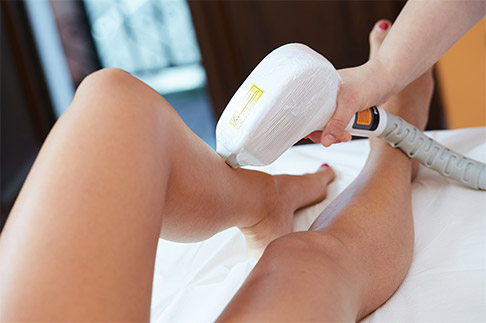
During the session, a virtual mapping (scanning) method is followed on the skin to ensure the beams are distributed evenly over the entire surface without being skipped. Taking into account the width of the area to be treated, devices’ wide scanning heads are preferred. This way, both the application time is kept at a reasonable level and the skin is ensured to meet the beam homogeneously. The ingrown-hair problem frequently encountered particularly in the leg area, triggered by methods such as razors and waxing, tends to decrease over time as the laser beams weaken the hair follicle. Session intervals are generally determined as periods of six to eight weeks, and supporting the skin with plenty of moisturizer after the procedure helps prevent any possible feeling of dryness.
Under What Framework Is Bikini and Genital Area Laser Hair Removal Assessed?
Bikini and genital area laser hair removal is assessed within a special framework, since it involves working on a tissue where the skin is extremely thin, sensitive, and rich in nerve endings. Hair in this area is mostly thick and darkly pigmented in structure; while this allows the beam to easily find the hair, it also causes the released heat energy to be felt more distinctly by the skin. The main purpose of the procedure is to support personal hygiene by weakening hair growth in this sensitive area and to reduce the negative effects created by traditional methods such as waxing or shaving, which cause irritation or skin darkening when applied continuously.
Observing hygiene rules at the highest level during the application is a great necessity. Sterilization of the device heads used, or the integration of personalized, single-use attachments into the system, are the cornerstones of a healthy process. At specific fold points where the skin can be darker, energy levels are carefully calibrated by expert aestheticians or physicians so the beams do not tire the skin. Due to their wavelengths, laser beams applied to the genital area only reach hair follicles a few millimeters beneath the skin; it is not physically possible for the beams to affect internal organs, the uterus, or the ovaries. Preferring cotton, comfortable clothing over tight, synthetic underwear after the session helps the skin breathe.
In Which Areas Is Laser Hair Removal More Frequently Preferred in Men?
In men, laser hair removal is frequently preferred in areas such as the back, chest, shoulders, nape, neck, cheekbones, and around the ear, which become denser due to the effect of the testosterone hormone and can create aesthetic or hygienic discomfort in daily life. Men’s hair structure is generally thicker, has more deeply positioned follicles, and is denser in format compared to women. Men who play sports, swim regularly, or pay extra attention to their outward appearance for work reasons include themselves in this process in order to keep issues such as sweating and odor, brought on by excessive hair growth, under control.
Particularly the back and chest areas, with their wide surfaces and deep hair follicles, require a different device calibration. In the neck and nape areas, easing folliculitis (hair follicle inflammation) and razor burns caused by razor use, and making the shaving line clearer, are among the main goals. Since the hormonal structure in men continuously supports hair formation, session timelines are personalized according to the individual’s age and hair density. It is normal for redness or bumps at the base of the hair (edema) to be seen on male skin after the procedure as well, just as in women. Keeping the skin cool and using soothing lotions afterward provides a comfortable return to daily life.
What Are the Assessment Approaches According to Skin and Area Characteristics?
| Assessment Factor | Regional Effect | Application Approach |
|---|---|---|
| Hair Depth | Follicles are deeper in areas such as the back and bikini area. | Wavelengths that can penetrate deeper (e.g. Nd:YAG) are considered. |
| Skin Sensitivity | Skin is thin and nerve networks are dense in the face and genital area. | Cooling systems are kept active; shot rate is adjusted according to the tissue’s response. |
| Color Contrast | Light-skin/dark-hair contrast is low on the arm, high in the underarm. | The device’s shot duration (pulse duration) is updated according to melanin density. |
Which Areas Is Laser Hair Removal Not Recommended to Be Applied To?
Areas where laser hair removal is not recommended to be applied are areas close to organs that the beams could structurally damage, areas where color pigments could mislead the device, or areas with a mucous membrane (wet tissue) characteristic. Foremost among these areas are the eyeball and its surroundings. Shooting at the lower part of the eyebrows, the eyelids, and the upper edges of the cheekbone very close to the eye is avoided. Since there is a risk that laser beams could reflect onto the retina inside the eye, carrying a great risk to eye health, direct shots are not made to these areas even when protective goggles are worn during the procedure.
In addition, laser hair removal is not applied over areas of the body with a tattoo. While searching for melanin in the hair follicle, the laser beam can target the color pigments in the tattoo ink, leading to an intense burst of heat; this causes burns on the skin and disrupts the tattoo’s form. While treating hair around a tattoo, the tattooed area is covered with protective tape, and the procedure passes around it. In addition, avoiding treatment of mucosal areas such as inside the nose, inside the ear cavity, and the wet parts of the lips, skin surfaces with an active infection or open wound, and directly over suspicious-looking moles, carries critical importance for preserving tissue integrity.
How Are Regional Assessments Carried Out at Özel Demiderm Polyclinic?
Regional assessments at Özel Demiderm Polyclinic are carried out alongside experienced specialists and detailed analyses so that the process proceeds in a personalized manner. When the individual steps into the clinic, information is first exchanged about their medical history, any medications they regularly use (particularly those that create sensitivity to light), and their hormonal status. Subsequently, the areas the person requests are examined, and the thickness, color, density of the hair, and the skin’s current tan level are analyzed. The Demiderm Polyclinic approach, starting from the fact that every individual’s anatomical structure is unique, is based on creating a timeline specific to the area and the person rather than a standard shot protocol.
During this regional assessment, the person’s suitability for the process is conveyed to them in transparent language. For example, if the person’s facial hair is very fine and light-colored (vellus hair) in form, there may be a possibility that the laser beams could trigger and thicken this hair. Specialists identify such anatomical details in advance, and can either direct the person to different alternatives or revise the parameters to minimize this risk. Özel Demiderm Polyclinic supports regional analyses being based on accurate data and individuals experiencing a conscious process, by carefully ensuring hygiene conditions and regularly updating device calibrations at scheduled intervals.
Why Do Session Intervals Vary in Regional Applications?
The variation of session intervals in regional applications stems from the fact that hair follicles in different points of the body go through the growth (anagen), regression (catagen), and resting (telogen) stages at different speeds. Due to their nature, laser hair removal devices can only interact during the anagen (active growth) stage — that is, the stage when the hair is fully attached to the follicle. Only a certain percentage of hairs on the body are in this active stage at the same time; the rest are either preparing to shed or resting beneath the skin. Resting hairs transitioning back to the active stage requires a time period that varies from area to area.
For example, in the facial area, since blood circulation is fast and hormonal effects are intense, the resting stage is short; hair quickly transitions back to the growth phase. For this reason, appointments created for the facial area are planned at four-to-six-week intervals. However, in torso and extremity areas such as the back, chest, legs, or arms, the life cycle of hair progresses more slowly. In these areas, it generally takes six to eight weeks for hair to shed and transition back to the growth stage. Individuals adhering to their appointment schedule carries great importance for these specific stages, when the hair is most vulnerable, not to be missed and for the application to proceed efficiently.
Can Laser Hair Removal Be Applied to the Entire Body in the Same Day?
There is no medical or technical obstacle to applying the laser hair removal procedure, one after another in the same day, to all body areas the individual requests and that pose no health obstacle (for example, the arms, legs, underarms, bikini area, and face). Today’s advanced-technology devices, thanks to their wide scanning areas and high shot speeds, have the capacity to complete a wide-ranging session covering many areas within a reasonable time. Combining multiple areas into a single appointment is a quite common approach, to make the individual’s time management and back-and-forth trips to the clinic easier.
However, treating multiple areas at the same time means that a wide surface of the body is exposed to a mild heat load on the same day. This can lead to regional sensitivities and mild redness being felt at different points on the same day. Taking into account the individual’s general comfort, pain threshold, and ability to remain still throughout the session, for those who wish, the areas can also be divided into different days. If the full-body application is done in the same day, consuming plenty of fluids, taking a lukewarm shower, and applying appropriate moisturizing lotion to all areas of the skin after the procedure greatly helps the body relax.
Frequently Asked Questions
1. Is laser hair removal done on every part of the body?
Laser hair removal can be applied to a broad range of the body, including the face, torso, arms, legs, and genital area, all of which contain hair follicles, except for mucosal areas such as around the eyes, inside the nose, inside the ears, and areas with tattoos.
2. Does hair on the face area decrease more slowly than on the body?
The face area is the area most open to the body’s hormonal fluctuations, and hair here is generally fine and persistent in structure. For this reason, it is an expected condition for the process on the face to spread over a longer timeline compared to areas such as the legs or underarms.
3. Do laser beams applied to the genital area reach internal organs?
The wavelengths of the laser beams produced by devices are formulated to only reach hair follicles a few millimeters beneath the skin surface. It is not physically possible for the beams to pass through the lower layers of the skin and reach the uterus, ovaries, or other internal organs.
4. Can men get laser hair removal for the back area?
Men frequently include themselves in the laser hair removal process for dense hair growth in the back, chest, shoulder, and nape areas. Using energy parameters suited to male hair structure, the density in these wide areas can be gradually thinned out.
5. Can laser hair removal be planned around the nipple?
Direct shots are avoided at the dark-colored area around the nipple (areola), because the dense melanin pigment in this area can attract too much heat. However, controlled shots can be made to the hairy areas right outside this ring, taking skin color into account.
6. Are laser shots done over a tattoo?
Laser shots are not done over tattooed areas. The device’s beam can target the pigments in the tattoo ink instead of the hair follicle, leading to excessive heat buildup in that area, skin burns, and disruption of the tattoo’s form.
7. Why is laser treatment not applied around the eyes?
Laser beams that could reach the eyeball and retina directly or through reflection carry a risk of causing serious damage to vision health. For this reason, even when protective goggles are worn, areas under the eyebrow or very close to the eye are left outside the application area.
8. Is laser hair removal applied over moles?
Shooting a laser directly over dark-colored, raised moles (nevi) on the skin can irritate the tissue. For this reason, moles are generally covered with a white pencil, or the procedure is carried out safely by going around the mole.
9. How often should sessions be attended for the underarm area?
Taking into account the growth and shedding cycle of hair in the underarm area, it is considered appropriate for sessions to generally be planned at intervals of six to eight weeks, in terms of tracking the intended process.
10. Is this process suitable for ingrown hairs that occur in the leg area?
Ingrown hair problems in the leg area, caused by the use of waxing, an epilator, or a razor, and which create a rough appearance on the skin, tend to decrease significantly over time as laser hair removal weakens the hair follicle.
11. Can hair growth in the nape and neck area be thinned out with laser?
Neck and nape hair, which can create aesthetic discomfort particularly after a haircut or with shirt collars, can be thinned out through laser applications, or support can be provided for the shaving line to gain a clearer appearance.
12. How is a regional analysis done at Özel Demiderm Polyclinic?
At the Demiderm Polyclinic branch the person visits, specialists examine the person’s skin tone, hair thickness, the sensitivity of the area, and the individual’s medical history in detail, determining a personal roadmap that specifies which device and parameters will be suitable for the area.
13. Do laser beams damage the lymph nodes?
The penetration depth of the beams is limited to the hair follicles right beneath the skin. Surface-level laser shots done in areas where lymph nodes are dense, such as the underarm or groin, have no contact with or effect on the lymphatic system located in the lower layers of the skin.
14. Is laser done in areas such as inside the ear or nose?
Areas such as inside the ear and nose are areas with a mucous membrane structure, whose interior is sensitive and not anatomically suitable for device heads to enter. For this reason, laser hair removal planning is not done inside mucous membranes.
15. Is a full-body hair removal session completed in the same day?
If the individual has no health obstacle, the full-body package consisting of the face, arms, legs, genital area, and underarms can be applied one after another in the same day, completed in a single session appointment.