How Does DHI Hair Transplantation Achieve Naturalness in Konak?
Konak, the showcase of Izmir, the center of social life, and the district with the highest aesthetic perception; with the stylish cafes of Alsancak, the free spirit of Kordon, and the prestigious plazas of the business world (Pasaport, Bayraklı border), offers its residents a high standard of living. For individuals living or working in Konak, appearance is not only a matter of personal satisfaction but also a part of social status and professional image. For many people experiencing hair loss (alopecia), the biggest fear is not being bald; it is having an artificial, spiky, and unnatural appearance, referred to as a “grass man,” after a hair transplant. The phrase “It’s obvious you had a hair transplant” is an expression that Konak residents with high aesthetic concerns do not want to hear. This is where DHI (Direct Hair Implantation), a revolutionary technology in hair transplantation, comes into play, offering artistic freedom and technical precision.
The secret to natural hair isn’t just “having hair.” Naturalness lies in the perfect harmony of many parameters, such as the angle at which the hair emerges from the skin, its direction, hairline design, and graft thickness. In classic methods (FUE), channels are opened first, then the hairs are placed. This “pre-opened channel” system can sometimes fail to mimic the natural direction of the hair. DHI, on the other hand, performs the channel opening and placement process simultaneously, giving the physician 100% control over each individual hair strand. This control is the key to naturalness.
The First Rule of Naturalness: “Angle and Direction” Engineering
Our hair doesn’t emerge straight from our scalp at a 90-degree angle. If it did, everyone’s hair would look like doll hair. Hair grows from the skin at an angle of approximately 40-45 degrees and in a specific direction (forward, sideways, or swirling in the crown area). The “straight hair” problem in classic hair transplants stems from the inability to open the channels at the correct angle.
The Role of the Choi Pen: The Choi Implanter Pen used in the DHI technique is a fine-tipped mechanical device. The physician places the graft in the pen and brings the tip close to the skin. At this point, they give the pen the desired angle (e.g., 42 degrees) and direction and press the trigger. The hair follicle is placed in the skin at precisely the angle determined by the physician. This technique allows for a precise imitation of the natural direction of hair combing. The natural way your hair blows back when walking against the wind, especially in Kordon, is only possible with this precise angulation.
Frontal Hairline: Where the Art Begins
The first thing to look at to determine if a hair transplant looks natural is the “Frontal Hairline”. No frontal hairline in nature is perfectly straight, as if drawn with a ruler. It contains indentations, protrusions, and asymmetries. Also, the hairs at the very front are always finer and singler.
The DHI technique provides the surgeon with a significant advantage in frontal hairline design:
- Single Graft Selection: Only single and thin hair follicles (single grafts) are placed in the pens and implanted in the front row. This provides a smooth transition.
- Micro-Indentations: The surgeon can create millimeter-sized zigzags (micro and macro irregularities) using the pen. This “regular irregularity” prevents the human eye from noticing the implantation.
- Density Transition: A density that gradually increases from the front to the back can be planned.
DHI vs. Root Canal Method: Comparison of Naturalness
For those seeking aesthetic results in Konak, the following table summarizes the effect of technical differences on naturalness.
| Features | DHI (Pen Technique) | FUE Classical Channel Method |
|---|---|---|
| Channel Width | No channel is opened; an entry the size of a needle tip is made. | Cuts the width of a blade are made. |
| Angle Control | Maximum (A separate angle can be given for each string). | Medium (Depends on the channel opened beforehand). |
| Density (cm²) | Very High (80-100 grafts/cm² is possible). | Medium (45-60 grafts/cm²). |
| Hair Direction | The direction of the existing hair is mimicked exactly. | A general direction is given. |
| Tissue Damage | Minimal (Healing is very fast). | More (Crusting is noticeable). |
Konak Wind and Hair Direction:The famous wind of Izmir, especially the Konak coastal strip, is the most natural element that tests the quality of hair transplantation. If hair is not transplanted at the correct angle, the roots will appear “sticky” when the wind blows, revealing aesthetic flaws. However, hair transplanted at the correct angle with DHI moves like your natural hair in the wind, and the roots are not noticeable.
Thickening While Preserving Existing Hair
Another aspect of naturalness is that your own hair in the transplanted area is not damaged. Many people are not completely bald, they only experience thinning. In the classic method, when channels are opened, the blood vessels of the existing hair follicles can be cut, and these hairs can become damaged and fall out (Shock Loss). The DHI pen, however, enters between two existing hair strands with the precision of a surgeon, without damaging them. In this way, you both protect your own hair and achieve maximum density (Densification) with the transplanted hair.
The Impact of the Healing Process on Naturalness
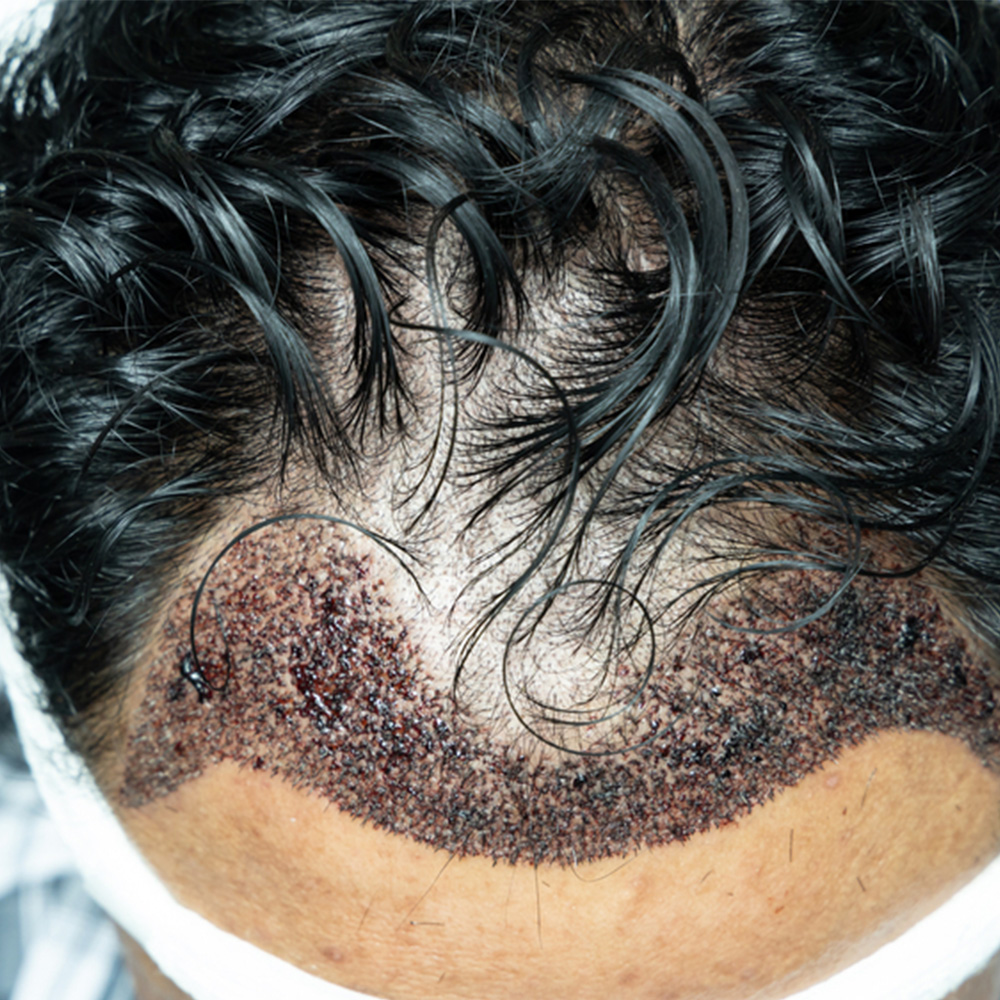
For those with an active social life in Konak, the “healing appearance” after the procedure is also important. Since there are no channels (incisions) in the DHI technique, bleeding is minimal and crusting is minimal.
Fast Social Adaptation: While large scabs formed in the classic method remain on the face for 10-12 days, the scabs formed in DHI, which are the size of a pinhead, fall off in 4-5 days. This allows the person to get rid of the “surgical” appearance much faster and return to social life naturally.
Result: The Meeting of Engineering and Art
In conclusion, DHI hair transplantation in Konak transforms naturalness from a matter of chance into a discipline of engineering and art. This technique, which can keep the angle, direction, and density of hair growth under complete control, is the most suitable solution for the select group seeking results that “don’t look like they’ve been transplanted.”
Naturalness is hidden in the details. The angle of a single hair strand in the frontal area or the soft transition in the temple area can change your entire facial expression. DHI is the most elegant hair restoration method offered by modern medicine, designed to perfect these details.