Liquid Facelift Among Non-Surgical Face Lift Methods
Aging is not just about fine lines appearing on the surface of the skin; anatomically, it is the process of bone erosion, loosening of the connective tissues (ligaments) that support the skin, and most importantly, loss of volume in the fat pads that give our face its fullness. With the effect of gravity, these emptied volumes shift downwards, and our face begins to lose its youthful “inverted triangle” shape and become square. While traditional aesthetic surgery aims to solve this problem by cutting away excess skin and tightening tissues; modern medical aesthetics has developed a more strategic and minimally invasive solution focusing on the root of the problem, namely “Volume Loss”: Liquid Facelift.
Especially in cities like Izmir, where social life is active, people don’t want to experience long recovery periods (downtime) after aesthetic procedures, and “natural appearance” is prioritized, Liquid Facelift is rapidly increasing in popularity. As the name suggests, this method aims to lift the face by injecting advanced dermal fillers in liquid form into strategic points without using any scalpel or surgical intervention. This procedure, which focuses not only on filling wrinkles but also on restructuring the architecture of the face, is a powerful tool that can produce results close to surgery when applied by the right hands.
What is Liquid Facelift?
Liquid Facelift is not a single procedure or a single product application; it is a combined filler protocol that addresses the face as a whole, restoring volume loss and creating a lifting effect.
The basic philosophy of this method is as follows: If we think of our face as a tent, with age the tent’s poles (bone and fat tissue) shorten and shrink. When the poles shrink, the tent’s fabric (skin) begins to loosen and sag. While surgical methods choose to “cut and tighten the fabric,” Liquid Face Lift chooses to “raise the poles again.” That is, by placing the lost volume back at strategic points (cheekbone, temple, chin tip, etc.), it allows the skin to tighten and lift again.
Materials Used: Filler Technologies
The fillers used in liquid face lift procedures are different from ordinary lip fillers. Special gels with high “Lifting Capacity” (G Prime), which have the power to lift tissue and maintain their form when placed on bone, are used.
1. Hyaluronic Acid (HA) Based Fillers
This is a form of hyaluronic acid, which is naturally found in our body, that has been cross-linked in a laboratory environment to make it more durable. It has a high water retention capacity.
Advantage: Its greatest safety advantage is that it can be dissolved (reversible) in an unwanted situation. It also moisturizes and brightens the skin.
2. Calcium Hydroxyapatite and Polycaprolactone (Smart Fillers)
These semi-permanent and biocompatible substances not only add volume but also stimulate the skin’s own collagen production.
Advantage: Its lifting power (lifting effect) is higher than hyaluronic acid and its effect is longer lasting. It is ideal for mimicking bone structure (jawline, cheekbones).
Anatomical Application Points: How Does the Lifting Effect Occur?
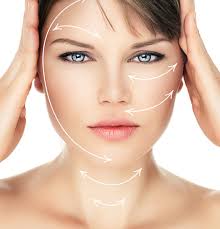
In Liquid Face Lift, fillers are not applied randomly. Using advanced injection techniques such as “MD Codes” (Medical Codes), support is provided under the ligaments that support the face.
1. 1. Temporal Region (Temples)
With age, the temples sag, causing the eyebrows to droop. Filling the temple area lifts the eyebrows and the corners of the eyes. This is the first “lever” point on the face.
2. Malar Region (Cheekbones)
The cheekbones are the “lift” of the face. Deep injections in this area lift the cheek tissue and reduce the appearance of nasolabial folds. This is the most critical step in restoring the “V” shape of the face.
3. Mandibular Line (Jawline and Chin)
The jawline is sharpened to tighten sagging in the lower part of the face and conceal the appearance of a double chin. Slightly extending the chin makes the face look thinner and more proportionate.
Aesthetic Expectations and Liquid Facelift in Izmir
The biggest expectation of patients living in Izmir from aesthetic procedures is “naturalness.” Instead of a “structured” or “swollen” facial expression, a “rested” and “fresh” look is preferred.
Liquid Facelift does not completely change expression like surgical facelift. It does not freeze facial expressions or make the person resemble someone else. It only aims to restore the volume balance in the person’s photos from 5-10 years ago. Also, due to the social structure of Izmir, patients want to be able to have a coffee on the Kordon or return to work immediately after the procedure. Liquid Facelift is a procedure that perfectly fits the “Lunchtime Aesthetics” concept, with no recovery period.
Comparison of Facial Rejuvenation Methods
research
The most frequently asked question by patients is how this procedure differs from other methods. The following table clarifies the place of Liquid Face Lift:
| Feature | Liquid Face Lift (Filler) | Surgical Face Lift (Facelift) | Thread Lift (Spiderweb) |
|---|---|---|---|
| Main Mechanism | Volume Restoration (Raising the supports). | Skin and muscle are cut and stretched (Tissue stretching). | Mechanical suspension and tissue stimulation. |
| Recovery Time | None (Immediate social life). | Long (2-4 weeks). | Short (3-5 days of swelling). |
| Durability | 12 – 24 Months (Depending on the product used). | 10 Years and over. | 1.5 – 2 Years. |
| Risks | Minimal (Bruising, swelling). | Surgical risks, anesthesia risk. | Thread breakage, asymmetry. |
| Ideal Candidate | Those with volume loss, mild-to-moderate sagging. | Advanced For those with sagging and excess skin. | For those with thin skin who don’t want volume. |
Application Process: Pain and Comfort
Liquid Face Lift is performed in a clinical setting under sterile conditions.
- Anesthesia: A local anesthetic cream is applied before the procedure. Also, because new generation fillers contain “Lidocaine” (a numbing agent), pain during injection is minimal.
- Duration: A full face application takes approximately 30-45 minutes.
After: Results are visible immediately after the procedure. Mild swelling or small bruises may occur, but these can be covered with makeup. It takes approximately 2 weeks for the filler to fully integrate with the tissue and for the final result to settle.
Who is it suitable for, and who is it not for?
Suitable Candidates:
Individuals aged 35-60 with a tired expression on their face, sunken cheeks, deepened nasolabial lines, and a blurred jawline, but with still good skin elasticity.
Unsuitable Candidates:
For older patients with excessive sagging and excess skin (folds), fillers alone are insufficient; surgical facelift is a more appropriate option. Also, in individuals with already full and round faces, incorrect filler application can further widen the face (Overfilled Syndrome). Therefore, patient selection and facial analysis are crucial. Result: An Architectural Restoration
In summary; “Liquid Face Lift, among non-surgical facelift methods,” means not just lifting the face, but restructuring it in three dimensions. This procedure restores the lost architecture of the face (cheekbones, jawline, temples) with fillers, allowing the skin to naturally lift.
For those in Izmir who want to see a more vibrant, energetic face with the signs of aging erased when they look in the mirror, Liquid Face Lift is a safe and effective non-surgical option. Remember, the best filler application is one that doesn’t look like it’s been done, one that only makes people say, “You look great!”