
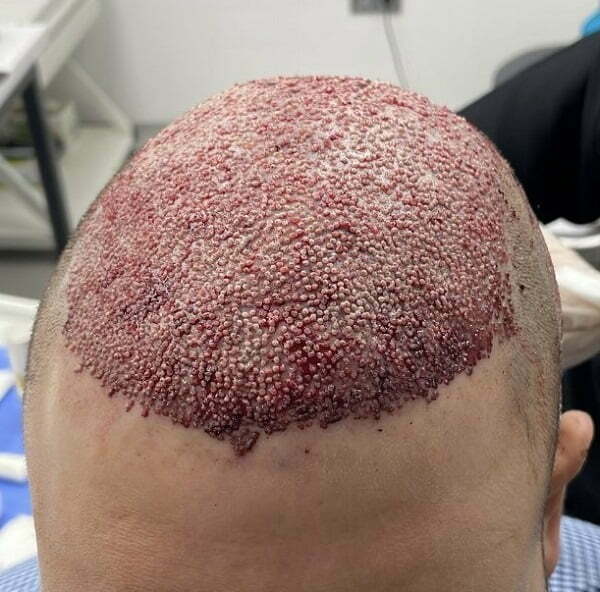
Front Filling Hair Transplantation
Hair loss usually manifests itself as a receding hairline in the forehead area or the onset of thinning at the temples. This is a change that directly affects facial symmetry and aesthetic integrity. Front filling hair transplantation is a micro-surgical method applied to address volume loss in this strategic area and create a personalized, natural hairline design. The main goal in frontal restoration is not only to fill the gaps but also to design the hair’s growth angle, direction, and density in perfect harmony with the existing hair.
Scientific Parameters in Frontal Hairline Design
The key to success in frontal transplants is the “golden ratio” and a design that conforms to facial anatomy. The range of motion of the forehead muscles, the width of the face, and the distance between the tip of the nose and the beginning of the forehead are decisive parameters in positioning the new hairline. In a professional approach, the front hairline is created not as a straight line, but with micro-indentations and protrusions (zig-zag technique) as in the natural hair structure. This is the most critical detail that ensures the operation is not perceived as a technical intervention.
Techniques Used and Application Differences
The methods used in frontal hairline restoration focus on technologies that minimize tissue trauma and increase the healing rate. The application protocol of each method is selected by the expert according to the client’s hair thinning and donor area capacity.
Recovery.
| Technical | Advanced Area | Tissue Effect |
|---|---|---|
| DHI (Choi Implanter) | Ability to thicken and provide detailed direction. | Minimum bleeding and rapid scab shedding. |
| Sapphire FUE | Natural appearance thanks to very small channels. | Possibility of denser implantation and tissue-friendly healing. |
| Micro-Motor Extraction | Possibility of selecting healthy and single grafts. | Homogeneous and scarless in the donor area. |
Process Management and Protective Protocols
The first few months after a front hair transplant operation are the integration phase of the transplanted roots with the tissue. Since the forehead area is prone to edema formation, the sleeping position and bandage use recommended by experts are of great importance in the post-operative period. New hairs usually start to appear on the surface from the 3rd month onwards, but it may take until the 12th month for the form to fully settle.
Post-Operative Care Instructions
- Physical Protection: Avoid contact between hats, helmets, or tight clothing and the transplant area for the first 10 days.
- Washing Protocol: Wash the area gently with lotions and shampoos recommended by specialists, without irritating the area.
- External Factors: Avoid intense sunlight, Turkish baths, saunas, and sports that cause excessive sweating for the first month.
Who is Suitable for This Procedure?
Frontal hair restoration is suitable for any individual whose general health condition does not prevent the operation, who has a sufficient number of grafts in the donor area (nape), and whose hair loss process has reached a certain stage. This procedure is an effective option, especially for clients who are bothered by receding hairline in the temple area or who want to narrow the forehead area. Digital analyses performed before the operation clearly reveal the amount of grafts needed and the extent to which expectations can be met.
In conclusion, interventions in the frontal area of the hair require high precision and an aesthetic perspective. A well-planned process rejuvenates the facial expression while offering a natural look. It is safest for your skin and hair health to have this process carried out by competent healthcare professionals and clinics operating in accordance with legal regulations.