
How Do Filler Applications Work?
The aging process is a multi-dimensional change affecting all anatomical layers of the human face, not just the formation of superficial wrinkles. Over time, bone resorption, loosening of connective tissues supporting the skin, and loss of volume in the deep fat pads that give our face that youthful, dynamic expression, cause the facial oval to deteriorate and the effects of gravity to become more pronounced. While traditional aesthetic approaches attempted to solve these problems only by tightening the skin, the modern medical aesthetic approach has adopted the principle of “replacing lost volume” by addressing the root cause of the problem. At this point, dermal filler applications emerge as one of the most powerful tools for restructuring, shaping, and rejuvenating the face without the need for surgery.
Especially in a city like Izmir, where the number of sunny days is high, environmental factors (UV rays) accelerate skin aging, and aesthetic expectations are based on “naturalness,” the interest in filler applications is increasing day by day. Izmir residents want to look more vibrant and fresh without changing their facial expressions or losing their expressions. Thanks to the biocompatible materials they contain, filler applications provide support under the skin, filling sunken areas, creating contours that reflect light better, and increasing the skin’s moisture balance.
Biochemical Working Principle of Fillers
The answer to the question “How do filler applications work?” varies depending on the type and molecular structure of the material used. Today, the most frequently used fillers are substances that are fully compatible with our bodies and can be biodegraded over time.
1. Hyaluronic Acid (HA) Based Fillers: Hydration and Volume
Hyaluronic acid is the most commonly used filler in medical aesthetics. Hyaluronic acid is actually a polysaccharide that occurs naturally in our bodies (in eye fluid, joints, and skin).
Mechanism of Action: The greatest characteristic of hyaluronic acid is its “hydrophilic” (water-loving) structure. It can attract and trap up to 1000 times its own weight in water molecules. HA fillers injected under the skin act like a sponge, drawing in water from the environment and swelling. This physical expansion fills under wrinkles, adds volume to sunken areas (temples, cheeks), and provides deep hydration to the skin. Thanks to cross-linking technology, HA fillers are not immediately absorbed by the body and maintain their form for a certain period (6-18 months).
2. Calcium Hydroxyapatite and Smart Fillers: Biostimulation
This group of fillers (mineral fillers, crystal fillers) not only adds volume but also triggers the skin’s biological processes.
Mechanism of Action: When injected under the skin, the micro-spheres they contain act as a “skeleton.” This skeleton provides immediate fullness while simultaneously stimulating “fibroblasts,” the skin’s repair cells. The stimulated fibroblasts begin to weave new collagen fibers around these micro-spheres. Even if the filler is eliminated from the body over time, the person’s own natural collagen tissue remains. This makes the effect longer-lasting and improves skin quality.
Application Areas and Anatomical Effects
Filler applications are applied to different layers and areas of the face according to the anatomical needs. The mechanism of action differs in each area.
Above Bone Applications (Deep Plane)
In areas such as the cheekbones, chin, and jawline, the filler is applied deep, just above the periosteum (bone membrane).
Purpose: To mimic bone structure. Firm and dense fillers, replacing bone tissue that erodes with age, create a lifting support point for the face. This allows sagging tissues to be lifted upwards.
Subcutaneous Applications (Mid and Superficial Plane)
In areas such as nasolabial lines (sides of the nose), lips, and under the eyes, softer and more fluid fillers are preferred.
Purpose: To integrate with the tissue, provide smooth transitions, eliminate shadows, and smooth the skin. Here, the filler replaces lost fat pads.
Filler Trends in Izmir: Naturalness and Radiance
The aesthetic perception in Izmir is based on “preservative aesthetics,” which avoids exaggeration and preserves the individual’s own characteristic features.
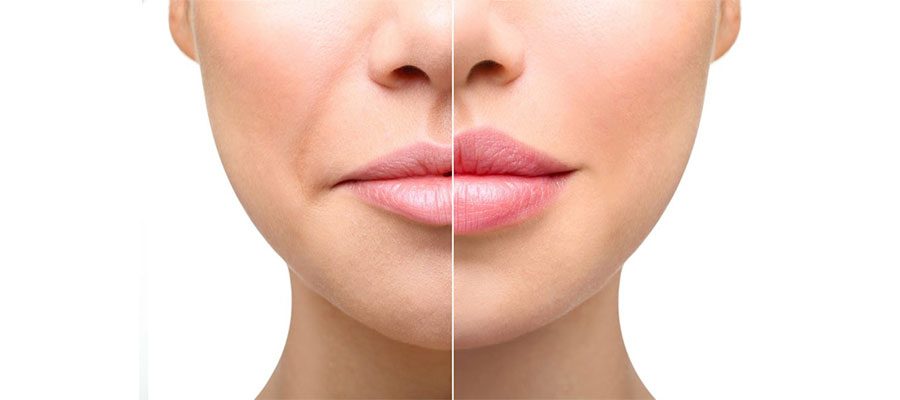
- Lip Fillers: Women in Izmir avoid the artificial look called “duck lips.” Instead, they prefer “French Kiss” or natural techniques that define the lip contour, provide moisture, and offer slight volume.
- Face Shaping: Instead of plumping the face (Pillow Face), the aim is to make the face look thinner and more “V” shaped with strategic touches to the cheekbones and jawline.
- Moisture Fillers: Because the sun in Izmir can dry out the skin, “Youth Vaccinations” or “Light Fillers” that do not add volume but provide intense moisture and radiance to the skin are in high demand.
Comparative Analysis of Filler Materials
Understanding which filler is used for which purpose is important to have the right expectations. The following table summarizes these differences:
| Filler Type | Main Component | Key Mechanism of Action | Duration of Effect | Reversibility |
|---|---|---|---|---|
| Classic Fillers | Hyaluronic Acid (HA) | Provides instant volume and moisture by retaining water. | 6 – 18 Months | Yes (Dissolvable with hyaluronidase). |
| Smart Fillers | Calcium Hydroxyapatite / PCL | Volume + Collagen stimulation (Biostimulation). | 12 – 24 Months | No (Dissolves spontaneously over time). |
| Moisture/Light Fillers | Cross-Linked HA | Only provides moisture and shine, does not provide volume. | 4 – 8 Months | Partially. |
Biological Process: What Happens After Application?
After the filler procedure is completed, an adaptation process begins under the skin.
- First 24-48 Hours: Mild edema (water retention) may occur due to injection trauma. Hyaluronic acid fillers may appear slightly fuller than they are in the first few days as they draw water from the surrounding tissue.
- First 2 Weeks: The filler integrates with the tissue. Swelling subsides and the filler softens, taking its final shape. The feeling of firmness disappears.
Long Term: If smart fillers are used, an increase in skin quality and tightening is observed from the 2nd month onwards. Hyaluronic acid fillers, on the other hand, are slowly metabolized (broken down) and eliminated from the body.
Who is it suitable for?
Filler applications are suitable for a wide range of people who want to manage the signs of aging:
Those with Volume Loss: People with sunken cheeks and empty temples.
Those with Wrinkles: Those with deepening nasolabial or marionette lines.
Those who want Profile Improvement: Those with a receding chin, a hump on the nose, or thin lips.
Those with Under-Eye Problems: Those who look tired due to under-eye hollows and dark circles.
Result: An Architectural Restoration
In short; “How Do Filler Applications Work?” The answer to this question is not just about adding volume to the face, but about reconstructing it according to anatomical principles. Fillers, which replace lost bone and fat tissue, support the skin, providing a younger, more vibrant, and aesthetically pleasing appearance.
If you want to see a fresher face when you look in the mirror in Izmir, filler applications are a non-surgical, fast, and effective option. However, it should be remembered that the best results are obtained with applications performed by expert hands who know the anatomy of the face, using the right products and the right techniques. Naturalness lies in the details and balance.