
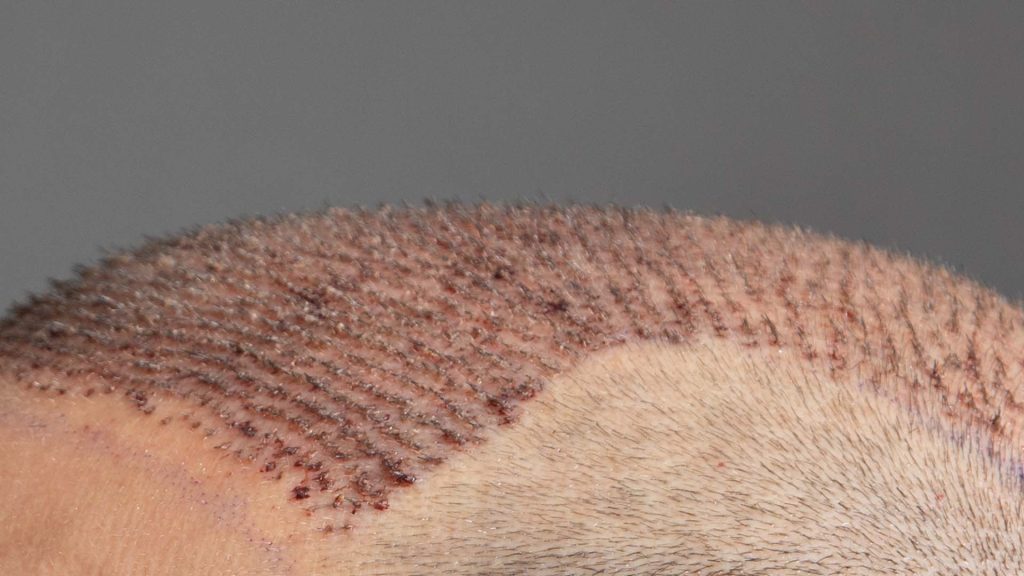
How is Hair Transplantation Performed in Men?
Male pattern hair loss is a process affecting millions of men worldwide due to the influence of biological and genetic factors. Today, modern medicine has developed hair transplantation technologies to offer permanent and aesthetic solutions to this condition. Hair transplantation in men is the process of transferring hair follicles from the nape and flanks, which are resistant to hair loss, to areas experiencing thinning.
Pre-Operation Analysis and Planning
The hair transplantation process is not just about the application itself. The foundation of a successful outcome is laid in a proper planning phase. In the first step, experts analyze the density of follicles and the quality of hair strands in the donor area (the area from which the hair will be taken). This analysis determines how many grafts (hair follicle units) can be transplanted. At the same time, the design of the hairline is carried out in a way that suits the person’s facial features and age. Calculating the direction and angle of hair growth at this stage is of great importance for a natural look.
Important Note: Each individual’s hair structure and hair loss type are different. Therefore, the application plan should be tailored to the individual. During planning, not only the current thinning but also future hair loss patterns are taken into consideration.
Modern Techniques Used: FUE and DHI
The most frequently preferred method in men is FUE (Follicular Unit Extraction). In this method, hair follicles are collected one by one using micro-motors. The DHI (Direct Hair Implantation) method allows the opening of channels and placement of the collected follicles simultaneously with the help of a special medical pen (Choi pen). Both methods aim to minimize tissue trauma and accelerate the healing process.
| Application Stages | Procedure and Technical Details |
|---|---|
| Local Anesthesia | The area is numbed for the comfort of the application area. |
| Donor Root Collection | Healthy roots are separated from the tissue using micro-tips. |
| FUE Channel Opening | Micro-incisions are made in the area to be transplanted, in accordance with the direction of the hair. |
| Placement | The collected grafts are carefully placed at the determined points. transplanted. |
How Does the Operation Proceed Step by Step?
The operation usually begins in the morning. After local anesthesia is administered, the person does not feel any discomfort during the procedure. The first stage, “graft harvesting,” can take several hours depending on the efficiency of the donor area. The harvested grafts are kept in special solutions to maintain their viability. In the second stage, channels are opened in the area where the hair will be transplanted, or, as in the DHI method, the direct placement stage is performed. During this process, specialists perform the transplant while maintaining the natural angle of the hair (usually 40-45 degrees).
After the transplantation process is completed, a protective dressing is applied to the donor area, and the person can be discharged the same day. The first 24-48 hours are the most sensitive period in terms of root attachment. During this period, the head area should not be bumped against anything, and physical contact should be avoided. The first washing is usually performed 48 hours after the operation under the supervision of a specialist or according to the specialist’s instructions.
Post-Procedure Precautions
- First 3 Days: To reduce swelling, it is recommended to keep the head in an upright position and avoid strenuous movements.
- Washing Process: For approximately 10 days, gentle washes with special lotions and shampoos will help scabs fall off.
- Activity Restriction: For the first month, strenuous sports, saunas, Turkish baths, and direct sunlight exposure should be avoided.
- Nutrition: A diet rich in protein, vitamins, and minerals can support the process to nourish the hair follicles.
Healing and the Appearance of Results
For men, seeing the full results after hair transplantation is a long process. Approximately 2-4 weeks after the operation, a phase called “shock shedding” occurs. During this phase, the transplanted hairs fall out, but the hair follicles remain under the skin. From the 3rd month onwards, permanent hair begins to grow in fine strands. Hair reaches a noticeable density in the 6th and 7th months, while the final and most natural appearance is usually achieved by the end of the 12th month. In some cases (such as the crown area), this period can extend up to 18 months.
In conclusion, hair transplantation in men, when combined with the right technique, an experienced team, and a meticulous aftercare process, offers highly successful aesthetic transformations. Scientific data and technological advancements ensure that this process becomes more comfortable and effective every day. Using the person’s own hair texture is the most fundamental element ensuring the naturalness and permanence of the result.